
Asset Tagging Services: Fixed Asset Tagging and Verification
Asset tagging services put a unique, durable tag on each fixed asset and link it to one line in your fixed asset register. CPCON crews apply the tags on site, check each asset against the register, and hand you a tagged asset file and an exceptions list. The data lands in your own system, with no platform to license.
Request a proposal
Five fields. We scope it to your assets and send a written quote.
What we tag
CPCON is an independent asset tagging company. We sell no asset software and take no vendor commissions. Our crews tag fixed assets at plants, warehouses, offices, labs, hospitals, campuses and outdoor sites. One site or many, you get one tag standard and one register file.
- Equipment: machinery and production equipment, tools, vehicles and mobile equipment.
- IT and AV: IT and AV equipment, tagged as fixed assets and linked to your register.
- Furniture: furniture and fixtures above your capitalization threshold.
- Medical and lab: lab and medical instruments.
- Field assets: infrastructure and outdoor assets.
Most teams tag every capitalized asset above their threshold. They also tag sensitive items below it, such as IT equipment, tools and lab instruments. We help you set that scope before we print a single tag. For field work in practice, read our guide to tagging field assets. For technology fleets, see IT asset tagging best practices.
Tag types and materials
There is no single best asset tag. The right one depends on your environment and how you scan.
- Barcode and QR tags are economical and print on durable materials. Any scanner or smartphone camera reads them. They suit high-volume assets in controlled spaces.
- RFID tags hold a chip and an antenna. They read without line of sight and support fast, bulk scans, so they suit high-volume or hard-to-reach equipment. NFC is a short-range RFID variant that a phone reads with a tap.
We choose the material to match the surface and the conditions: heat, chemicals, washdown, outdoor exposure, metal or liquid surfaces.
- Metal tags, including on-metal tags, for machinery.
- Polyester tags, including heat-resistant and chemical-resistant types, for plants and labs.
- Tamper-evident labels where security matters.
The goal is simple. The tag stays readable at your next count. Every tag carries a unique asset ID. We can add your organization's name and a "property of, do not remove" notice. We can also apply tags that you supply.
For a side-by-side look at materials and read methods, see barcode, QR and RFID asset tags compared. For fast, contactless reads, see RFID asset inventory and tracking.
An asset tagging system is more than the tag. It is the tags plus the process that applies and records them. We set a tagging policy and a numbering convention, choose the tag technology for each asset class, apply the tags with trained crews, and capture make, model and serial from the nameplate. The mark on the asset and the record in your system then agree.
Tagging is not tracking. Tagging is the one-time step that answers "which asset is this?" Tracking is the ongoing use of those tags to follow location, condition and history. Tagging is the foundation. Once assets are tagged, the same ID feeds your asset tag software and RFID tracking.
Tagging and verification in one visit
Some teams need more than tags. They need every asset found, tagged and checked against the register in the same visit. This is common at fiscal year-end, after an acquisition, or before a GASB or SOX audit.
In one on-site engagement, our crews walk each room, floor and yard of a location, find each asset, apply the tag, capture its details and compare it to your register. You leave with a tagged, checked, audit-ready record.
Asset verification goes one step past a raw count. We confirm that each register line exists. We check its tag, location and condition. We flag ghost assets that we cannot find. A count gives you a floor list. Verification compares that list to your register.
Typical fields include tag number, description, location, department, condition, manufacturer, model, serial number and photos. Our mobile app reads make, model and serial from the nameplate photo with OCR, and shows conflicts with your register on site. Our people check each exception. You get a photo audit trail for each tag where the scope includes photos.
If counting is the main job, start with our fixed asset inventory services. Going deeper: fixed asset physical inventory count requirements, how to audit fixed assets, the fixed asset verification checklist and the fixed asset register guide.
How asset tagging deployment works
Deployment runs in six steps. Scoping comes first, so we choose the tag material before any label is printed.
- 1
Scope inputs. You send the site list, the asset classes, the approximate asset count, a register extract and the environments: office, plant, outdoor, cold, washdown.
- 2
Site plan. We set the tag standard and numbering. We choose the tag material and technology for each asset class. We plan crews and access windows for each site.
- 3
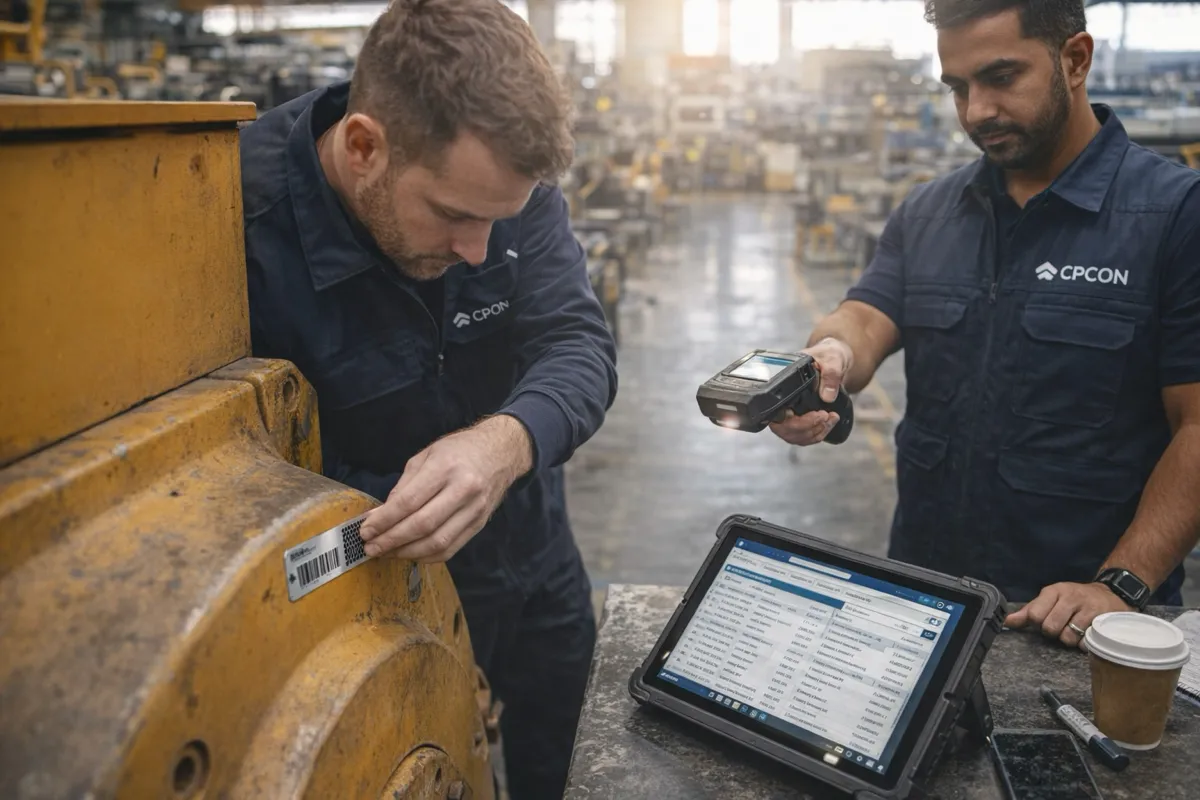
Field work. Crews apply a durable tag to each in-scope asset. They photograph the nameplate and capture make, model, serial and location. Conflicts with your register show on the floor.
- 4
Verify. We check that each tag is on the right asset, that it reads, and that it matches one register line. We replace tags that are missing, duplicate or damaged.
- 5
Handover. We load the checked data into your own system, in your format: ERP, EAM, CMMS or fixed asset register. You own the data when we hand it over.
- 6
Quote. Send the number of sites, the approximate asset count, the asset classes and the environments. A register extract helps but is not needed for a first quote. We scope the work and send a written quote.
We schedule all work around your operations.
Watch: Fixed Asset Tagging Services, 6 Steps
Subscribe on YouTube for the next guide.
Asset tagging audit and register reconciliation
An asset tagging audit checks the tags that are already on your assets. It is the right start when old numbers fail, tags have faded, or an auditor asked a question that the register could not answer.
Register reconciliation here means one thing. We compare what we find on the floor to your register, and we give you a variance report. We check floor to register and register to floor. Each difference goes on the exceptions list with a documented trail. We do not post to your books. Your finance team and your auditors decide the accounting treatment.
- SOX internal controls. You can test the existence and completeness of fixed assets. A tagged register with photo evidence helps move a control from asserted to evidenced. Read key vs non-key controls.
- ASC 360 impairment and disposals. You cannot impair or write off what you cannot locate. Ghost assets stay on the balance sheet and keep depreciating. Read ASC 360 compliance.
- 2 CFR 200.313 federal equipment. Federal grant recipients must keep equipment records and take a physical inventory, compared to those records. Read the 2 CFR 200.313 requirements.
- Insurance and lender schedules. Underwriters and lenders price what you can evidence. Read how to reconcile fixed assets.
For the full comparison of count to register, see our fixed asset inventory reconciliation service.
CPCON supports compliance and audit readiness. This is field work. It is not a CPA or financial statement audit.
Deliverables
- A durable tag on each in-scope asset.
- A tagged asset file: tag number, description, make, model, serial, location, and a photo where the scope includes photos.
- A variance report against your register, with matched, added and flagged lines.
- An exceptions list for register lines we did not find, including suspected ghost assets.
- A note on the tag standard and numbering.
- The data in the format of your own ERP, EAM, CMMS or fixed asset register.
What the tags do after the crew leaves:
- Maintenance teams scan to pull the right asset, history and manual, with fewer wrong-asset work orders.
- The next count and the next audit start from tags that scan.
- Depreciation and write-offs track assets one to one, not grouped lines.
- Auditors get a scannable ID and a photo trail for each asset.
Industries
- Manufacturing: plants and production equipment, with tags chosen for heat, chemicals and washdown.
- Healthcare: hospitals, labs and medical instruments. We plan around the access windows that limit when crews can enter a room.
- Government: public sector sites and grant-funded equipment, with records that support federal equipment rules.
- Warehouse: warehouse equipment, vehicles, tools and IT hardware.
Campuses and utilities follow the same method. We work with controllers, internal audit, maintenance and reliability teams, procurement, and IT and lab managers.
Why CPCON
CPCON has 30+ years of experience, 2,500+ clients, projects on every continent and 1M+ Assets Inventoried.
- Independent. We sell no software, no tags as a product, and take no vendor commissions. Our deliverable is a record you can defend at audit.
- Vendor-neutral. We advise the tag type and material that fit your conditions, not what we stock.
- Your data, your system. The data goes into your ERP, EAM, CMMS or register. No lock-in. No portal to license.
- People check the result. Our app helps the crew capture each tag. Our people check each exception.
- Built around your operations. We schedule all work around your operations.
Frequently asked questions
What is fixed asset tagging?
Fixed asset tagging puts a unique, machine-readable ID on each physical asset and links that ID to the asset's record in your fixed asset register, CMMS or EAM. One scan then opens its ID, location, condition and history. The tag turns an anonymous item into one you can find, maintain and audit.
What information should fixed asset tags carry?
Each tag carries a unique asset ID as a barcode, QR code or RFID inlay. Many also show the owner's name and a "do not remove" notice. The ID links to the full record: description, location, serial number and condition.
What is an asset tagging system?
It is the physical tags plus the process that applies and records them. That includes the tagging policy, the numbering convention, the tag technology for each asset class, the on-site application and the capture of each asset's details. The result is one scannable mark tied to one record.
What is asset verification, and how is it different from a count?
A count lists what is on the floor. Verification compares that list to your register. We confirm that each register line exists, check its tag, location and condition, and flag ghost assets we cannot find.
What does an asset tagging audit check?
It checks that each tag is on the correct asset, that it can be read, and that it matches one line in your register. We replace tags that are missing, duplicate or damaged. Every difference goes on an exceptions list.
Is asset tagging and verification a financial audit?
No. It is the field work that supports an audit: tagging, verification and the variance report against your register. It is not a CPA or financial statement audit. Your finance team and auditors decide the accounting treatment.
What drives the cost of asset tagging services?
Five things: how dense your assets are, the tag material your environment needs, the condition of your register, the access windows at each site, and how deep the capture goes. A rate quoted before anyone sees your site is a guess, so we scope first and then send a written quote.
How we tag and count your assets
We use four tools on each job. Each tool removes one cause of a bad count.
We apply durable tags, then scan each tag to confirm it is in the register.
OCR tag reading
We read worn, faded or damaged asset tags with OCR. You get a correct record even when the barcode does not scan.
Mobile barcode scanning
Our teams scan barcodes on mobile devices at the asset. Each scan records the asset, its location and the time.
RFID
We read RFID tags without a line of sight. Assets in racks, ceilings and closed rooms go into the count.
RFID fixed asset inventoryRegister reconciliation
Our software matches the floor count to your fixed asset register. We show you each missing, extra or moved asset before we close the job.
Request your asset tagging quote
Send the number of sites, the approximate asset count and the environments. We scope the work and send a written quote.
Request a written quote