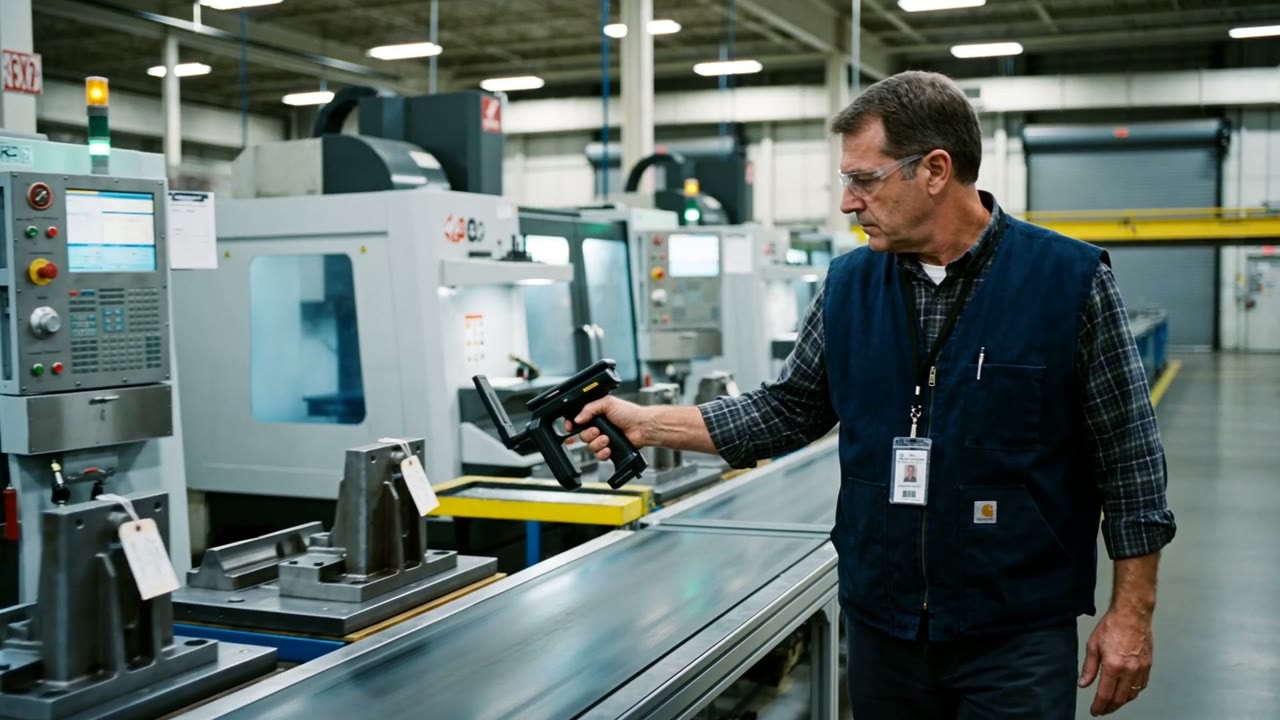
Count every asset in minutes — and always know where it is.
Tag every asset once, then count an entire facility in a single walk-through — real-time location, audit-ready records, zero ghost assets, reconciled straight to your ERP/EAM.
Counting by hand can't keep up with your register
Manual and barcode counts are slow, partial, and out of date the moment they finish — so the books and the floor drift apart, and audits become a fire drill.
Counts take days
Manual and barcode counts pull staff off the floor for days and still only capture a point in time — one scan at a time, line of sight required.
Ghost assets & phantom inventory
Ghost assets — items on the books that aren't on the floor (and assets on the floor that aren't on the books) — inflate the register and fail audits.
Audit & compliance pain
Without an immutable trail, reconciliation is manual and error-prone, and SOX / GASB audits become a scramble.
Four steps, every asset accounted for
A durable RFID tag turns each asset into a traceable record — then the platform reads, locates, and reconciles it against your register with an audit-ready trail.

Tag
A durable UHF asset tag or label is applied to each asset.

Read
A handheld reader or fixed portal reads hundreds of tags per second, no line of sight.

Locate
Real-time location & status across sites; portals catch every move.
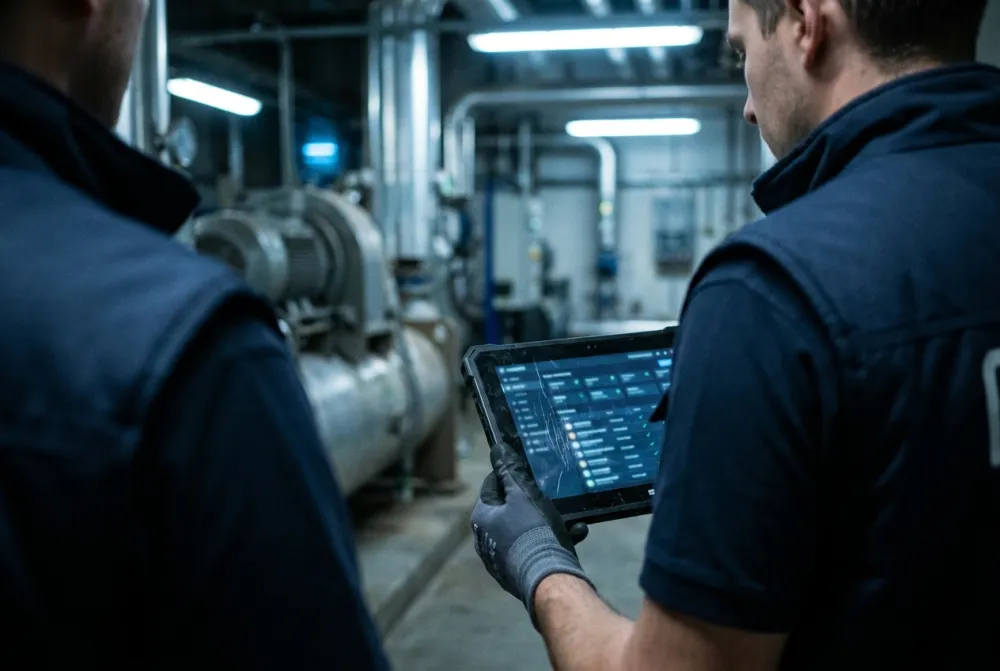
Reconcile
Counts post to your ERP/EAM with an immutable, audit-ready trail.

One pull of the trigger reads a whole rack
- A passive UHF chip in every tag — no battery, no line of sight.
- Hundreds of tags per second — through shelving and totes, not one scan at a time.
- Reads from across the aisle — point it down a row and the rack counts itself.
- A full facility in minutes — days of hand-counting become a walk-through.
Wondering how it compares? RFID vs barcode tracking →
What changes when assets count themselves
RFID turns the count from a periodic fire drill into a live system of record your ops and finance teams can trust.
Real-time asset visibility
Know what you own and where it is across every site, not just on count day.
Faster, more accurate counts
A full facility counted in a walk-through, with far less manual effort and error.
Eliminate ghost assets
Reconcile the floor against the register and clear phantom inventory off the books.
Audit & compliance ready
An immutable, attributed trail that supports SOX, GASB 34, and IFRS asset reporting.
Lower labor & downtime
Free staff from days of hand-counting and capture measurable ROI on every cycle.
ERP/EAM integration
Reconcile to SAP, Oracle, IBM Maximo, or a generic ERP through one layer.
Built for the assets you actually manage
From rugged warehouse racking to data-center equipment, CPCON scopes the tag and reader setup to each environment.

Warehouse & distribution
Count racking and totes in a single pass.
Manufacturing & MRO
Track tooling, spares, and production assets.
Healthcare & medical equipment
Locate mobile medical assets on demand.
IT & data-center assets
On-metal tags for servers and rack gear.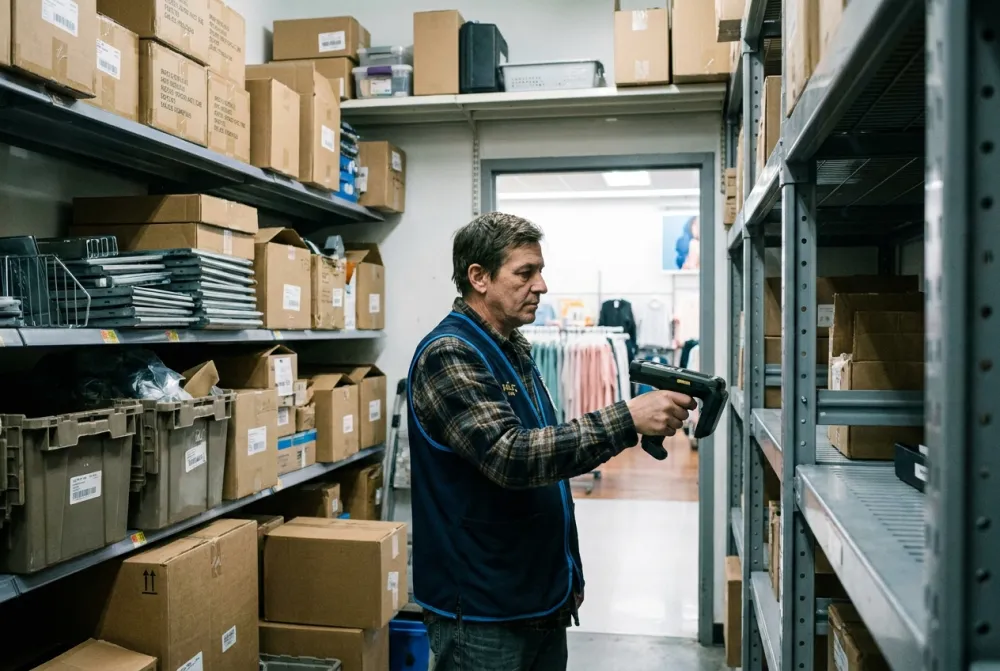
Retail
Backroom-to-floor asset and fixture visibility.
Energy, utilities & government
Rugged tags for field and regulated assets.End-to-end inventory, fixed-asset & RFID specialists
CPCON has run inventory, fixed-asset, and RFID programs for global operations for decades — the same discipline now applied to your asset base.
Fortune 500 clients, 15+ industry awards, 95% client satisfaction, and zero material findings in client audits — an inventory and fixed-asset practice built on accuracy.
RFID asset inventory, answered
The questions ops, warehouse, and finance teams ask before they tag a single asset.
How fast can RFID count a facility versus manual or barcode counts?
Minutes, not days. A UHF RFID reader reads hundreds of tags per second across an entire rack from a distance and needs no line of sight, so a count that took staff days by hand or one barcode scan at a time becomes a single walk-through of the floor.
What is the difference between RFID asset tracking and a one-time RFID inventory count?
A one-time RFID count tags your asset base and reads it once to reconcile the register fast and accurately. RFID asset tracking keeps those tags live — fixed portals and handheld reads give ongoing real-time location and status so the register stays accurate between audits, not just on count day.
Does it integrate with our ERP or EAM (SAP, Oracle, Maximo)?
Yes. Counts and movements post to your ERP or EAM — SAP, Oracle, IBM Maximo, or a generic system — through a reconciliation layer, so your fixed-asset register and the physical floor stay in sync with an audit-ready trail.
Can RFID find ghost assets and reconcile our fixed-asset register?
Yes. Reading the floor against the books surfaces ghost assets — items on the register that are not physically present (and assets on the floor that are missing from the books). RFID reconciles the difference and gives you an attributed record for each correction.
Will it work in metal, rugged warehouse, or data-center environments?
Yes, with the right tag selection. On-metal and hard tags are designed for metal assets, racking, IT and data-center equipment, and rugged industrial environments. CPCON selects the tag format and reader setup for each environment during the assessment.
How much do RFID tags and readers cost?
Cost depends on your environment, asset volume, tag format, and how many sites and read points you need. CPCON scopes tags, readers, and integration to your facility during the free RFID asset assessment rather than quoting a generic per-tag price.
See your own facility counted in minutes.
Book a free RFID asset assessment and we'll scope it on your inventory.
Get a free assessment →Get a free RFID asset assessment
Tell us about your assets and sites and we'll scope it. No obligation.
- See real-time RFID asset tracking live
- Get a count-time & accuracy estimate for your site
- Discuss ERP/EAM reconciliation (SAP / Oracle / Maximo)