ABL collateral verification and M&E verification for lenders
Independent, on-site verification of the inventory and machinery behind the borrowing base or term loan. We count it, reconcile it and document it, so your field exam and your appraisal rest on physical evidence.
30+ years · 2,500+ clients · Projects on every continent.
Who uses it
ABL field exam and collateral audit managers.
You need physical evidence on the floor that ties back to the records you are testing.
ABL portfolio managers.
You need to know the collateral is still there, still where the borrower says it is, and in the condition it was when you lent against it.
Credit and risk.
You need an independent, documented record behind the borrowing base and the M&E schedule. That record should come from someone with no role in the borrower's books or operations.
When lenders call us
Pre-close survey exams.
Verify the inventory and equipment before the loan books, so the first field exam starts from a confirmed population.
Between re-appraisals.
Confirm that the M&E on the last appraisal is still on site, in use and identifiable, without commissioning a new appraisal.
Workouts and distressed situations.
Get a fast, documented check of what is on the floor, what has moved and what is missing, when you need more frequent visibility.
M&E term loans and sublimits.
Verify that each asset behind an equipment term loan or M&E sublimit exists, can be identified by serial and nameplate, and matches the schedule you lent against.
Amendments, refinancings and new sublimits
When a facility is amended, refinanced or given a new M&E sublimit, confirm the collateral behind the new terms before you sign. We verify the inventory or equipment population that the amendment relies on and reconcile it to the updated schedule. You get one documented baseline for the new structure.
Closing count instead? See our closing and net-working-capital counts.
What we verify
Machinery & equipment
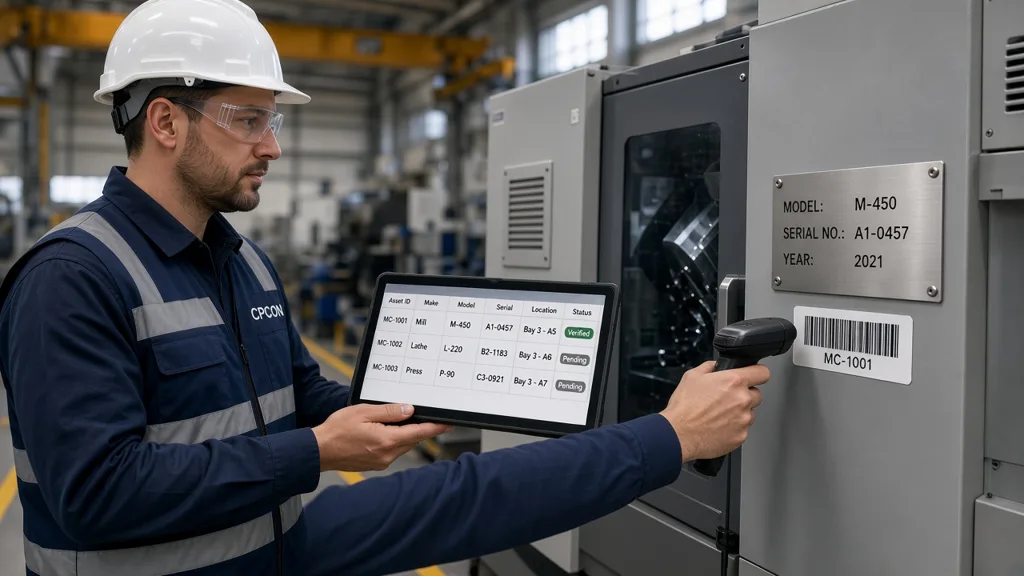
We physically verify each asset and record its serial number, nameplate detail, location and condition as found. We then reconcile in both directions:
- Lender's appraisal listing → floor: is every appraised asset on site and identifiable?
- Borrower's fixed asset register → floor: does the register match what is there?
- Floor → both lists: what is on the floor that neither list shows?
We flag missing assets (listed but not found), leased assets (on site but carrying a lessor tag or lessor nameplate, which you should confirm against your liens), and unlisted assets (found but not on the appraisal listing or the register). Each exception is photographed and its location recorded. We apply durable barcode or RFID asset tags to verified assets so your next exams go faster. The same field team runs our fixed asset inventory work for corporate finance teams, so the method is proven outside lending.
This is verification, not valuation. We don't appraise. Our work supports your appraiser's listing and your field examiner's testing. For valuation needs, see CPCON's Valuation Advisory practice.
Inventory collateral
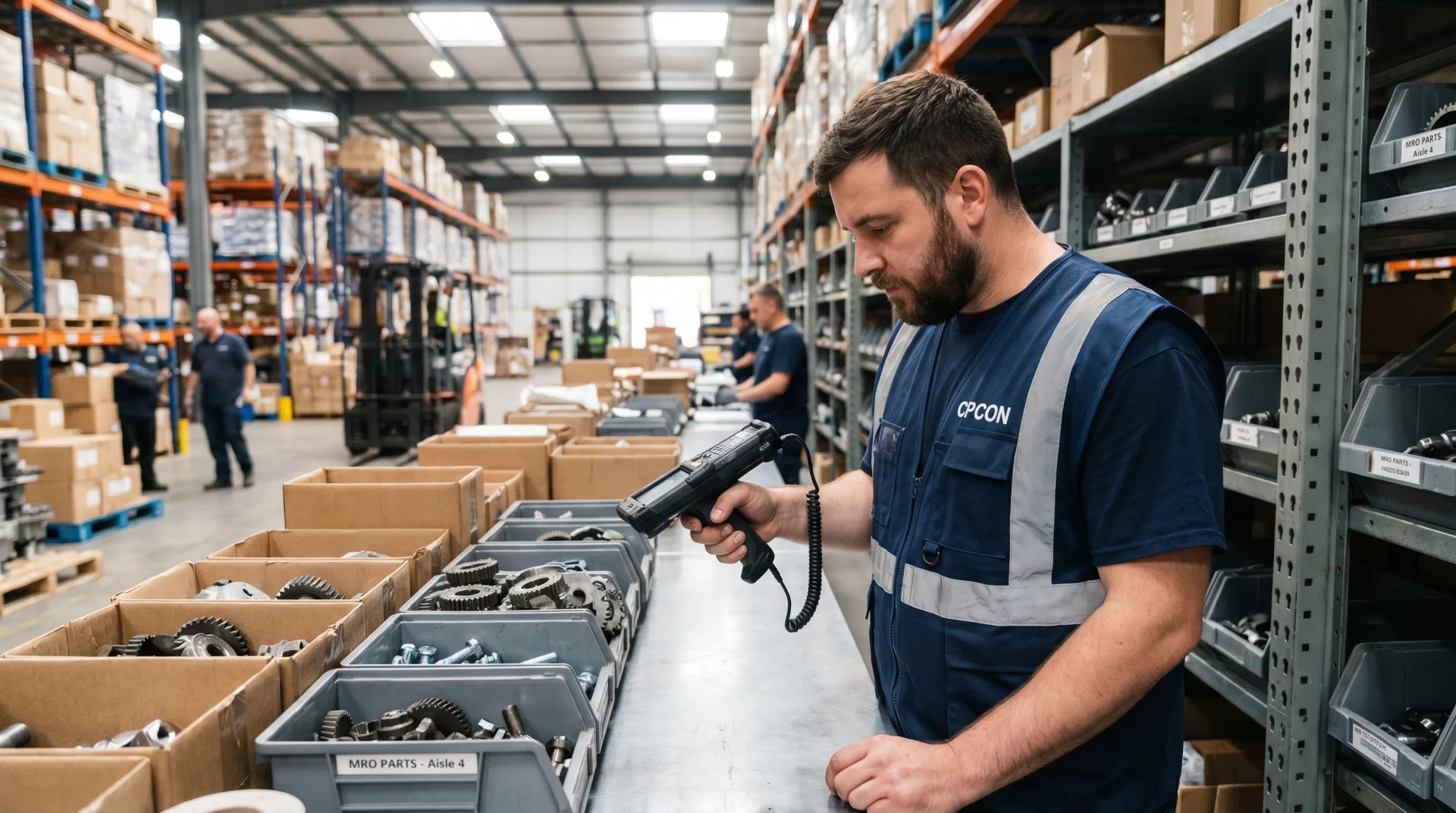
Wall-to-wall or targeted test counts. We reconcile floor-to-book and book-to-floor against perpetual records on the count date, covering raw materials, WIP and finished goods across single or multiple sites.
Ineligibles, in-transit and third-party locations
- Ineligible inventory: we flag obsolete, slow-moving, damaged and consigned stock on the floor, with location and photo. You apply your eligibility criteria.
- In-transit stock: we list inventory the borrower reports as in transit separately, so you can decide how to treat it.
- Bonded and third-party warehouses: lenders are expected to confirm collateral held off site. The OCC's verification procedures say: "Obtain confirmation of any collateral held outside the bank (e.g., by bonded warehouses)." (OCC Comptroller's Handbook, Asset-Based Lending, Verification Procedures, p. 58) Where access allows, CPCON counts inventory on site at bonded warehouses, 3PLs and other off-site locations, so your exam has a physical count to set beside the custodian's records.
What you receive
| Deliverable | What it covers |
|---|---|
| Per-asset M&E schedule | Each asset with serial number, make/model, location, condition as found, and its match status against the appraisal listing and the fixed asset register |
| Nameplate photos | A photo of each asset's nameplate or serial plate, linked to its schedule line |
| Photographed exceptions | Missing, leased, unlisted and ineligible items, each with photo and location |
| Count certificate | Population covered, count date and method (inventory engagements) |
| Variance report | Book vs floor by item and location |
| Excel output | All of the above in Excel, laid out to drop into field-exam workpapers |
Working with your field examiner
We do the physical work on the floor. Your field examiner or financial advisor tests receivables, cash and the borrowing base calculation. One coordinated site visit, one consistent set of evidence for the lender and its appraiser.
| CPCON does | Your examiner does |
|---|---|
| The physical work on the floor. | Tests receivables, cash and the borrowing base calculation. |
How often lenders verify collateral
The OCC's handbook for bank examiners sets the expectation plainly: "A field audit should be conducted before a new account is booked and regularly thereafter— often quarterly but more frequently if risk dictates." (OCC Comptroller's Handbook, Asset-Based Lending, Field Audits, p. 23)
We schedule around your exam cycle: a pre-close visit, recurring visits that track your field-exam schedule, and more frequent visits when a credit is on watch or in workout. Assets tagged on the first visit are faster to find and confirm on the next one.
Why lenders use an independent count team
Independent
no role in the borrower's books or operations
Fast mobilization
crews scheduled around the lender's timeline
Multi-site
programs across plants, warehouses and 3PLs
Findings of fact
clear evidence, no unsupported conclusions
Confidentiality
All client data is handled under NDA on request.
Coverage
US focus. Headquartered in New York with offices around the world. Projects on every continent.
FAQ
Do you perform appraisals or valuations?+
No. We verify that the inventory and equipment exist, can be identified and match the records. That work supports your appraiser's listing and your field examiner's testing. Valuation, where needed, is handled separately.
How do you verify machinery and equipment for an ABL or term loan?+
We record each asset's serial number, nameplate, location and condition on site. We then reconcile in both directions against the lender's appraisal listing and the borrower's fixed asset register, and flag missing, leased and unlisted assets with photos.
Do you count inventory at bonded or third-party warehouses?+
Where access allows, yes. We count inventory on site at bonded warehouses, 3PLs and other off-site locations. We list stock the borrower reports as in transit separately, so you can decide how to treat it.
Do you decide what is ineligible?+
No. We flag and photograph exceptions such as obsolete, damaged, consigned or in-transit stock. You apply your eligibility criteria.
What do we receive?+
A per-asset M&E schedule, nameplate photos, photographed exceptions and, for inventory, a count certificate and variance report. All of it comes in Excel, laid out to fit field-exam workpapers.
Do you replace our field examiner?+
No. We do the physical verification on the floor. Your field examiner tests receivables, cash and the borrowing base calculation.
Scope a collateral count
Independent, on-site verification of the inventory and equipment behind the borrowing base.