
Industry
ISO 55000 vs 55001 vs 55002: The Real Difference
ISO 55000, 55001, and 55002 are not interchangeable — only one is certifiable. Here's exactly what each standard covers.
July 14, 20267 min read
CPCON · Resource library
Search and filter 196+ pieces on inventory, fixed assets, RFID, compliance, and valuation — written by CPCON specialists.
Showing 25–48 of 196 articles · Page 2 of 9
ISO 55000, 55001, and 55002 are not interchangeable — only one is certifiable. Here's exactly what each standard covers.

What ISO 55001 requires for asset identification and register data integrity — real clauses, 2014 vs 2024 differences, and where physical verification fits.
Why financial and operational asset registers diverge, what ISO/TS 55010:2024 recommends, and the real cost of unreconciled ghost assets.
The precise clause-by-clause breakdown behind ISO 55001 asset data quality — 2014 vs 2024 editions compared.

Barcode, QR, or RFID — and how to structure functional locations, equipment numbers, and finance asset numbers for ISO 55001.

What ISO 55001 auditors expect as evidence of asset existence and condition — and how clause 8.3 governs outsourced verification.
The difference between Stage 1 and Stage 2 ISO 55001 audits, common asset-data nonconformities, and a practical readiness checklist.

Turn the fixed asset register into a material control for the Provision 29 declaration: ownership, reconciliation and the evidence boards rely on.

How physical verification, floor-to-book reconciliation and ISA (UK) 501 practice build the audit evidence behind a material controls declaration.

A practical guide to assembling the board’s evidence base for the Provision 29 declaration: assurance mapping, dry runs and physical asset evidence.

Provision 29 of the UK Corporate Governance Code frames fixed-asset controls as material controls. See what boards must evidence for the declaration.
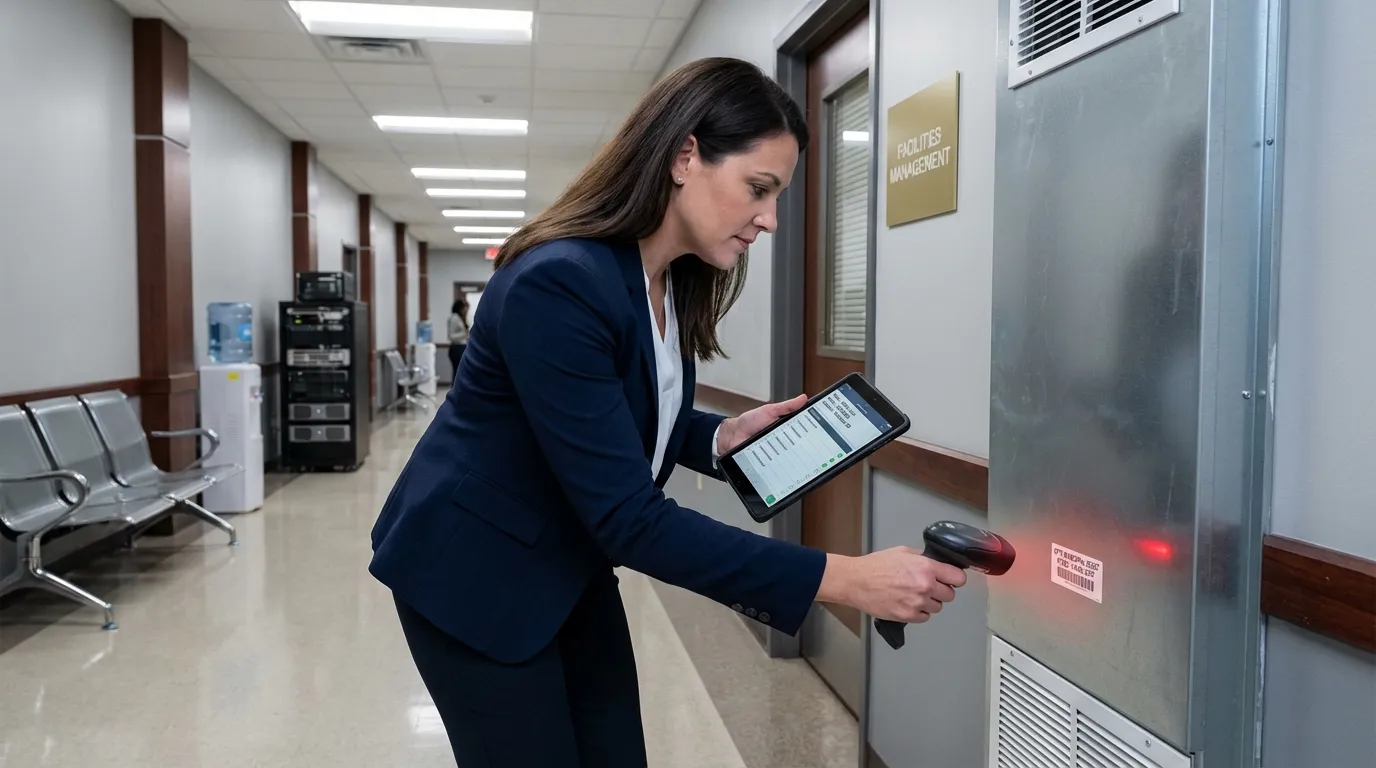
Safeguarding of assets, from custody records to security tagging, is a candidate material control under Provision 29. See how boards evidence it.

UK SOX never arrived. Compare Provision 29’s board declaration with Sarbanes-Oxley 404: scope, attestation and what it means for asset controls.

What IMMEX and Anexo 24 require for imported machinery: the fixed-asset module, pedimento reconciliation, SAT audits, and floor-to-record verification.

Learn the fixed asset audit process: 7 steps, procedures, and a printable checklist — and when to hire a specialist audit firm vs. audit in-house.

See how auditors decide fixed-asset audit sample size and which assets to physically verify — statistical vs. judgmental sampling, key items, and two-directional testing.

Learn how to audit fixed assets step by step — plan, verify existence two-directionally, reconcile to the GL, test additions, disposals, and depreciation. Start now.

Decide when you need an independent, third-party fixed-asset audit instead of an internal one — and how to choose an objective, multi-site verification provider.

When SAP PM logs a component replacement, FI-AA rarely derecognizes the old part — creating ghost components on your fixed-asset register. The mechanism, the IAS 16 exposure, and how to close it.

The existence assertion tests whether recorded PP&E actually exists. See how a verified, evidence-backed asset register is your audit + SOX 404 proof.

Measure GAAP inventory at the lower of cost and net realizable value under ASC 330. See the NRV test, allowed cost-flow methods, and physical-count rules.

Unmanaged fixed assets quietly drain budgets: over-taxation, over-insurance, audit inflation, impairment exposure & more. See the 7 hidden cost buckets.

The fixed asset accounting cycle explained: acquisition, capitalization, depreciation, ASC 360 impairment, verification, disposal, and reporting under U.S. GAAP.

Step-by-step process and a reusable SOP template for running accurate warehouse cycle counts, plus best practices for inventory and operations managers.
Subscribe for asset management, inventory, and compliance updates — or browse the full insights hub.