Why "Unmanaged" Is More Expensive Than It Looks
A fixed-asset base is unmanaged the moment the register stops describing physical reality. Equipment is scrapped but never written off. A machine is moved between plants and the location field is never updated. An asset is impaired in everything but the ledger. None of these events shows up as a line item called "cost of poor asset management" — and that is exactly why the cost compounds for years before anyone quantifies it.
This guide is the umbrella view. It maps the full taxonomy of what an unmanaged fixed-asset base actually costs a finance organization, broken into seven buckets. Each bucket is a distinct mechanism — they do not double-count, and most organizations are paying into several of them at once. Where we cite figures we use clearly framed ranges grounded in published norms, not invented precision.
One bucket — ghost assets — is large enough to warrant its own treatment, and CPCON covers it in depth in the ghost asset detection guide. Here, ghost assets are just bucket one of seven. The point of this article is the total drag, not any single leak.
The seven cost buckets of unmanaged fixed assets:
- 1. Over-taxation — property tax on ghost assets still on the roll
- 2. Over-insurance — premiums on assets that no longer exist
- 3. Audit-cost inflation — expanded testing plus material-weakness remediation
- 4. Depreciation distortion — overstated carrying value and misstated expense
- 5. Impairment-detection lag — ASC 360-10 / IAS 36 indicators going unobserved
- 6. Compliance & restatement risk — SOX control failures
- 7. Operational waste — maintenance spend and downtime on untracked equipment
Bucket 1 — Over-Taxation on Ghost Assets
In jurisdictions that levy a business personal property tax, assets are taxed on their assessed value while they sit on the roll — whether or not they still physically exist. A disposed machine that was never retired from the register keeps generating an assessment, and the company keeps paying tax on a phantom.
Across the largest U.S. cities, the average effective commercial property tax rate is about 1.81% (Lincoln Institute of Land Policy / Minnesota Center for Fiscal Excellence, 50-State Property Tax Comparison Study), with the highest-tax cities exceeding 4%. That is a major-cities urban average rather than a true national figure. For planning, a defensible working range is 1-3% per year, with the understanding that high-tax locations push beyond it. Apply that to the ghost portion of a register and the overpayment becomes concrete: on a $50M asset base carrying a conservative 10% ghost rate ($5M of phantom value) at ~2%, the company overpays on the order of $100,000 per year in property tax it does not owe — recurring, until the assets are written off.
This is the most directly recoverable bucket. A clean write-off and retirement process removes the phantom value from the next assessment, and in many jurisdictions supports a corrected filing.
Bucket 2 — Over-Insurance on Assets That Do Not Exist
Property and equipment insurance is priced on insured values that are typically pulled from — you guessed it — the fixed-asset register. When the schedule of insured values includes scrapped, sold, or duplicated assets, the premium is calculated on a base that overstates what is actually at risk. The company pays to insure equipment that cannot suffer a loss.
The mechanism is the inverse of underinsurance: instead of a coverage gap, the company carries a premium gap. Because premiums scale with insured value, the same phantom portion that inflates the tax bill also inflates the insurance bill, year after year, until the schedule is reconciled to a verified asset list. Insurers will generally true up the schedule at renewal once the company can produce a defensible, physically verified inventory of insured assets.
Bucket 3 — Audit-Cost Inflation and Material-Weakness Remediation
External auditors price risk. When the fixed-asset subledger cannot be tied to physical reality, the auditor cannot rely on the existence and completeness assertions without doing more work — wider sampling, more substantive testing, more hours, a higher fee. That is the visible cost.
The larger cost arrives if controls over fixed assets are judged ineffective. A breakdown in existence controls can be elevated to a significant deficiency or a material weakness, which then drives remediation projects, management and audit-committee time, re-performance of controls, and — for public companies — a disclosure that investors and lenders read. The fee increase is measured in tens of thousands; the remediation and the disclosure exposure are measured in much more. Producing reliable existence evidence is exactly what a physical-to-book register reconciliation delivers. The same weak custody and location controls also make safeguarding of assets a candidate material control for UK boards under Provision 29.
Bucket 4 — Depreciation Distortion and Overstated Carrying Value
Every phantom asset on the register carries a net book value and, until it is fully depreciated, an ongoing depreciation charge. The effect runs in two directions and both are wrong. The balance sheet overstates total assets — carrying value that no audit could substantiate. The income statement records depreciation expense against equipment that is not generating any economic benefit, distorting margins, asset-turnover ratios, and return-on-assets metrics that boards and lenders track.
Because depreciation is a non-cash charge, finance teams often treat this bucket as cosmetic. It is not. Overstated assets inflate covenant calculations, distort segment profitability, and — when the correction finally lands — can require a catch-up adjustment in a single period that draws attention precisely because it was deferred. The fix is the same reconciliation that addresses the tax and insurance buckets: tie the register to verified physical assets and retire what is not there.
Bucket 5 — Impairment-Detection Lag (ASC 360-10 / IAS 36)
Under ASC 360-10 (US GAAP) and IAS 36 (IFRS), long-lived assets held and used are tested for impairment when events or changes in circumstances indicate the carrying amount may not be recoverable. ASC 360-10 does not require an annual test for these assets — the obligation is indicator-driven. Triggering indicators include a significant adverse change in the extent or manner in which an asset is used, a deterioration in its physical condition, or an adverse change in the business or legal climate affecting its value.
Here is the trap for an unmanaged base: you cannot observe an indicator on an asset you are not tracking. Idle equipment, physically damaged assets, or assets stranded by a process change are precisely the population most likely to be impaired — and precisely the population an unmanaged register loses sight of. The recoverability test itself (comparing carrying amount to undiscounted future cash flows, then measuring any loss against fair value) can only run if someone notices the indicator first. The cost of the lag is overstated carrying value that should already have been written down, recognized late and often all at once. CPCON treats the standards interaction in detail in the impairment and tax treatment guide.
Bucket 6 — Compliance and Restatement Risk (SOX)
For companies subject to the Sarbanes-Oxley Act, fixed assets sit inside the scope of internal control over financial reporting. Management must assert that controls over the asset base — existence, completeness, valuation, and disposal — are designed and operating effectively. An unmanaged register makes that assertion difficult to support honestly.
When the gap between book and physical is large enough, the exposure is no longer a fee or a soft cost — it is the risk of a misstatement that requires correction, up to and including a restatement of previously issued financials. Restatements carry direct costs (additional audit and advisory fees, legal review) and indirect ones (management distraction, lender and investor scrutiny, and a hit to the credibility of every other number in the filing). This bucket is low-frequency but high-severity, which is why control-conscious finance teams treat the underlying reconciliation as routine hygiene rather than a project.
Bucket 7 — Operational Waste on Untracked Equipment
The first six buckets are financial. The seventh is operational, and it is the one plant and facilities managers feel directly. An asset base that finance cannot see is an asset base operations cannot manage. Untracked equipment falls off maintenance schedules, so it fails unexpectedly and pulls unplanned downtime and emergency-repair premiums with it. Duplicate purchases happen because nobody can confirm the company already owns the spare. Warranty and service contracts lapse or get paid on equipment long retired.
This bucket is harder to put a single range on because it depends on equipment criticality, but it is rarely small: maintenance budgets carry line items for assets that no longer exist, and downtime on a single critical asset can dwarf the annual tax-and-insurance overpayment on the entire ghost population. Tying the asset register to physical reality is the prerequisite for any credible maintenance, capital-planning, or reliability program.
The Seven Buckets at a Glance
The buckets below are independent mechanisms. The recurring financial buckets (tax, insurance, depreciation) compound every year an asset stays unmanaged; the event-driven buckets (audit, impairment, compliance) are lower-frequency but higher-severity when they land.
| Cost Bucket | Mechanism | Pattern |
|---|---|---|
| Over-taxation | Property tax (~1-3%/yr of assessed value) on phantom assets still on the roll | Recurring |
| Over-insurance | Premiums calculated on insured values that include assets that no longer exist | Recurring |
| Audit-cost inflation | Wider testing, higher fees, plus deficiency / material-weakness remediation | Event-driven |
| Depreciation distortion | Overstated carrying value and misstated expense, ratios, and covenants | Recurring |
| Impairment-detection lag | ASC 360-10 / IAS 36 indicators unobserved on untracked assets | Event-driven |
| Compliance / restatement | SOX control failure; potential misstatement or restatement | Low-frequency / high-severity |
| Operational waste | Maintenance spend, downtime, and duplicate purchases on untracked equipment | Recurring |
One Fix Addresses Most of the Buckets
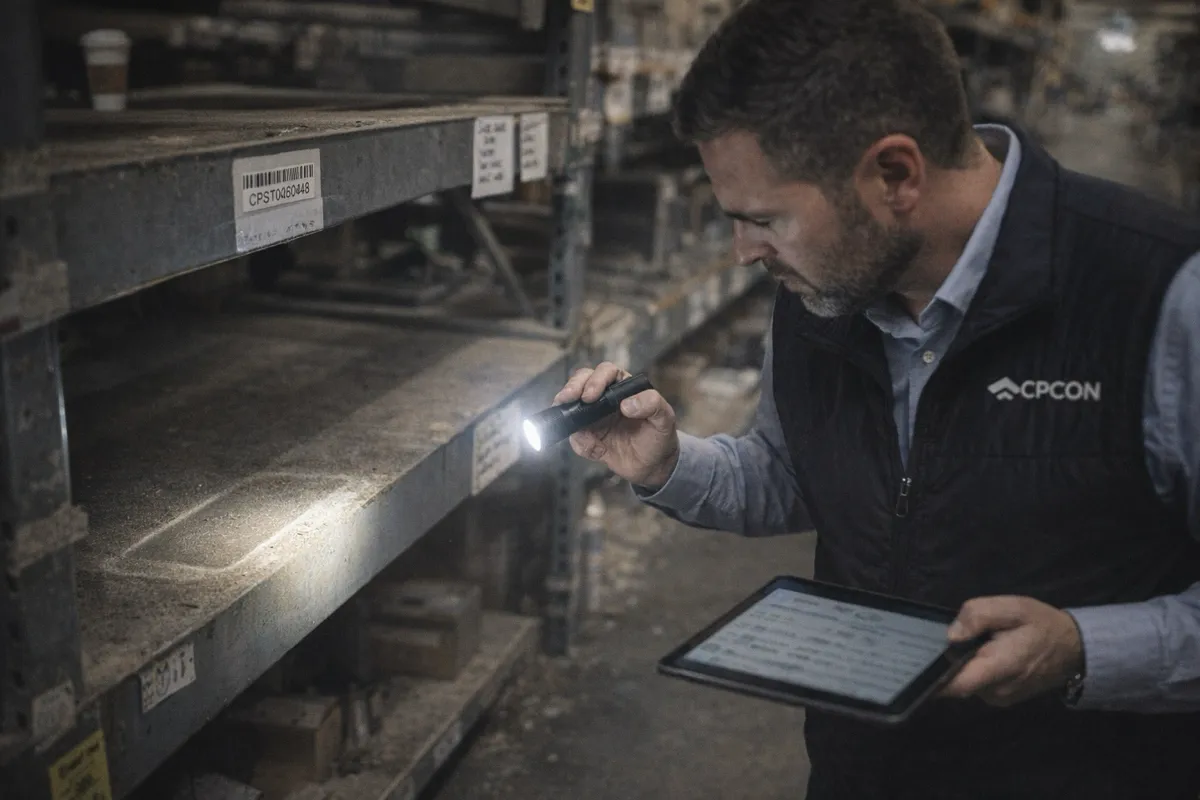
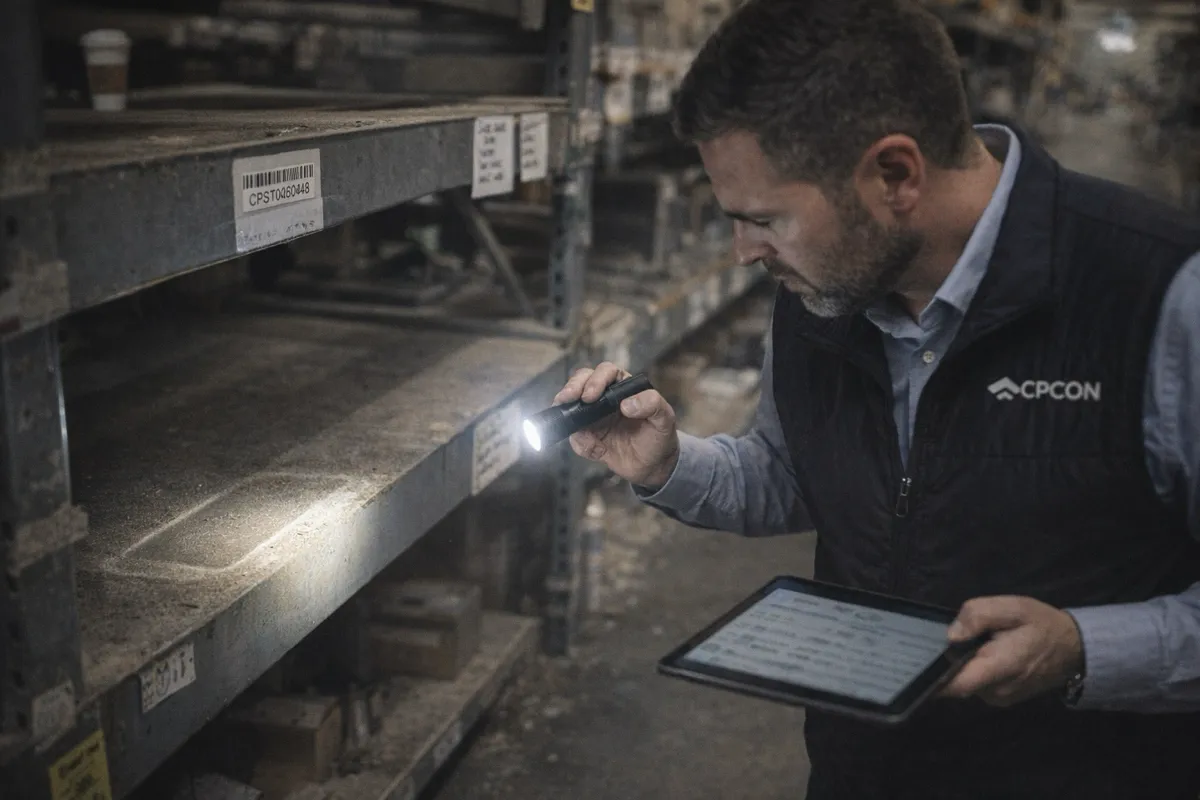
The seven buckets share a single root cause — the register no longer matches physical reality — which means a single intervention addresses most of them at once. That intervention is a physical-to-book reconciliation: a wall-to-wall or statistically sampled physical verification that ties each tagged, located asset back to the ledger and flags every line that has no asset behind it.
One reconciliation simultaneously surfaces ghost assets for write-off (bucket 1), corrects the insured-value schedule (bucket 2), produces the existence evidence auditors need (bucket 3), restores depreciation accuracy and carrying value (bucket 4), exposes idle and impaired assets for testing (bucket 5), and re-establishes the control documentation SOX requires (bucket 6) — while handing operations a register it can finally manage (bucket 7). Because buckets 1 and 2 are recovered cash, the exercise is frequently self-funding within the first cycle.
The durable version is not a one-time cleanup but a maintained fixed asset register with a disciplined disposal workflow and periodic re-verification, so the buckets do not refill. CPCON's fixed asset management services pair RFID-enabled physical verification with reconciliation specialists to close the gap and keep it closed.
Frequently Asked Questions
What does it cost to leave fixed assets unmanaged?
Unmanaged fixed assets generate cost across at least seven buckets: over-taxation on ghost assets that remain on the property-tax roll, over-insurance premiums on equipment that no longer exists, audit-cost inflation and material-weakness remediation, depreciation distortion that overstates carrying value, impairment-detection lag, compliance and restatement exposure under SOX, and operational waste on untracked equipment. The combined drag is rarely captured on a single line of the income statement, which is precisely why it persists. As a directional anchor, property tax alone typically runs 1-3% of assessed value per year (higher in some jurisdictions), so the ghost-asset portion of a large register can quietly overpay tens of thousands of dollars annually before any of the other six buckets are counted.
How are unmanaged fixed assets different from ghost assets?
Ghost assets are one bucket inside the broader category of unmanaged fixed assets. A ghost asset is a specific defect — a register line with no physical asset behind it (scrapped, sold, stolen, or duplicated but never written off). Unmanaged fixed assets is the umbrella: it includes ghost assets, but also assets that physically exist yet are mistagged, mislocated, never impairment-tested, over-insured, or absent from any maintenance schedule. You can have zero ghost assets and still carry a heavily unmanaged asset base. For the deep dive on the ghost-asset bucket specifically, including detection methods, see CPCON's ghost asset detection guide.
Why does an unmanaged register inflate audit costs?
External auditors price risk. When the fixed-asset subledger cannot be reconciled to physical reality, sampling expands, substantive testing increases, and additional hours are billed. If controls over existence and completeness are judged ineffective, the engagement can surface a significant deficiency or material weakness — which triggers remediation work, management time, and in public companies a disclosure that markets read. The audit-fee increase is the visible cost; the remediation and reputational exposure are the larger ones.
How does poor asset management create impairment exposure?
Under ASC 360-10 (US GAAP) and IAS 36 (IFRS), long-lived assets are tested for impairment when events or changes in circumstances indicate the carrying amount may not be recoverable. ASC 360-10 does not mandate an annual test for held-and-used assets — the obligation is triggered by indicators such as a significant adverse change in how an asset is used, its physical condition, or the business climate. An organization that does not track its assets cannot reliably observe those indicators, so impairment that should have been recognized goes undetected and carrying value stays overstated until an auditor or a transaction forces the correction.
How do you stop the bleed from unmanaged fixed assets?
Start with a physical-to-book reconciliation: a wall-to-wall or sampled physical verification that ties tagged, located assets back to the register. That single exercise simultaneously surfaces ghost assets for write-off, corrects over-insured and over-taxed values, restores depreciation accuracy, and produces the existence evidence auditors need. From there, a maintained register with a disciplined disposal workflow and periodic re-verification keeps the cost buckets from refilling. The reconciliation is typically self-funding within the first cycle through recovered tax and insurance overpayments alone.