ISO 14224 is one of the most cited — and least understood — standards in maintenance and reliability. Most explanations stop at "it's a standard for reliability data." That is true but useless when you are the one who has to actually build the asset hierarchy and collect the data it describes. This guide explains ISO 14224 the way it matters in practice: the taxonomy, the data it requires, and where real implementations succeed or fall apart.
What ISO 14224 Actually Is
ISO 14224 is the international standard for the collection and exchange of reliability and maintenance (RM) data for equipment. It was developed for the petroleum, petrochemical, and natural gas industries, and that remains its formal scope — but its structure is generic enough that manufacturing, power, utilities, and other asset-intensive sectors adopt it as a best-practice framework.
Its purpose is comparability. If every plant records equipment, failures, and maintenance the same way, using the same taxonomy, then reliability data can be benchmarked across sites, companies, and years — which is the foundation of reliability-centered maintenance, failure analysis, and data-driven maintenance strategy. Without a shared structure, every plant's data is an island.
The Nine-Level Equipment Taxonomy
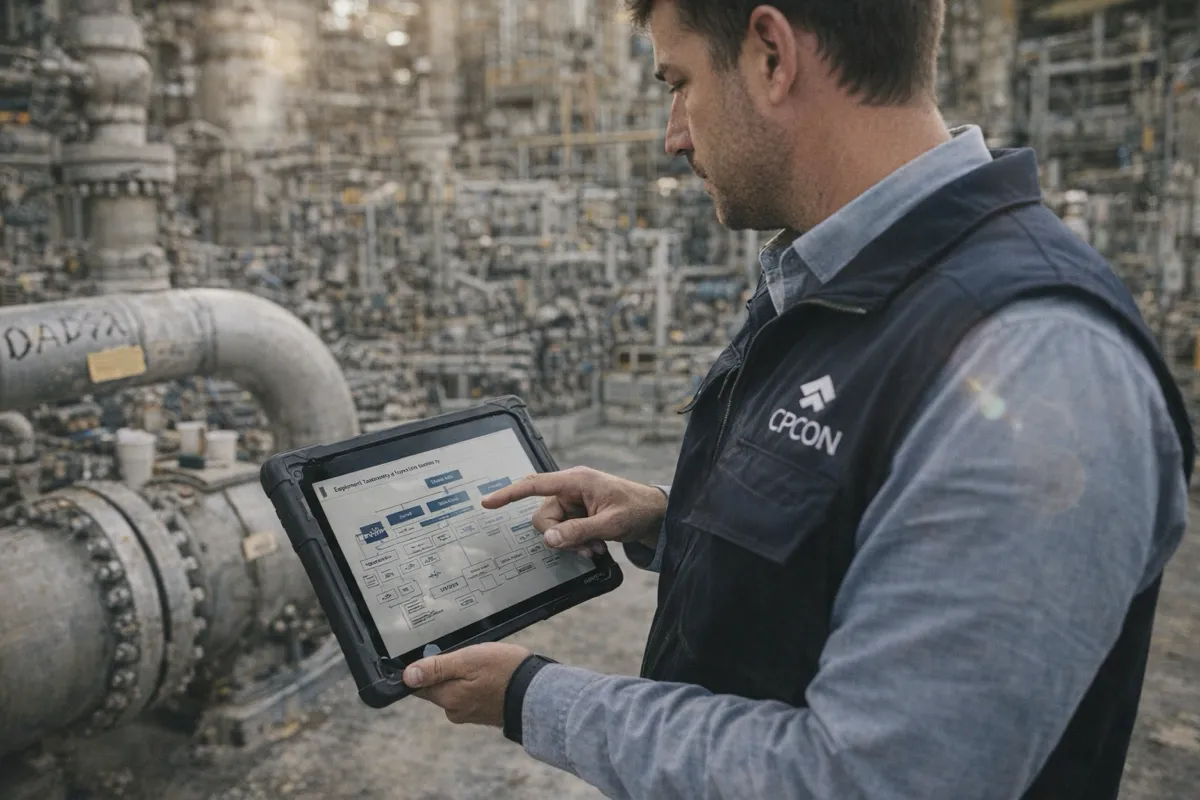
The heart of ISO 14224 is its taxonomy — a systematic classification of equipment into nine levels. The upper levels locate the equipment in the business and the plant; the lower levels break the equipment down into a parent-child hierarchy you can attribute data to.
| Level | Classification | Example |
|---|---|---|
| 1–2 | Industry & business category | Oil & gas, upstream |
| 3–5 | Installation, plant/unit, section/system | Refinery → unit → cooling system |
| 6 | Equipment unit | Pump |
| 7 | Subunit | Lubrication subunit |
| 8 | Component / maintainable item | Bearing |
| 9 | Part | Seal |
Levels 6–9 are the parent-child relationship that matters most day to day: a failure is recorded against the component that actually failed, not just "the pump." That precision is what makes the data useful for analysis later — and it is exactly the structure a well-built CMMS asset hierarchy should mirror.
The Three Data Categories
ISO 14224 defines what to record in three categories. Get all three consistently and you have analyzable reliability data; miss one and the rest loses much of its value.
- Equipment data — the taxonomy classification plus attributes: manufacturer, type, and design/operating characteristics.
- Failure data — failure mode, cause, and consequence, attributed to the correct taxonomy level.
- Maintenance data — the maintenance action, resources used, downtime, and maintenance consequence.
Why It Matters
A consistent taxonomy and data structure turn maintenance records from a logbook into an asset. With ISO-14224-aligned data you can compare failure rates for the same equipment class across sites, feed reliability-centered maintenance and root-cause analysis, build credible mean-time-between-failure figures, and benchmark against industry data. None of that is possible if "pump failure" on one site means something different from "pump failure" on another.
The Implementation Reality
Here is the part the standard cannot do for you: ISO 14224 compliance is mostly a data-collection problem, not a software-configuration problem. Any capable CMMS or EAM can be configured to the taxonomy. What breaks implementations is the underlying data — equipment that was never captured, a flat or wrong hierarchy, nameplate fields left blank, and inconsistent naming that quietly defeats the whole point of a standard.
The standard assumes you have an accurate, well-structured asset register to attach failure and maintenance data to. Most organizations do not — which means the real work of "implementing ISO 14224" is the field asset data collection and hierarchy build that comes first. Do that badly and the most standards-compliant configuration in the world still produces reliability data you cannot trust.
Building ISO-14224-Aligned Data
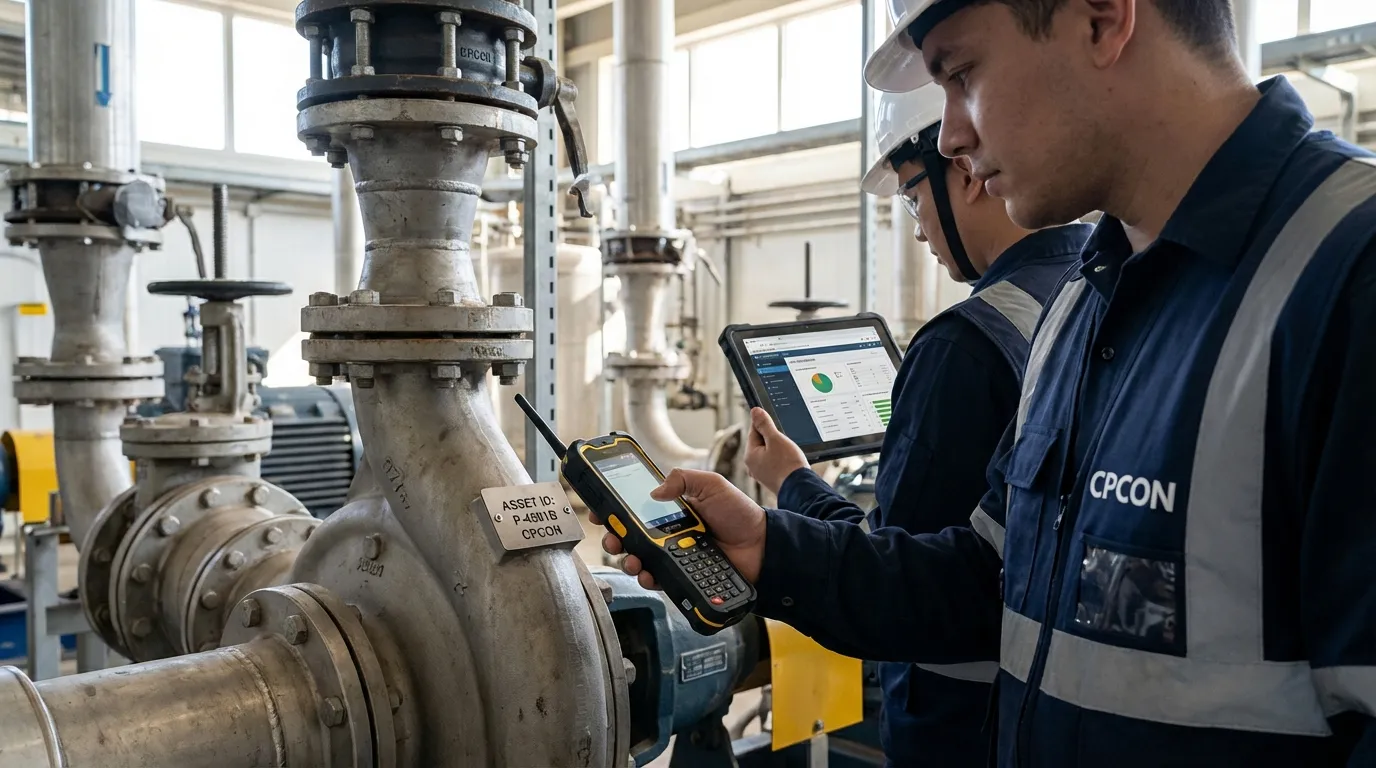
CPCON Group collects and structures the asset data that makes ISO 14224 real — on the plant floor. Our field teams capture equipment data and nameplate details, build the parent-child hierarchy to the right indenture levels, assign criticality, and deliver an asset register structured to the taxonomy your CMMS and reliability program need. Whether you are formally bound by ISO 14224 or simply want its rigor, talk to our team about building the data foundation underneath it — see our CMMS data services.