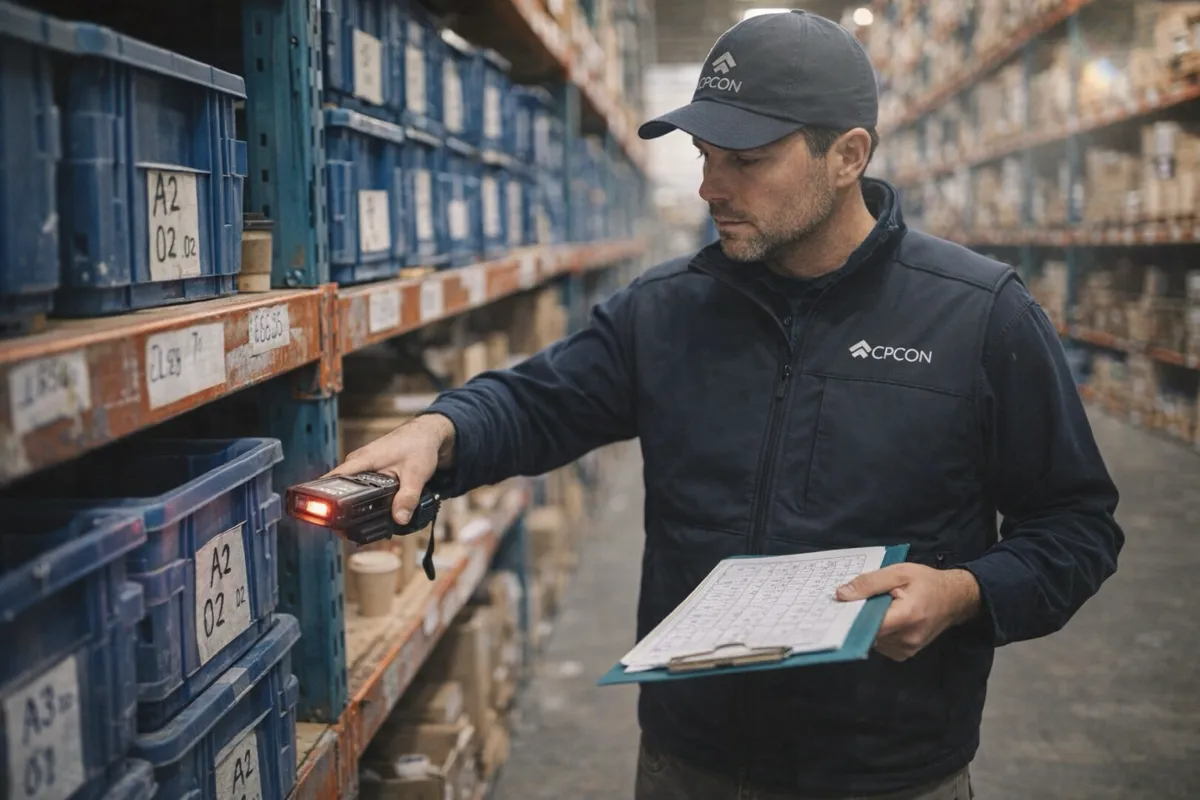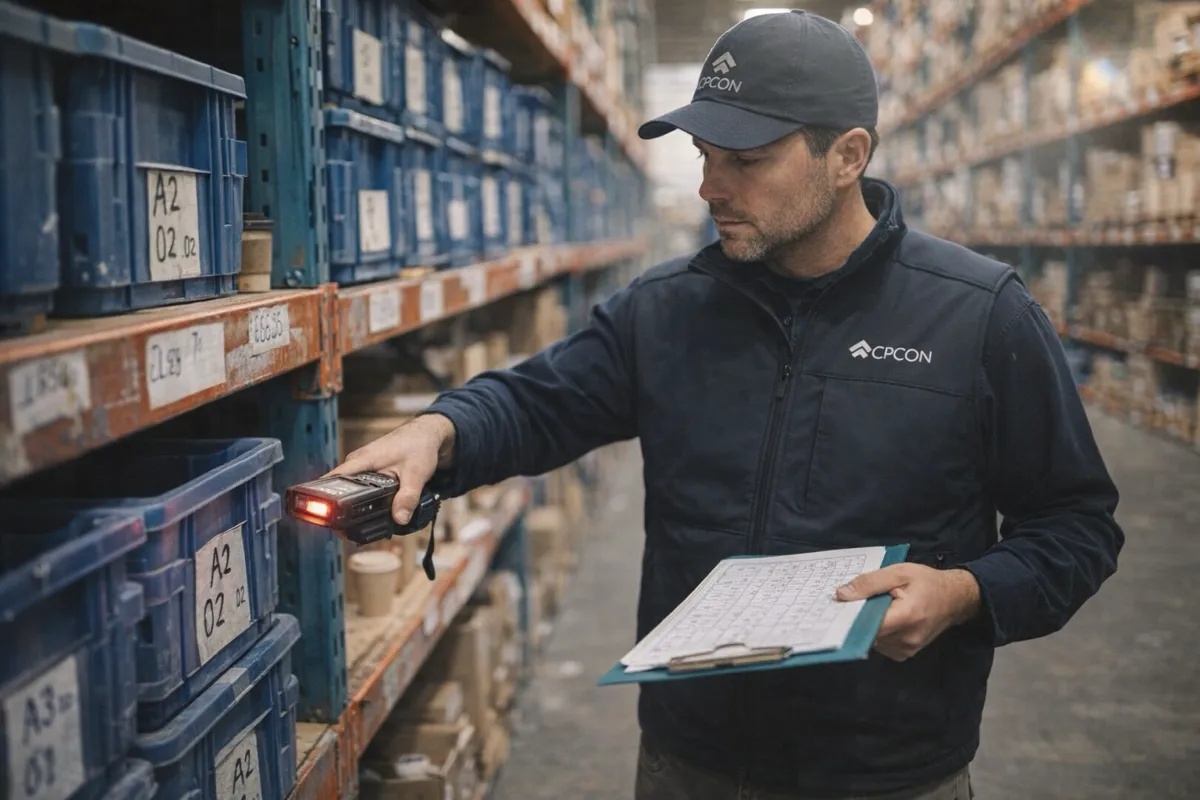
Industrial cycle count programs fail when they copy retail shelf logic into a plant. Plants and warehouses have different location structures, velocity patterns, spare-parts risk, and shutdown costs. Program design has to start from those constraints—not from a generic “count everything somehow” calendar.
This article is education for program owners. For the service overview of ABC cadence programs, see Cycle Count Program. For the shutdown-free execution offer when the line cannot stop, see Keep Running Count (soft CTA below).
Industrial constraints are not retail constraints
Industrial floors typically mix:
- Bulk and bin locations with different scan realities.
- Critical spares that rarely move but stop a line if wrong.
- High-velocity WIP or staging locations that move constantly.
- Cross-dock or marshalling areas that look “empty” on paper and full on the floor.
A cadence that only mirrors store-planogram thinking will under-count risk classes and over-count quiet bulk that barely changes.
ABC, velocity, and risk classes
Classification should reflect risk to operations and books, not only dollar value:
- A — high value, high velocity, or high line-down risk (including critical spares).
- B — moderate movement or moderate financial exposure.
- C — low movement / low risk bulk that can ride a longer interval.
Document the rules. Revisit classes when the mix changes (new product lines, seasonality, CAPEX installs). Classification without review becomes folklore.
Cadence design without invented KPIs
Cadence answers “how often,” not “what score will we hit.” A workable industrial pattern:
- Fix daily capacity (locations or hours the count crew can complete well).
- Assign A/B/C intervals that fit that capacity.
- Reserve slots for recount and exception work—do not fill 100% of capacity with first-pass counts.
- Align cadence with production calendars so keep-running counts do not collide with known freeze events.
Do not publish vanity accuracy targets in the design doc unless leadership owns a measured definition. Design for explainable variance first.
Where program design ends and shutdown-free execution begins
Program design owns classes, cadence, WMS hooks, and escalation rules. Execution owns how counts run while picks continue—cutoffs, blind counts, movement flags—covered in Cycle Counts While Picks Are Live and Shutdown vs Keep-Running Cycle Counts.
If the business constraint is “we cannot stop the line,” design alone is not enough. You need a shutdown-free operating model. For the procedure backbone, see How to Run Warehouse Cycle Counts.
When design has to run without stopping the line, see how CPCON runs a shutdown-free cycle count.
Frequently asked questions
Is this the same as the cycle count program services page?+
No. That page is the program / ABC service overview. This article teaches industrial design choices. Keep Running Count is the shutdown-free offer.
Can we skip ABC?+
You can start simple, but without risk classes the cadence usually collapses into “count whatever is convenient,” which misses critical locations.
How does this relate to wall-to-wall?+
Wall-to-wall remains the freeze event when required. A designed cycle program reduces how often you need that freeze for everyday control.
Retail shelves?+
Out of scope.