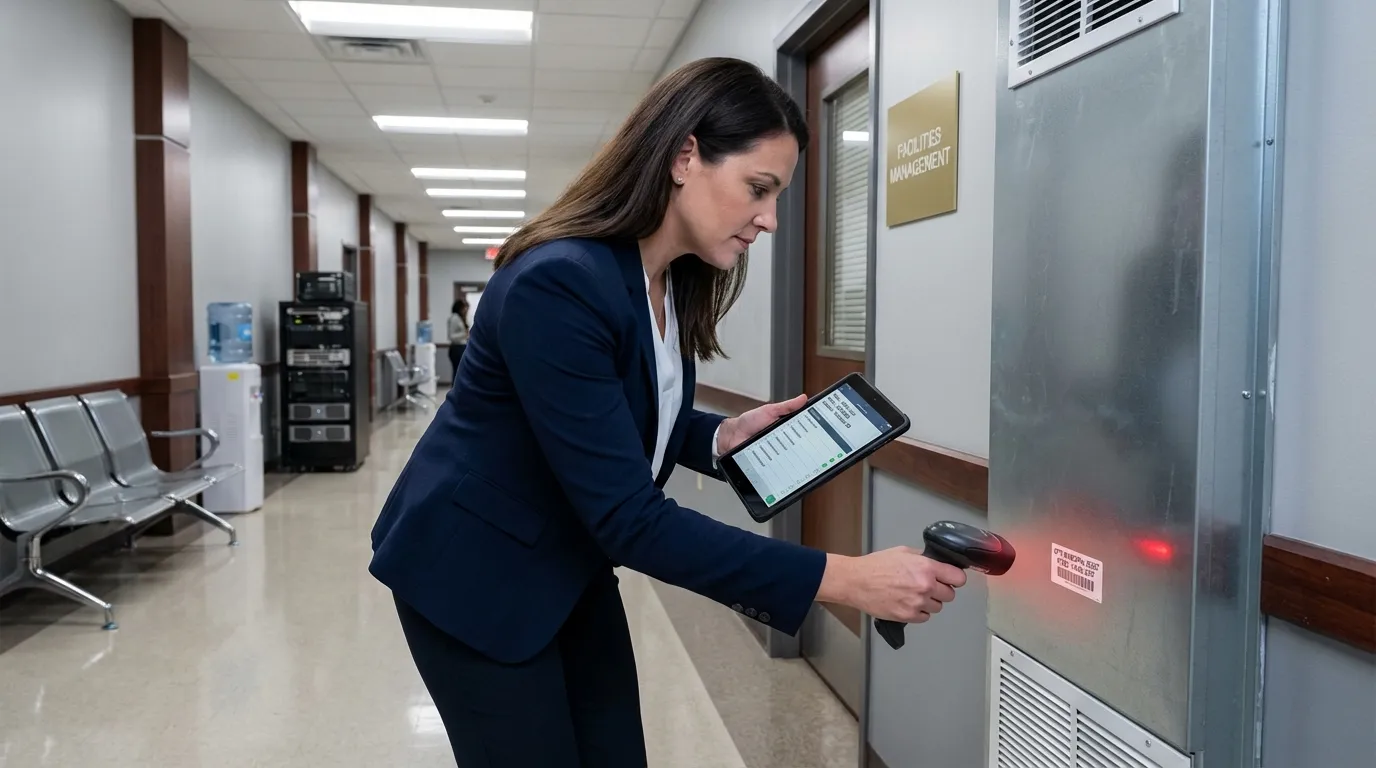
When the Governmental Accounting Standards Board issued Statement No. 34 in 1999, it fundamentally changed how state and local governments report their finances. For the first time, governments were required to report capital assets — land, buildings, equipment, infrastructure — on their government-wide financial statements, complete with accumulated depreciation. The era of ignoring the balance sheet value of public assets was over.
More than two decades later, most government entities still struggle with GASB 34 capital asset compliance. The standard itself isn't complicated. The challenge is operational: maintaining an accurate, complete, and physically verified asset register across departments that were never designed to track assets with financial precision. Fire departments, public works yards, school buildings, water treatment plants — these environments generate assets constantly and dispose of them informally.
This guide covers every aspect of GASB 34 capital asset compliance — from what the standard requires, to which assets must be reported, to the step-by-step process for conducting a compliant physical inventory. Whether you're a finance director preparing for an audit, a school district business manager reconciling technology assets, or a county administrator dealing with decades of unrecorded infrastructure, this is the practical playbook for getting it right.
In This Guide
What Is GASB 34 and Why Does It Require Capital Asset Tracking?
GASB Statement No. 34 ("Basic Financial Statements — and Management's Discussion and Analysis — for State and Local Governments") is the foundational accounting standard that requires state and local governments to report capital assets on their government-wide financial statements. Issued in 1999 with phased implementation from 2001 to 2003, it replaced the previous model where governments could ignore the value of their buildings, equipment, and infrastructure on their balance sheets.
Before GASB 34, most governments used a "modified accrual" model that treated capital asset purchases as expenditures — the money went out the door, and that was the end of the accounting. A city could build a $50 million water treatment plant and show zero assets on its balance sheet the following year. Voters, bondholders, and oversight agencies had no way to see what the government actually owned or what condition it was in.
GASB 34 changed that by requiring two levels of financial reporting:
Government-Wide Statements
Full accrual basis. Capital assets must be reported on the Statement of Net Position at historical cost less accumulated depreciation. This is where GASB 34 capital asset requirements have the biggest impact — every building, vehicle, piece of equipment, and mile of road must be accounted for.
Fund Financial Statements
Modified accrual basis for governmental funds (general fund, special revenue, etc.). Capital assets are still recorded as expenditures in fund statements, but the government-wide statements provide the full picture. Proprietary funds (utilities, enterprise operations) already used full accrual and were less affected.
The critical implication for asset management is straightforward: you can't report what you can't verify. If your government-wide Statement of Net Position shows $200 million in capital assets, your auditor expects you to prove those assets exist, are in service, and are valued correctly. That proof requires a physical asset inventory — and that's where most government entities encounter their compliance gap.
Why This Matters Now
GASB 34 has been in effect for over twenty years, but compliance challenges persist — and in some ways have intensified. Government entities now face compounding complexity from subsequent standards (GASB 51 for intangible assets, GASB 87 for leases, GASB 96 for IT subscriptions) layered on top of the original GASB 34 requirements. Each new standard adds categories of assets that must be tracked, valued, and reported. The foundation — an accurate, physically verified capital asset register — remains the starting point for all of them.
Which Assets Must Be Reported Under GASB 34?
GASB 34 defines capital assets broadly: land, improvements to land, easements, buildings, building improvements, vehicles, machinery, equipment, works of art and historical treasures, infrastructure, and all other tangible or intangible assets used in operations with initial useful lives extending beyond a single reporting period.
| Asset Category | Examples | Depreciated? | Typical Threshold |
|---|---|---|---|
| Land | Parcels, right-of-way, easements | No | All (no threshold) |
| Buildings | Offices, schools, fire stations, libraries | Yes | $25,000 - $100,000 |
| Building Improvements | HVAC systems, roofing, ADA upgrades | Yes | $10,000 - $50,000 |
| Equipment & Vehicles | Police vehicles, fire trucks, mowers, IT equipment | Yes | $5,000 - $25,000 |
| Infrastructure | Roads, bridges, water mains, sewer lines, dams | Yes (or modified approach) | $50,000 - $250,000 |
| Intangible Assets (GASB 51) | Software, water rights, patents, easements | Yes (if finite life) | $10,000 - $100,000 |
| Construction in Progress | Buildings, roads, utilities under construction | No (until placed in service) | Per underlying category |
Capitalization Thresholds
GASB 34 does not prescribe specific capitalization thresholds — each government establishes its own policy. Common ranges are $5,000 for equipment, $25,000 for buildings and improvements, and $50,000 or more for infrastructure. The threshold determines the dollar value above which an asset must be capitalized (recorded on the balance sheet) rather than expensed in the period of purchase.
Setting thresholds too low creates an administrative burden — tracking every $500 desk buries your register in low-value items. Setting them too high understates your capital assets and may draw audit scrutiny. Most government finance officers find that a $5,000 equipment threshold balances practicality with completeness.
What's Excluded
Items that don't meet capitalization thresholds, consumable supplies, items with useful lives under one year, and library collections (optional reporting) are generally excluded from capital asset reporting. However, governments must still maintain internal controls over these items — the capitalization threshold determines balance sheet treatment, not whether the government should track the asset at all.
GASB 34 Reporting Requirements for Capital Assets
The government-wide financial statements must present capital assets using full accrual accounting. This means recording the asset at its historical cost when acquired, depreciating it over its useful life, and removing it from the books when disposed.
Statement of Net Position
Capital assets appear on the Statement of Net Position (the government-wide balance sheet) at historical cost less accumulated depreciation. This net figure — often called "net capital assets" or "capital assets, net of depreciation" — typically represents the largest single line item on a government's balance sheet. For a mid-sized city, net capital assets routinely exceed $500 million.
Depreciation Requirements
GASB 34 requires governments to depreciate capital assets (except land and CIP) over their estimated useful lives. The straight-line method is used by the vast majority of government entities. Common useful life estimates include:
- Buildings: 30-50 years
- Building improvements: 10-25 years
- Vehicles: 5-10 years
- Equipment: 5-15 years
- Infrastructure (roads): 20-40 years
- Infrastructure (bridges): 40-75 years
- Water/sewer systems: 25-75 years
- Technology: 3-7 years
The Modified Approach for Infrastructure
GASB 34 offers an alternative to depreciation for eligible infrastructure assets. Under the modified approach, a government can elect to not depreciate infrastructure if it commits to maintaining the assets at a condition level it establishes and documents. The requirements are demanding:
- 1.Conduct condition assessments at least every three years using a consistent, reproducible methodology
- 2.Document that assessment results demonstrate infrastructure is being maintained at or above the condition level the government establishes
- 3.Estimate the annual amount needed to maintain the infrastructure at the established condition level
- 4.Disclose the assessed condition, target condition, and comparison of estimated vs. actual preservation spending for the past five reporting periods
In practice, relatively few governments use the modified approach. It requires a mature asset management program with documented condition assessment protocols — which is more operationally complex than simply depreciating the assets. State departments of transportation are the most common adopters, using pavement condition indices (PCI) and bridge ratings to support their condition assessments.
Required Disclosures
GASB 34 requires notes to the financial statements that disclose capital asset activity for the period, including:
- Beginning and ending balances by major asset class
- Acquisitions (additions) during the period
- Disposals and retirements during the period
- Depreciation expense by function or activity
- Capitalization policy (thresholds, useful lives, depreciation method)
- Impairment losses, if any (per GASB 42)
These disclosures create a reconciliation that auditors trace directly to the capital asset sub-ledger. If the numbers don't tie — if additions don't match capital outlay expenditures, or if disposals don't correspond to surplus property records — the auditor has a finding. The sub-ledger is only as good as the physical inventory that supports it.
The Capital Asset Inventory Challenge
If GASB 34 is the standard, the capital asset register is the evidence. And for most government entities, that evidence has gaps. Understanding why — and how large the gaps typically are — is the first step toward closing them.
Common Problems in Government Asset Registers
- Pre-GASB 34 assets: Buildings and infrastructure acquired decades before the standard was implemented, often with no historical cost records available
- Donated and contributed assets: Assets received from developers, other governments, or federal programs that were never recorded at fair value at the time of donation
- Disposed assets still on the books: Equipment that was surplused, scrapped, or transferred years ago but never removed from the register — the classic ghost asset problem
- Department-level tracking gaps: Parks, fire stations, and public works yards that acquire assets through operational budgets without notifying finance
- CIP never closed: Construction projects completed and in service but still sitting in Construction in Progress, never reclassified to the appropriate asset category
The Ghost Asset Problem in Government
Ghost assets — items on the register that no longer physically exist — are endemic in government asset tracking. Our experience across hundreds of government engagements shows ghost asset rates of 15-30% in registers that haven't been physically verified within the past five years. A school district with 10,000 capitalized assets typically finds 1,500-3,000 that can't be physically located.
The financial impact is significant. Ghost assets inflate the depreciation expense reported on government-wide statements, overstate insurance valuations (governments pay premiums on assets that don't exist), and misrepresent the entity's net position to bondholders and rating agencies.
The Retroactive Capitalization Problem
Perhaps the most challenging aspect of GASB 34 compliance is dealing with assets acquired long before the standard existed. A municipality's water system may have been built in the 1950s. A county courthouse may date to the 1920s. GASB 34 required governments to go back and capitalize these assets — determining a historical cost and accumulated depreciation for infrastructure and buildings that were never tracked as capital items.
Many governments completed this retroactive capitalization during initial GASB 34 implementation but haven't revisited the estimates since. The assumptions made 20+ years ago — useful life estimates, salvage values, component breakdowns — may no longer reflect reality. A comprehensive physical inventory is the opportunity to validate those original estimates and correct errors that have compounded over two decades.
How to Inventory Capital Assets: 6 Steps
Before diving into the financial-treatment mechanics, here is the practical, reader-facing primer: the six steps that take a capital asset inventory from a blank policy to an audit-ready register loaded back into your ERP. Each step builds on the one before it — skip the scope and policy work up front and the field count produces evidence your auditor can't use.
1. Define the Scope, Capitalization Policy, and Count Calendar
Start by deciding what counts as a capital asset before anyone walks a floor. Confirm (or write) the capitalization policy that sets dollar thresholds by category, useful-life ranges, the depreciation method, and the rule that separates a capitalizable improvement from a deductible repair. Then define scope explicitly: which funds, departments, buildings, yards, and remote sites are in this count, and whether below-threshold "controlled" items (laptops, tools, AV gear) get a parallel non-capitalized register for theft control. Set the count calendar around your fiscal year-end and audit schedule, and document who has authority to sign off on additions, disposals, and transfers. GASB 34 lets each government set its own thresholds, so the policy is the yardstick your auditor will measure the inventory results against — vague scope here is the single most common reason a count fails to produce audit-usable evidence.
2. Build the Baseline Register from Your Financial System of Record
Pull the existing capital-asset sub-ledger out of your ERP — Tyler Munis or New World, SAP Public Sector, Oracle Cloud, Workday — and treat it as the "file" side of the count. Export every field you will need to verify and reconcile against, not just the description: asset ID, tag number, serial number, category, fund, department, location/room code, acquisition date, historical cost, useful life, accumulated depreciation, and net book value. Clean the extract before fieldwork: drop test records, merge obvious duplicates, flag rows with no location, and resolve blank acquisition dates. A controller running this for a multi-site county should also map old department or building codes that have since been renamed, because a mismatch between the register's location hierarchy and the physical site map will inflate your "not found" list with assets that exist but were filed under a retired code.
3. Tag and Capture Assets in the Field with a Standard Data Set
In the field, give every in-scope asset a durable, scannable identity and capture a consistent record. Apply a barcode or RFID tag (polyester or aluminum for sheltered outdoor gear, metal-mount tags for vehicles, generators, and equipment) and, for each asset, record description, manufacturer, model, serial number, condition grade, custodian, and a photo, plus GPS or room-level location. Standardize the data set in advance so two different field teams capture the same fields the same way — inconsistent condition codes or free-text locations are what make later reconciliation slow. For government environments, use offline-capable mobile apps: pump stations, fleet yards, remote parks, and water-treatment sites rarely have reliable connectivity, and a count that depends on live signal will stall. Tagging during this pass (not as a separate later project) is what links each ERP record to a physical asset you can re-scan in future cycle counts.
4. Reconcile File-to-Floor and Floor-to-File
Run the count in both directions, because each catches a different error. File-to-floor takes every asset on the register and physically locates it — verifying description, serial, condition, and location match the record; anything that cannot be found is a candidate ghost asset. Floor-to-file walks every room, building, and yard and confirms each physical asset appears on the register — anything found that is not on the books is a "found asset," typically above threshold but never recorded (developer-contributed infrastructure, donated equipment, grant-funded purchases that bypassed procurement). File-to-floor alone leaves unrecorded assets invisible; floor-to-file alone never validates the existing register. Categorize every exception as you go: ghost asset, found asset, location correction, condition change, description fix, or serial correction — because each category triggers a different accounting entry in Step 5, and a clean exception log is the deliverable your external auditor will sample from.
5. Resolve Discrepancies, Value Found Assets, and Recalculate Depreciation
Convert the exception log into corrected financial records. Ghost assets need a disposal/retirement entry that removes both gross cost and accumulated depreciation and records any gain or loss. Found assets need a historical cost before they can be capitalized — source it from original purchase orders or vendor invoices, period insurance appraisals, grant documentation for federally funded items, deflated replacement cost using a published index (RSMeans or the BLS Producer Price Index), or comparable assets from the same era. GASB 34 expects reasonable, documented estimates rather than perfection, but the method must be consistent. Then recalculate depreciation: for newly capitalized found assets, accrue accumulated depreciation from the estimated in-service date to the current period; for existing assets whose in-service date or useful life you corrected, post the catch-up adjustment. Keep the calculation methodology with each record — auditors want the work, not just the final number.
6. Load the Verified Register and Lock in Ongoing Controls
Push the reconciled register back into the ERP with each record mapped to the correct fund, function, department, account code, and location hierarchy — not a flat spreadsheet import. Confirm the corrected capital-asset sub-ledger ties to the general ledger and that the additions and disposals you just posted reconcile to capital-outlay expenditures and surplus-property records, since that reconciliation is exactly what flows into the GASB 34 capital-asset note disclosure. A clean register decays fast without controls, so codify them in the capitalization policy and assign owners: record new acquisitions within 30 days, process disposals the moment surplus is authorized, run annual cycle counts covering 20–25% of the register, and reconcile the sub-ledger to the GL monthly. This is the difference between a one-time clean-up and a register that stays audit-ready year over year — and it is what keeps the next full count fast instead of starting from scratch.

A CPCON technician tags and scans a municipal standby generator during a Step 3 field capture.
Get a Six-Step Capital Asset Inventory Done Right
CPCON runs file-to-floor and floor-to-file counts, values found assets, recalculates depreciation, and delivers an audit-ready register mapped to Tyler Munis, SAP, and Oracle.
Request a Capital Asset InventoryHow to Conduct a GASB 34 Capital Asset Inventory
A GASB 34-compliant capital asset inventory is more rigorous than a simple equipment count. It must produce data that supports the financial statements — historical cost, in-service date, useful life, location, condition, and depreciation schedule for every capitalized asset. Here's the methodology we use across government engagements, aligned with the fixed asset verification checklist.
Define Capitalization Policy and Thresholds
Before counting anything, confirm or establish the capitalization policy. The policy should define thresholds by asset category, useful life estimates, depreciation method, component capitalization rules, and the treatment of improvements vs. repairs. If the current policy is outdated or inconsistent, this is the time to update it — your auditor will test whether the inventory results align with the stated policy.
Key decision: Will you track below-threshold items (desks, monitors, tools) in a separate non-capitalized inventory for internal control purposes? Many governments maintain two registers — capitalized assets for GASB 34 and controlled items for theft prevention.
Extract Existing Records from the Financial System
Pull the current capital asset sub-ledger from your financial system (Tyler Munis, SAP Public Sector, Oracle, etc.). This becomes the "file" in the file-to-floor reconciliation. Extract every field: asset ID, description, category, location, department, acquisition date, historical cost, useful life, accumulated depreciation, net book value, serial number, and tag number.
Clean obvious data quality issues before going to the field. Remove test records, consolidate duplicate entries, and resolve assets with missing location codes. The cleaner the extract, the more efficient the physical verification.
Physical Verification: File-to-Floor and Floor-to-File
This is the core of the inventory — physically locating every asset on the register and identifying every asset in the field. The process runs in two passes:
File-to-floor: Start with the register. For each asset on record, locate it physically. Verify the description, serial number, condition, and location match the record. If the asset can't be found, it's a potential ghost asset.
Floor-to-file: Walk every room, building, and yard. For each asset found in the field, verify it appears in the register. If it doesn't, it's a "found asset" — likely above the capitalization threshold but never recorded.
Both passes are essential. File-to-floor alone catches ghost assets but misses unrecorded items. Floor-to-file alone finds unrecorded items but doesn't validate existing records. Together, they produce a complete and verified register.
Reconcile Physical Findings Against Financial Records
After fieldwork, the reconciliation phase categorizes every discrepancy: ghost assets to be removed, found assets to be added, location corrections, description updates, condition changes, and serial number corrections. Each category requires different financial treatment. Ghost assets require a disposal entry. Found assets require historical cost determination and retroactive depreciation. This reconciliation is the deliverable your auditor will examine.
Determine Historical Cost for Previously Unrecorded Assets
Found assets — items physically present but not on the register — need a historical cost for capitalization. Methods include:
- Original purchase orders or vendor invoices (check procurement archives)
- Insurance appraisals from the acquisition period
- Deflated replacement cost using cost indices (RSMeans, BLS Producer Price Index)
- Comparable asset costs from the same era
- Grant documentation (for federally funded assets)
Calculate Accumulated Depreciation
For newly capitalized assets, calculate accumulated depreciation from the estimated in-service date to the current period. For existing assets with corrected in-service dates or useful life estimates, recalculate depreciation and record the adjustment. Your auditor will want to see the calculation methodology documented for each adjustment — not just the final number.
Load Verified Data into the Asset Management System
The verified register must be loaded back into the financial system. This isn't a simple spreadsheet import — each record needs to be mapped to the correct account codes, fund assignments, department codes, and location hierarchies within the ERP. Asset tagging (barcode or RFID) should be completed during the physical inventory so that each record in the system links to a scannable tag on the physical asset.
Implement Ongoing Tracking Procedures
A clean register is worthless if it degrades immediately. Establish procedures for recording new acquisitions within 30 days, processing disposals when surplus property is authorized, conducting annual cycle counts of 20-25% of the register, and reconciling the capital asset sub-ledger to the general ledger monthly. These procedures should be documented in the capitalization policy and assigned to specific roles.
Need Help Getting Your Capital Assets GASB 34 Compliant?
CPCON has conducted capital asset inventories for municipalities, school districts, counties, and state agencies across the United States. Our teams deliver audit-ready asset registers formatted for Tyler Munis, SAP, Oracle, and other government financial systems — complete with historical cost determination, depreciation calculations, and barcode or RFID tagging.
Request a Government Asset Inventory ProposalGASB 34 for School Districts
School districts face unique GASB 34 compliance challenges driven by the volume and variety of assets spread across dozens of buildings, the rapid turnover of technology equipment, and the complexity of grant-funded asset tracking. K-12 districts typically manage 5,000-50,000 capitalized assets depending on size — and technology refresh cycles mean the register is constantly changing.
Technology Assets
The proliferation of 1:1 device programs has created a tracking challenge that didn't exist when GASB 34 was written. A district with 10,000 students may have 10,000 Chromebooks or iPads, each with a 3-5 year useful life and a unit cost of $300-$500. Whether these are capitalized individually depends on the district's threshold — most districts with a $5,000 threshold expense them individually but may capitalize them as a group purchase above the threshold. Interactive displays (smartboards), networking infrastructure, and server equipment typically exceed capitalization thresholds individually.
Facility Assets
School buildings contain significant capital assets beyond the building itself: HVAC systems, boilers, commercial kitchen equipment, playground structures, auditorium systems, and portable/modular classroom buildings. Many of these are componentized — a school's HVAC system may be capitalized separately from the building shell, with its own useful life and depreciation schedule. Tracking which components have been replaced vs. which are original construction requires field verification.
Vehicle Fleets
School bus fleets represent a major capital asset category. A district with 100 buses has $8-15 million in fleet assets, each with detailed records required: VIN, chassis year, body year (they're often different), mileage, condition, and remaining useful life. Buses transferred between districts, leased from cooperatives, or acquired through state programs each have different cost basis and tracking requirements.
Grant-Funded Asset Tracking
Assets purchased with federal grant funds — Title I, Title II, E-Rate, IDEA, ESSER — carry additional tracking requirements beyond GASB 34. Federal regulations (2 CFR 200) require grantees to maintain records that include the federal award identification, acquisition date, cost, percentage of federal participation, location, condition, and disposition data. These requirements layer on top of GASB 34 and must be maintained for the useful life of the asset plus three years.
For a comprehensive look at education-sector asset management, see our education industry solutions.
GASB 34 for Municipalities and Counties
Municipalities and counties face the broadest range of GASB 34 capital asset categories of any government type. A mid-sized city manages everything from police cruisers to wastewater treatment plants, from park playground equipment to fiber optic networks. The infrastructure reporting requirement — unique to GASB 34 — hits municipalities and counties hardest because they own and maintain the roads, bridges, water systems, and sewer networks that citizens rely on daily.
Infrastructure Reporting
Infrastructure is often the largest capital asset category on a municipality's books. A city with 500 miles of roads, 200 miles of water mains, and 150 miles of sewer lines may have $1-3 billion in infrastructure assets. GASB 34 gave Phase 1 governments (revenues over $100 million) until fiscal year 2007 to retroactively report major infrastructure. Phase 2 and Phase 3 governments were encouraged but not required to report infrastructure retroactively.
The challenge is valuation. How do you determine the historical cost of a road built in 1965? Of a water main installed in 1940? Governments use deflated replacement cost methods — estimating current replacement cost and adjusting backward using construction cost indices. The methodology is acceptable to auditors but requires documentation and consistency.
Modified Approach vs. Depreciation for Infrastructure
Municipalities must decide whether to depreciate infrastructure assets or use the modified approach. Most choose depreciation because it's simpler — you set a useful life and the math runs automatically. The modified approach requires active condition assessment programs (pavement management systems, pipe condition assessments, bridge inspections) that many smaller municipalities don't have the resources to maintain consistently.
Larger cities and counties with established public works departments may benefit from the modified approach, especially for road networks where condition data is already collected through pavement management systems. The key advantage: under the modified approach, preservation spending is expensed rather than capitalized, which simplifies the accounting for routine road maintenance and rehabilitation.
Public Safety Assets
Police vehicles, fire apparatus, ambulances, communication systems, body cameras, weapons, and protective equipment represent a significant and rapidly depreciating asset category. Fire trucks alone can cost $500,000-$1.5 million each with 15-20 year useful lives. Radio communication systems — often shared across police, fire, and EMS — may represent $10-50 million in infrastructure that spans multiple departments and funding sources.
Park and Recreation Assets
Parks departments manage a diverse asset portfolio: playground equipment, athletic field lighting, pool systems, trail infrastructure, recreation center equipment, and maintenance vehicles. Many of these assets are donated by community organizations or constructed through volunteer projects, making historical cost determination challenging. Donated assets must be recorded at fair value at the time of donation — a requirement frequently missed.
Utility Plant Assets
Municipal utilities (water, sewer, electric, gas) typically operate as enterprise funds and were already using full accrual accounting before GASB 34. However, the requirement to report these assets on the government-wide statements — and to reconcile them with the utility fund statements — creates an additional layer of tracking. Utility plant assets are often the most valuable and longest-lived assets on the government's books, with water treatment plants, pump stations, and distribution networks spanning 50-75 year useful lives.
Common GASB 34 Compliance Pitfalls
After conducting hundreds of government asset inventories, we see the same compliance failures repeatedly. These aren't obscure technical violations — they're fundamental gaps that lead to qualified audit opinions and financial misstatements.
1. Not Conducting Regular Physical Inventories
The most common and consequential pitfall. Many governments haven't physically verified their capital assets since initial GASB 34 implementation — over 20 years ago. The register drifts further from reality every year. Auditors increasingly demand physical verification evidence, and "we've always reported it this way" is not a defense for a register full of ghost assets.
2. Failing to Record Donated or Contributed Assets
Developer-contributed infrastructure (roads, utilities in new subdivisions), donated vehicles from other agencies, and grant-funded equipment frequently bypass the normal procurement process and never get recorded. GASB 34 requires these assets to be recorded at fair value at the time of donation. Missing them understates capital assets and net position.
3. Inconsistent Capitalization Thresholds Across Departments
Public works capitalizes equipment over $10,000. The police department uses $5,000. Parks uses $25,000. Without a unified policy enforced across all departments, the register is inconsistent and the disclosure note is inaccurate. One threshold, one policy, applied everywhere — auditors test for this.
4. Not Depreciating Assets Properly
Common errors: using incorrect useful life estimates, not beginning depreciation when the asset is placed in service (especially CIP that's been in use for years), not adjusting depreciation when assets are improved or impaired, and applying depreciation to land. Each error compounds annually and distorts the Statement of Net Position.
5. Missing Infrastructure Asset Records
Many Phase 2 and Phase 3 governments never fully capitalized their infrastructure networks. Roads, bridges, water and sewer systems may be on the books at estimated values from initial implementation — or may not be on the books at all. As these assets age and require major rehabilitation, the accounting implications of missing or inaccurate records become increasingly significant.
6. Not Updating the Register for Disposals
Surplus property sales, trade-ins, casualty losses, and equipment taken out of service must all be recorded as disposals. Many governments have no formal process for notifying finance when an asset leaves service. The result: ghost assets accumulate, overstating both gross assets and accumulated depreciation, and potentially affecting the reported gain or loss on disposal.
7. CIP Not Closed to Asset Categories
Construction in Progress should be reclassified to the appropriate asset category (buildings, infrastructure, improvements) when the project is substantially complete and the asset is placed in service. CIP that remains open for years after the building is occupied or the road is in use represents a misstatement — the asset isn't being depreciated, and the CIP balance is overstated.
Technology for Government Capital Asset Tracking
The right technology makes the difference between a one-time inventory project and a sustainable asset management program. Government environments have specific requirements — multiple locations, outdoor assets, restricted areas, and integration with government-specific financial systems.
Barcode Tagging
The most cost-effective solution for government asset tracking. Polyester or aluminum barcode labels withstand indoor and sheltered outdoor environments. Scanners range from smartphone apps to rugged industrial handhelds. Read our RFID vs. barcode cost comparison.
Best for: Office equipment, vehicles, IT assets, indoor facility equipment
RFID Tagging
RFID tags enable bulk scanning without line-of-sight. A reader can capture all tagged assets in a room in seconds. Passive UHF tags are increasingly cost-effective for government applications. Metal-mount tags work on equipment and vehicles.
Best for: High-density environments, ongoing cycle counts, assets in hard-to-reach locations
Mobile Verification Apps
Cloud-connected mobile apps allow field teams to scan tags, capture photos, record GPS coordinates, and update asset records in real time. Offline capability is essential for government sites without reliable connectivity — maintenance yards, pump stations, remote parks.
Critical for: Multi-site governments with dispersed assets
Financial System Integration
Verified asset data must flow into the government's financial system. Common government ERP platforms include Tyler Technologies (Munis, New World), SAP Public Sector, Oracle Cloud for Government, and Workday. The integration should map asset records to the correct fund, function, department, and account codes automatically.
Key requirement: Bi-directional sync so financial system changes (disposals, transfers) update the tracking system
The technology investment pays for itself in audit efficiency. Governments with barcode or RFID-tagged assets and scanning capability can respond to auditor sample requests in hours instead of days — pulling up the asset record, last scan date, photo evidence, and location history instantly. This audit readiness alone justifies the technology cost for most government entities. Learn more about our asset verification methodology and how technology integrates with the physical count process.
Frequently Asked Questions
How often should government entities conduct a physical capital asset inventory?
GASB does not mandate a specific frequency, but best practice calls for a full physical inventory every 2-3 years supplemented by cycle counts of 15-25% of assets annually. Many state auditors recommend annual verification for high-value equipment and biennial counts for infrastructure and buildings. Any major event — merger, bond issuance, leadership change, or audit finding — should trigger a full count regardless of schedule.
What is the difference between GASB 34 and GASB 87?
GASB 34 (issued 1999) established comprehensive financial reporting requirements for state and local governments, including the requirement to report capital assets on government-wide financial statements with depreciation. GASB 87 (issued 2017, effective 2022) specifically addresses lease accounting, requiring governments to recognize lease assets and liabilities on their financial statements. GASB 34 covers owned capital assets; GASB 87 covers leased assets. Both affect the Statement of Net Position but apply to different asset categories.
Does GASB 34 require depreciation of all capital assets?
No. GASB 34 requires depreciation of most capital assets, but land and certain land improvements are not depreciated because they have unlimited useful lives. Construction in progress (CIP) is also not depreciated until the asset is placed in service. Additionally, governments can elect the modified approach for eligible infrastructure assets, which replaces depreciation with condition assessment and preservation spending disclosures — but only if the government maintains the infrastructure at or above a condition level it establishes and documents.
What is the modified approach for infrastructure assets?
The modified approach is an alternative to depreciation for eligible infrastructure assets under GASB 34. Instead of recording depreciation expense, a government commits to maintaining the infrastructure at a condition level it establishes. Requirements include: performing condition assessments at least every three years using a consistent measurement scale, documenting that the results show the infrastructure is being maintained at or above the established condition level, and estimating the annual amount needed to maintain the assets at that level. If these conditions are met, preservation costs are expensed rather than capitalized, and no depreciation is recorded.
How do you determine historical cost for assets acquired before GASB 34?
For assets acquired before GASB 34 implementation where original records are unavailable, governments can use several methods: original purchase records from archived files or vendor records, insurance appraisals from the acquisition period, deflated replacement cost (current replacement cost adjusted backward using construction or equipment cost indices like RSMeans or the Bureau of Labor Statistics Producer Price Index), or estimated cost based on comparable assets acquired in the same era. GASB requires reasonable estimates — perfection is not expected — but the methodology must be documented and consistently applied.
What are the consequences of non-compliance with GASB 34?
Non-compliance can result in a qualified or adverse audit opinion on the government's Comprehensive Annual Financial Report (CAFR/ACFR), which directly affects bond ratings and borrowing costs. Specific consequences include: higher interest rates on municipal bonds (rating agencies view poor financial reporting as a governance risk), difficulty issuing new debt, state oversight or intervention (some states require GASB compliance for revenue sharing), loss of grant eligibility (federal grantors may require clean audits), and reputational damage with taxpayers and oversight bodies. The financial impact of a single bond rating downgrade typically far exceeds the cost of compliance.
Request a Capital Asset Inventory Proposal
CPCON has conducted GASB 34 capital asset inventories for municipalities, school districts, counties, and state agencies across the United States. Our teams deliver audit-ready asset registers with full reconciliation to your financial system — including historical cost determination, depreciation recalculation, and barcode or RFID tagging for every verified asset.
Your auditor expects a capital asset register that ties to reality. We make sure it does.
Related Resources
Fixed Asset Verification: 50+ Step Checklist
Printable checklist for planning, executing, and reporting on physical asset verification.
GASB 87 & IFRS 16 Lease Accounting Guide (2026)
How lease accounting standards affect government and corporate asset reporting alongside GASB 34.
Ghost Asset Detection: Find Millions in Missing Assets
How to identify and eliminate phantom asset records inflating your register and insurance costs.