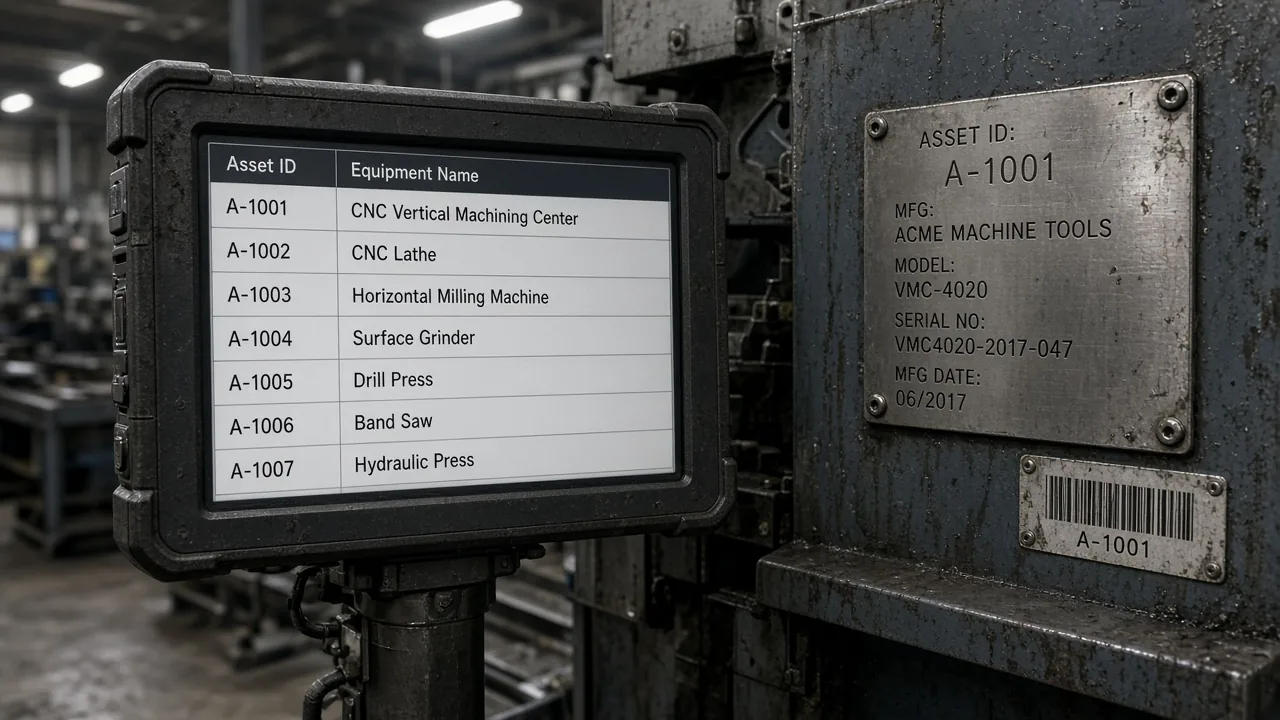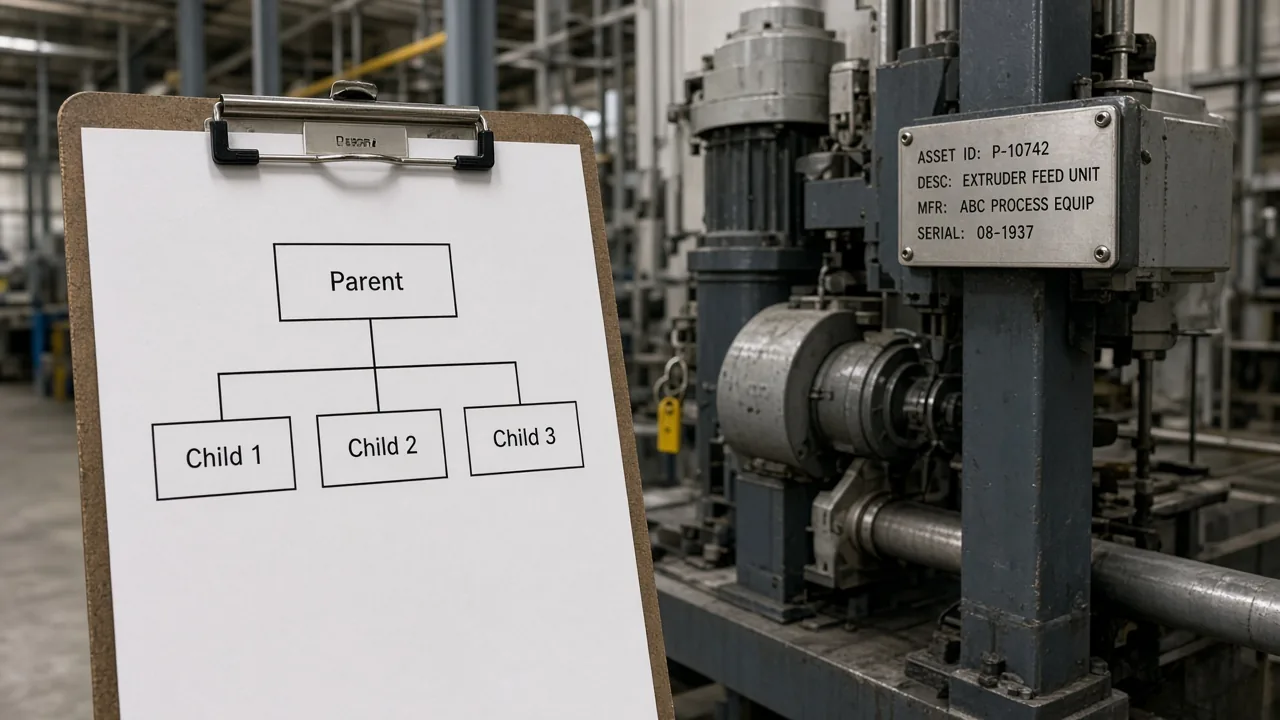
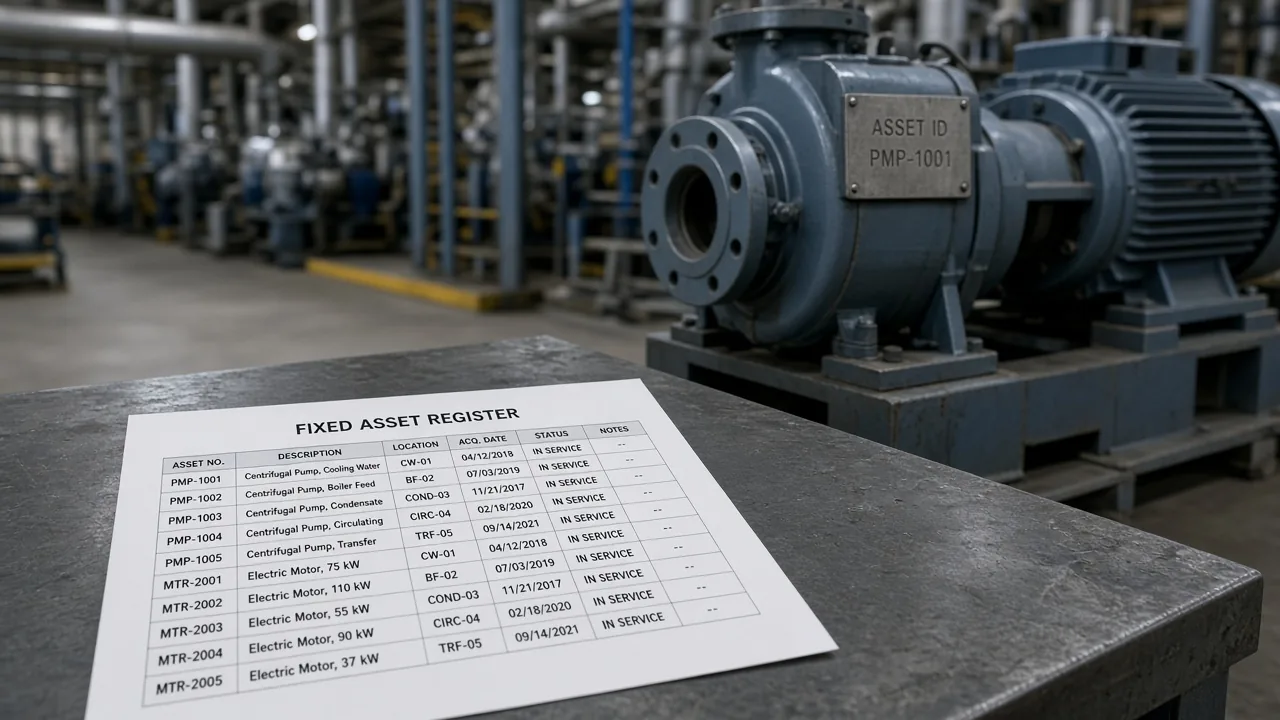
Fixed asset tagability is a control-design choice: which capitalized PPE classes need a durable physical identifier so floor teams can support existence evidence—and which classes are better tracked by GIS, title packets, meter registers, serials already controlled in ITAM/CMMS, or contractual schedules. It is not a recognition rule. Controllers who treat “tag everything” as GAAP or IFRS often over-tag structures that never get walked, or under-document the compensating controls that untagged classes still need under ICFR.
This article stays on criteria and evidence—not tagging services, not barcode/RFID install how-tos, and not a full SOX 404 walkthrough. For operational tag standards once a class is must-tag, see the asset tagging guide. For how existence evidence sits inside ICFR for PPE, see fixed asset existence assertion and SOX 404. For book-without-floor remediation patterns, see ghost asset detection.
Tagability is a control-design choice, not a recognition rule
(a) IAS 16 does not prescribe the unit of measure for recognition—judgment applies (IAS 16.9). (a) ASC 360 frames depreciation around a “unit (which may be a group of assets)” in a systematic and rational manner and treats depreciation as allocation, not valuation (ASC 360-10-35-4). Neither standard defines “tagability,” barcodes, or RFID programs, and neither requires a metal plate or sticker on PPE.
(a) What does speak to records and unauthorized acquisition, use, or disposition of assets is the SEC’s ICFR definition (Exchange Act Rules 13a-15(f) / 15d-15(f), as quoted in FR-77): policies and procedures that maintain records accurately reflecting transactions and dispositions of assets, and that provide reasonable assurance regarding prevention or timely detection of unauthorized acquisition, use, or disposition that could materially affect the financial statements.
So the useful question is not “does IAS 16 / ASC 360 require a tag?”—they do not (a)—but “for this class, what existence and completeness controls will management rely on, and is a physical tag the right identifier for those controls?” (c)
Assertions first
Before scoring a class for must-tag vs other means, name the financial reporting risks for PPE (gross, net book value, depreciation, disposals) against the assertions in (a) PCAOB AS 1105.11:
| Assertion (a) | Plain meaning for the FA register |
|---|---|
| Existence or occurrence | Recorded assets exist at a given date |
| Completeness | Assets and transactions that should be recorded are included |
| Valuation or allocation | Cost, accumulated depreciation, and impairments are appropriate |
| Rights and obligations | The entity holds or controls rights to the assets |
| Presentation and disclosure | Classification, description, and disclosures are proper |
(a) SEC FR-77 links physical count controls directly to the existence assertion (inventory example). The same design logic applies when management relies on physical verification for movable PPE. (a) AS 1105.15–.16: inspection includes physically examining an asset; observation evidence (for example, of a count) is limited to that point in time.
A tag-plus-register program can support identity matching for existence and, with a defined population and cut-off, help completeness testing. It cannot alone prove net book value, impairment conclusions, or legal title (a)/(c)—those need accounting evidence and title/lease/purchase documentation.
Must-tag vs other means (qualitative matrix)
(c) Use a workshop matrix by asset class. Capitalization thresholds are entity policy, not amounts prescribed by IAS 16 or ASC 360. Do not invent a universal dollar floor.
| Lean must-tag (or equivalent unique ID on the asset) (c) | Lean other means (c) |
|---|---|
| Discrete, physically separable object | Structural, buried, land, or otherwise not walkable as a unit |
| Movable, stealable, or redeployable without a system notice | Relocation risk is low; engineering or title evidence dominates |
| Physical verification is a primary existence control for the class | Primary existence evidence is title packet, GIS/drawing ID, meter register, or engineering survey |
| Unit is individually meaningful for retirements and custody | Individually insignificant items that policy aggregates ((a) IAS 16.9 allows aggregation of individually insignificant items) |
| Need to retire or replace this unit without guessing NBV | Group/composite retirements acceptable under an elected US GAAP policy (b) |
| OEM serial not already controlled in a system that reconciles to the FA register | Unique serial/VIN already controlled in ITAM/CMMS and reconciled 1:1 to the register (serial may serve as the digital ID) |
(a) Nothing in IAS 16 or ASC 360 requires a tag. (a) SEC ICFR still requires records of asset transactions/dispositions and controls over unauthorized acquisition, use, or disposition—so untagged classes need named alternative controls, not silence.
(b) Physical verification remains the classic existence-control analogy (FR-77 inventory example; Big 4 practice commonly pairs a maintained FA register with physical verification for movable PPE). That is opinion and control design, not a recognition mandate.
What a floor count can and cannot prove
A tagged floor count or scan is powerful inside its design—and oversold outside it.
Can support (c) (tied to (a) existence / observation limits)
- Existence of observed tagged items at the observation date
- Book↔floor matching for a defined population and cut-off
- Location / custodian at a point in time ((a) AS 1105.16)
- Ghost detection when testing book→floor (book without floor)
- Unrecorded items when testing floor→book inside the tagged population you chose to walk
Cannot alone support (c)
- Correct historical cost, accumulated depreciation, or residual value (valuation)
- Impairment conclusions
- Legal title or liens (rights—tags show custody/location, not ownership)
- Completeness of unscoped or untagged assets
- Continuous existence throughout the period
- That capitalization vs expense decisions were correct
Completeness trap (c): Book→floor finds ghosts. Floor→book finds unrecorded assets only inside the population you walked. Untagged or bulk classes still need CAPEX-to-register, CIP close, and purchase cut-off controls tied to (a) ICFR recordkeeping requirements. Pair floor work with those completeness controls—do not treat a successful tagged count as proof that every owned asset entered the register.
For patterns when book and floor diverge, see ghost asset detection. For how existence evidence is framed under ICFR for PPE, see fixed asset existence assertion and SOX 404.
Evidence pack for class decisions
(c) For each material asset class, retain a short evidence pack so the tagability call survives audit and management change:
- Tagability matrix row — answers to the must-tag vs other-means questions above
- Named existence control — tagged count/scan or documented alternative (GIS extract, title file review, meter register, engineering survey)
- Named completeness control — CAPEX-to-register (and CIP close where relevant) for the class
- Link to capitalization policy — threshold and aggregation rules (entity policy)
- Owner and date — Controller / FA lead sign-off
- Exception list — assets at/above threshold but untagged, each with a compensating control
Register fields should make the decision operational: unique asset number, subnumber when components are tracked, Tag ID or an explicit “untagged-alt” flag, description, class, location, cost and depreciation attributes, source-document references, status (active / idle / held-for-sale / retired), and last physical-verify date/result (c). (a) ICFR requires records that accurately reflect transactions and dispositions—status and retirement documentation matter as much as tags.
Explicit: IAS 16 and ASC 360 do not mandate tags
Re-state the boundary so content and search stay de-conflicted:
- (a) IAS 16 and ASC 360 set recognition, measurement, depreciation, and (for IFRS) componentization rules. They do not require physical tags.
- (a) IFRS requires significant-cost parts to be depreciated separately when lives or patterns differ (IAS 16.43–47); US GAAP permits but does not require component depreciation (a)/(b) — see KPMG, IFRS vs. US GAAP: PP&E Component approach (2023) and EY, US GAAP versus IFRS: The basics (Dec 2024 component note) (b). Subnumbering (parent/child) is an implementation choice to operationalize that policy—not a synonym for “must tag.”
- Tagging is an ICFR / operational evidence mechanism for identity, custody, and physical verification—not a recognition criterion (a)/(c).
- Once a class is must-tag, durable ID standards and floor procedures belong in methods—see the asset tagging guide—without turning this criteria page into a technology how-to.
Closing — related Insights (educational)
Use the matrix, name the assertions, document alternatives for untagged classes, and keep floor-count claims inside what observation can prove. Continue with:
- Asset tagging guide — how to identify and track tagged populations once criteria say must-tag
- Fixed asset existence assertion and SOX 404 — existence evidence in an ICFR framing (not a full 404 playbook)
- Ghost asset detection — book→floor patterns when register lines lack floor support
FAQ
Does IAS 16 or ASC 360 require physical tags on fixed assets?
No. (a) Neither standard mandates tags, barcodes, or RFID. Tagability is a control-design and ICFR evidence choice. Recognition and unit-of-measure judgment sit in IAS 16.9 / ASC 360 depreciation framing; tags are not recognition criteria.
Is “fixed asset tagability” the same as buying tagging services?
No. This article is informational criteria: when a class should carry a physical (or reconciled serial) ID versus GIS, title, or other means. It is not a services pitch and not a barcode/RFID installation guide.
What can a floor count prove for existence?
(a)/(c) Point-in-time existence and book↔floor match for a defined tagged population. It does not prove valuation, rights/title, impairment, period-long existence, or completeness of assets you never scoped.
Do untagged assets fail SOX?
Not automatically. (a) ICFR requires appropriate records and controls over unauthorized acquisition, use, or disposition. Untagged classes need named alternative existence/completeness controls and documentation. Silence is the failure mode—not the absence of a sticker by itself.
How is this different from a full SOX 404 walkthrough?
This page stops at tagability criteria, assertion mapping, floor-count limits, and the class evidence pack. It does not walk entity-level vs transaction-level testing plans or AS 2201 procedures end-to-end. Use the existence-assertion Insights article for ICFR framing of PPE existence; keep full 404 design with your SOX team.
When should we use GIS, title, or serial tracking instead of a physical tag?
(c) When the item is not discrete/walkable, when physical verification is not the primary existence control, or when a unique serial is already controlled and reconciled to the FA register. Document the alternative control on the tagability matrix row.