Real-Time WIP Tracking: A Lean Manufacturing Essential
How real-time work-in-process visibility eliminates waste, reduces cycle times, and drives continuous improvement in lean manufacturing environments.
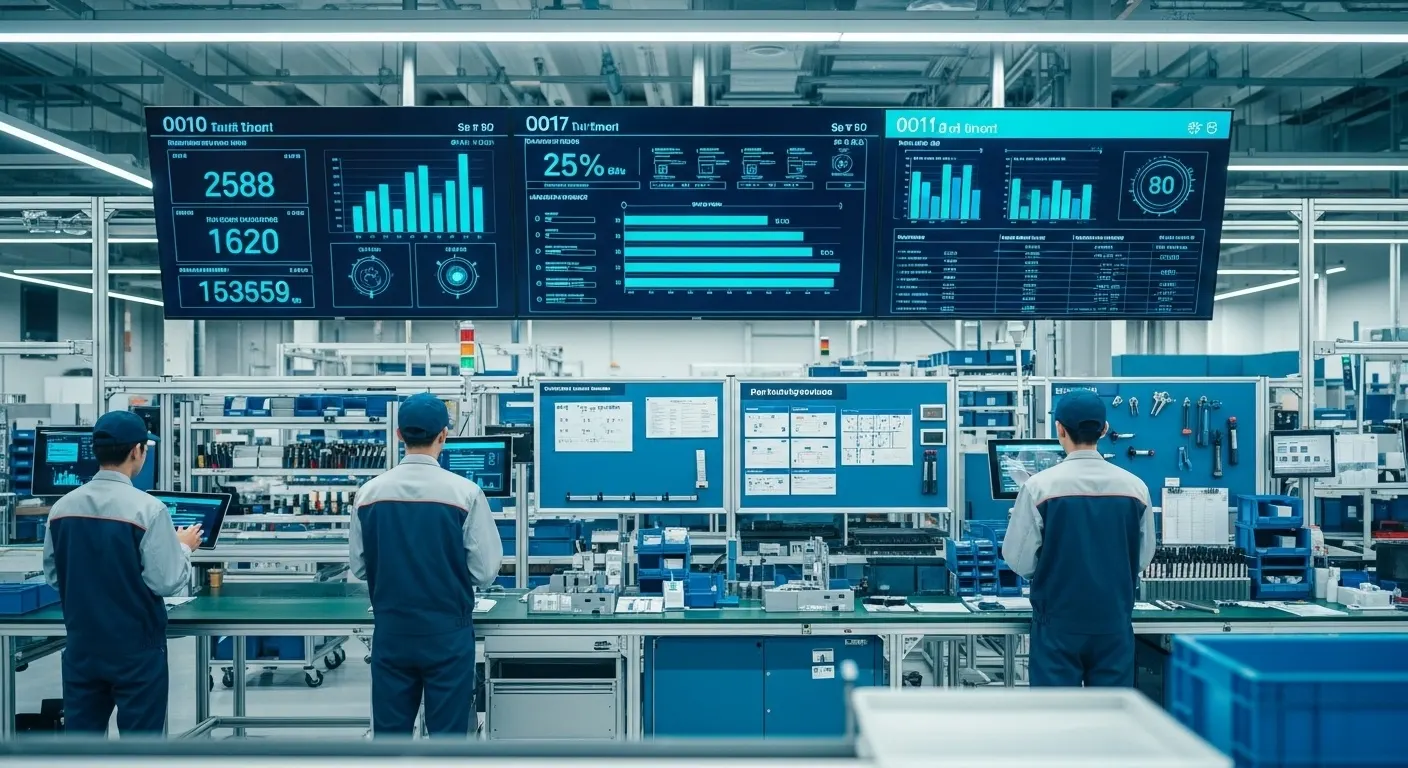
In lean manufacturing, visibility is everything. The ability to see exactly where every work-in-process item is located, how long it's been there, and what's happening to it in real‑time is fundamental to eliminating waste and optimizing flow. Yet many manufacturers still rely on manual tracking methods that provide only periodic snapshots of WIP status, leaving them blind to bottlenecks, delays, and inefficiencies as they occur.
Real‑time WIP tracking transforms this paradigm by providing continuous visibility into production flow, enabling immediate response to problems and data‑driven decision making. This article explores how real‑time WIP tracking supports lean manufacturing principles and delivers measurable operational improvements.
The Lean Manufacturing Imperative
Lean manufacturing is built on the principle of eliminating waste—anything that doesn't add value from the customer's perspective. The seven wastes of lean (overproduction, waiting, transportation, over‑processing, inventory, motion, and defects) all manifest in WIP management:
The Seven Wastes in WIP Management
- 1.Overproduction: Making more than needed or before it's needed, tying up capital and space
- 2.Waiting: WIP sitting idle between operations, extending cycle times
- 3.Transportation: Unnecessary movement of WIP between locations
- 4.Over-processing: Doing more work than required or using more complex processes than necessary
- 5.Inventory: Excess WIP beyond what's needed for smooth flow
- 6.Motion: Unnecessary movement by workers searching for WIP or materials
- 7.Defects: Quality issues not caught until later stages, requiring rework
Without real‑time visibility, these wastes remain hidden or are discovered too late to prevent their impact. Real‑time WIP tracking makes waste visible immediately, enabling rapid countermeasures and continuous improvement.
How Real-Time WIP Tracking Works
Real‑time WIP tracking systems use automatic identification technologies to capture WIP movement and status without manual intervention:
Barcode Scanning
Workers scan barcodes at each process step, providing transaction‑level visibility. Cost‑effective and reliable, but requires manual scanning action.
RFID Technology
Passive or active RFID tags enable automatic tracking as WIP moves through read zones. No line‑of‑sight required, can read multiple items simultaneously.
Vision Systems
Computer vision and AI identify and track WIP items automatically. Ideal for high‑speed lines or when tags aren’t feasible.
IoT Sensors
Environmental sensors monitor conditions (temperature, humidity, vibration) alongside location, critical for sensitive products.
The captured data flows to a central system that provides real‑time dashboards, alerts, and analytics, giving everyone from operators to executives visibility into production status.
Key Benefits for Lean Manufacturing
1. Immediate Bottleneck Detection
Real‑time tracking reveals bottlenecks as they form, not hours or days later. When WIP accumulates at a workstation, the system alerts supervisors immediately, enabling rapid response before the bottleneck impacts downstream operations.
Case Example:
An automotive parts manufacturer reduced average bottleneck resolution time from 4.2 hours to 18 minutes by implementing real‑time WIP alerts. Annual throughput increased 12% without adding capacity.
2. Reduced Cycle Time
By making wait times visible, real‑time tracking drives cycle time reduction. Teams can see exactly how long WIP sits between operations and focus improvement efforts on the longest delays.
Typical Cycle Time Improvements:
- 20-35% reduction in total cycle time within first year
- 40-60% reduction in queue time between operations
- 15-25% improvement in on‑time delivery performance
3. Lower WIP Inventory Levels
Real‑time visibility enables tighter control of WIP levels. Instead of maintaining safety stock to buffer against uncertainty, manufacturers can operate with lower WIP because they know exactly where everything is and can respond quickly to variations.
Financial Impact:
A medical device manufacturer reduced WIP inventory by 42% ($3.2M) while improving service levels from 94% to 98%. The freed capital funded expansion into new product lines.
4. Enhanced Quality Control
Real‑time tracking enables immediate quality issue containment. When a defect is discovered, the system can instantly identify all affected WIP, preventing defective items from progressing further through production.
Complete traceability also supports root cause analysis by providing detailed history of each item's path through production, including process parameters, operators, and timing.
5. Improved Resource Utilization
With real‑time visibility into WIP location and status, supervisors can dynamically allocate labor and equipment to where it's needed most. This flexibility prevents idle time and ensures resources are always working on the highest‑priority items.
Implementation Approach
Successful real‑time WIP tracking implementation follows a phased approach that minimizes disruption while building capability:
Phase 1: Value Stream Mapping (Weeks 1-2)
Map current state WIP flow to identify critical tracking points and pain points. Engage operators and supervisors to understand current challenges and define requirements.
Deliverable: Current state map with tracking point requirements and success metrics
Phase 2: Pilot Implementation (Weeks 3-8)
Deploy tracking technology in a single production line or cell. Test hardware, software, and processes. Train operators and refine based on feedback.
Deliverable: Proven system design and implementation playbook
Phase 3: Rollout (Weeks 9-20)
Expand to additional lines and areas using lessons learned from pilot. Implement in waves to manage change and maintain production continuity.
Deliverable: Full facility coverage with real‑time WIP visibility
Phase 4: Optimization (Weeks 21+)
Use data to drive continuous improvement. Implement advanced analytics, predictive alerts, and integration with other systems (ERP, MES, quality).
Deliverable: Mature system with advanced capabilities and documented ROI
Critical Success Factors
Operator Buy‑In
Operators must understand how the system helps them, not just management. Involve them early, address concerns, and demonstrate value through quick wins.
Actionable Dashboards
Data is only valuable if it drives action. Design dashboards that clearly show what's normal vs. abnormal and what action is needed.
System Integration
Real‑time WIP data becomes exponentially more valuable when integrated with ERP, MES, and quality systems. Plan integration from the start.
Continuous Improvement Culture
The system provides visibility, but people must act on it. Establish daily management routines that use real‑time data to drive improvement.
Metrics That Matter
Track metrics that align with lean principles: cycle time, WIP turns, first‑pass yield, on‑time delivery. Avoid vanity metrics that don’t drive behavior.
ROI Calculation Example
Here's a realistic ROI calculation for a mid‑sized manufacturer implementing real‑time WIP tracking:
Implementation Costs (Year 1)
Annual Benefits
Conclusion
Real‑time WIP tracking is no longer a luxury for lean manufacturers—it's a necessity. The ability to see production flow as it happens, identify problems immediately, and make data‑driven decisions in real‑time is fundamental to competing in today's manufacturing environment.
The technology has matured to the point where implementation is straightforward and ROI is compelling. Manufacturers who embrace real‑time WIP tracking gain significant competitive advantages through lower costs, faster cycle times, higher quality, and greater flexibility.
The question is no longer whether to implement real‑time WIP tracking, but how quickly you can deploy it to start capturing benefits. In lean manufacturing, every day of delay is a day of waste that could have been eliminated. Explore CPCON's RFID tracking systems for real-time production visibility, and learn about inventory services designed for manufacturing environments.
Ready to Implement Real-Time WIP Tracking?
Our team has helped hundreds of manufacturers implement real‑time WIP tracking systems that deliver measurable results. Let's discuss how we can support your lean manufacturing journey.