Radio Frequency Identification (RFID) is one of the most transformative technologies in modern asset management and supply chain operations. Understanding the RFID meaning — what it is, how it works, and what it costs — is essential for any organization looking to replace manual processes with automated identification and real-time visibility. This guide covers everything from basic RFID technology fundamentals to advanced implementation strategies for inventory management, warehouse operations, and enterprise asset tracking.
What Is RFID? Understanding the RFID Meaning
RFID stands for Radio Frequency Identification — a wireless technology that uses electromagnetic fields to automatically identify and track tags attached to objects. Unlike barcode systems that require direct line-of-sight scanning, RFID enables automatic identification of hundreds or thousands of items simultaneously without visual contact.
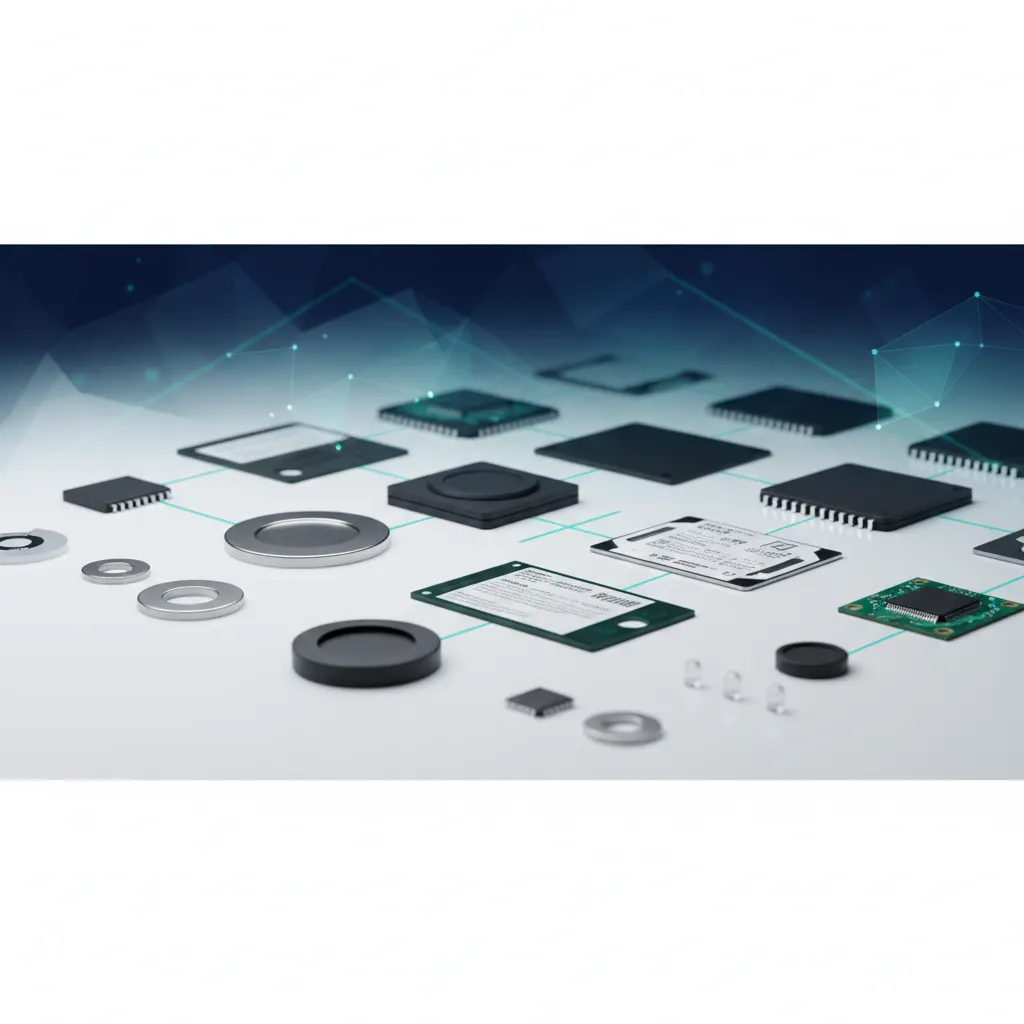
At its core, an RFID system consists of three components: tags (transponders) attached to objects, readers (interrogators) that emit and receive radio signals, and software that processes the captured data. Each tag contains a Radio Frequency Integrated Circuit (RFIC) — the tiny microchip that stores and transmits data — plus an antenna. When an RFID reader sends out radio waves, any tag within range responds by transmitting its stored data — typically a unique identifier linked to a record in a central database.
The technology has been in commercial use since the 1990s but has accelerated dramatically in the past decade as tag costs have dropped below $0.05 per unit and reader hardware has become more reliable. Today, RFID tracking is deployed in retail stores, hospitals, warehouses, manufacturing plants, and government facilities worldwide. According to industry data, the global RFID market surpassed $20 billion in 2025 and continues to grow at a compound annual rate of 10-12%.
Ready to put RFID to work tracking your fixed assets?
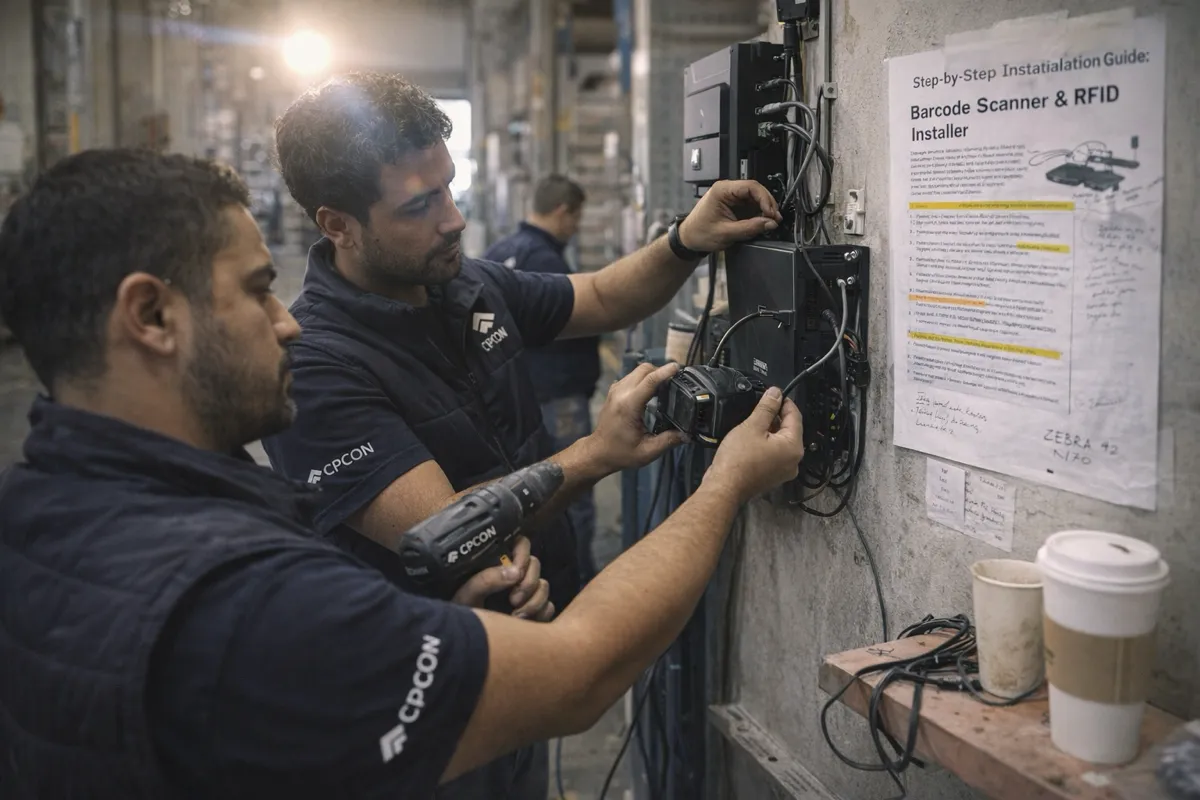
RFID only delivers ROI when every asset is tagged and tied back to your ledger. CPCON physically verifies, reconciles, and RFID-tags fixed assets against your register so you can track and audit them automatically.
Related: RFID-enabled fixed-asset verification & inventory services
Core Components of an RFID System
Every RFID deployment — from a single-room tool crib to a multi-site warehouse network — relies on the same three core components working together.
RFID Tags (Transponders)
RFID tags are small electronic devices containing a microchip — known as an RFIC (Radio Frequency Integrated Circuit) — and an antenna. The RFIC stores identification data (typically 96 to 512 bits), while the antenna enables wireless communication with readers. Tags come in many physical forms: adhesive labels for retail items, rugged hard tags for industrial assets, wristbands for patients, and embedded inlays for documents.
Tags fall into three categories based on their power source:
- Passive tags have no internal battery and draw power from the reader's electromagnetic field. They are the most widely deployed type due to their low cost ($0.05 to $0.15 at volume) and effectively unlimited lifespan. Read range for passive UHF tags is typically 5 to 12 meters.
- Active tags contain an onboard battery that powers continuous or periodic signal transmission. They offer read ranges of 100 meters or more and can integrate sensors for temperature, humidity, or motion. Active tags cost $15 to $50 each and have a battery life of 3 to 5 years.
- Semi-passive (BAP) tags use a battery to power the chip but rely on the reader's signal for communication. They offer a middle ground — better range and sensor support than passive tags at a lower cost ($3 to $10) than fully active tags.
RFID Readers (Interrogators)
Readers emit radio waves through their antennas and capture the signals returned by tags. They convert this raw radio data into digital information that flows to enterprise software. Readers come in several form factors:
- Fixed readers are mounted at permanent locations such as dock doors, conveyor lines, or room portals. They provide continuous, automated scanning and typically cost $2,500 to $10,000 per unit.
- Handheld readers are portable devices used for cycle counts, asset audits, and search-and-find tasks. They range from $1,500 to $5,000 depending on features and durability rating.
- Integrated readers are built into other devices such as forklifts, printers, or mobile computers, extending RFID capabilities into existing workflows.
Antennas
Antennas transmit and receive the radio signals between readers and tags. Antenna selection and placement are critical to system performance. Circular-polarized antennas offer more forgiving tag orientation requirements, while linear-polarized antennas provide longer range in controlled environments. Most fixed reader installations use external antennas ($200 to $500 each), while handheld readers include integrated antennas.
How RFID Technology Works: Step by Step
The RFID communication process happens in milliseconds, enabling the rapid identification of thousands of items per minute. Here is the step-by-step workflow:
- Signal emission: The RFID reader sends out radio waves at a specific frequency through its antenna, creating an electromagnetic field.
- Tag activation: When an RFID tag enters the field, the antenna on the tag captures the energy. For passive tags, this energy powers the microchip. Active tags use their onboard battery.
- Data transmission: The tag's chip modulates the radio signal and sends its stored data (typically a unique EPC code) back to the reader via backscatter (passive) or active transmission (active tags).
- Signal capture: The reader's antenna receives the tag's response and passes it to the reader's processor for decoding.
- Data processing: The decoded tag ID is sent to middleware software, which matches it against a database record containing item details — location, status, ownership, maintenance history, or any other associated data.
- Action trigger: Based on business rules, the system can trigger alerts, update records, generate reports, or feed data to ERP, WMS, or EAM systems in real time.
The entire cycle — from signal emission to database update — takes 10 to 50 milliseconds per tag. Modern UHF readers can process 700 to 1,000 tags per second, which is why RFID tracking is orders of magnitude faster than manual barcode scanning.
Key Takeaway: Speed Advantage
- Barcode scanning: 1 item per scan, requires line of sight — roughly 15 to 20 items per minute
- RFID scanning: Hundreds of items simultaneously, no line of sight — up to 1,000 reads per second
- Impact: A warehouse with 10,000 SKUs can complete a full inventory count in hours instead of days
RFID Frequency Ranges and Their Applications
RFID systems operate across four frequency bands, each with distinct characteristics that make them suitable for different use cases. Selecting the right frequency is one of the most important decisions in any RFID deployment.
| Frequency Band | Range | Read Distance | Best For |
|---|---|---|---|
| Low Frequency (LF) | 125 - 134 kHz | Up to 10 cm | Access control, animal ID, laundry tracking |
| High Frequency (HF) | 13.56 MHz | Up to 1 meter | NFC payments, library books, item-level retail |
| Ultra-High Frequency (UHF) | 860 - 960 MHz | 5 - 12 meters (passive) | Inventory, supply chain, asset tracking, warehouse |
| Microwave | 2.45 / 5.8 GHz | Up to 10+ meters | Toll collection, vehicle tracking, RTLS |
UHF (860-960 MHz) is the dominant frequency for enterprise inventory and asset tracking because it offers the best combination of read range, speed, and tag cost. The EPC Gen2 / ISO 18000-63 standard governs UHF RFID communication and ensures interoperability across vendors. Most modern inventory technology solutions are built on UHF infrastructure.
RFID vs Barcode vs BLE: Technology Comparison
Organizations evaluating tracking technologies often compare RFID against barcodes and Bluetooth Low Energy (BLE). Each technology has strengths depending on the use case, asset type, and operating environment. For an in-depth analysis, see the detailed RFID vs barcode cost comparison.
| Capability | Barcode | Passive RFID (UHF) | BLE Beacon |
|---|---|---|---|
| Cost per tag | $0.01 - $0.05 | $0.05 - $0.15 | $5 - $25 |
| Read range | 0.5 - 1 meter | 5 - 12 meters | 30 - 100 meters |
| Simultaneous reads | 1 at a time | Hundreds per second | Dozens per second |
| Line of sight required | Yes | No | No |
| Durability | Low (paper labels) | High (ruggedized options) | High (sealed housings) |
| Data capacity | Up to 100 characters | 96 - 512 bits (writable) | Configurable (KB range) |
| Battery required | No | No | Yes (1-5 year life) |
| Best use case | Low-value, low-volume items | Inventory, assets, supply chain | Indoor location, high-value assets |
For most enterprise inventory and fixed asset applications, passive UHF RFID offers the best balance of cost, speed, and range. BLE is better suited for real-time location systems (RTLS) where continuous positioning is needed. Barcodes remain cost-effective for low-value consumables. Many organizations deploy a hybrid approach — learn more in the RFID vs BLE tracking comparison.
RFID Cost Breakdown: What Does an RFID System Cost?
Understanding RFID cost is critical for building a business case. Total cost of ownership depends on the scale of deployment, tag type, infrastructure requirements, and software integration complexity. For a detailed pricing analysis, see the complete RFID chip cost guide.
Tag Costs
| Tag Type | Unit Cost (Volume) | Typical Use Case |
|---|---|---|
| Passive UHF inlay | $0.05 - $0.15 | Retail, inventory, shipping |
| Ruggedized passive tag | $0.50 - $5.00 | Manufacturing, outdoor assets |
| On-metal tag | $1.00 - $8.00 | IT assets, tools, metal equipment |
| Semi-passive (BAP) tag | $3.00 - $10.00 | Cold chain, sensor-enabled tracking |
| Active tag | $15.00 - $50.00 | Vehicle tracking, high-value assets, RTLS |
Hardware Costs
- Handheld readers: $1,500 to $5,000 per unit — used for cycle counts, audits, and search tasks
- Fixed readers: $2,500 to $10,000 per unit — installed at dock doors, portals, and conveyor lines
- Antennas: $200 to $500 per antenna — most fixed readers require 2 to 4 antennas
- Cables and mounting hardware: $100 to $300 per reader installation
Software and Integration Costs
- RFID middleware: $10,000 to $75,000 — filters, aggregates, and routes tag data to enterprise systems
- ERP/WMS integration: $15,000 to $50,000 — connecting RFID data to SAP, Oracle, or other platforms
- Annual software licensing: 15-25% of initial software cost per year
- Professional services: $20,000 to $100,000 — site surveys, installation, testing, training
Total Investment Ranges
- Small deployment (1 location, 5,000 assets): $25,000 - $75,000
- Mid-size deployment (3-5 locations, 25,000 assets): $75,000 - $150,000
- Enterprise deployment (10+ locations, 100,000+ assets): $150,000 - $500,000+
RFID for Inventory Management
RFID inventory management represents the largest and fastest-growing application of radio frequency identification technology. By replacing manual barcode scanning with automated RFID reads, organizations achieve transformative improvements in accuracy, speed, and labor efficiency.
How RFID Transforms Inventory Counting
Traditional inventory counts require staff to physically scan each item's barcode — a slow, error-prone process. With an RFID inventory system, a single associate walking through an aisle with a handheld reader can capture the identity and location of every tagged item in seconds. Fixed readers mounted at strategic points provide continuous, automated inventory updates without any human intervention.
The impact is measurable. Organizations deploying RFID for inventory management typically report:
- Inventory accuracy improvement: From 65-75% (barcode-based) to 95-99% (RFID-based)
- Count time reduction: 50-80% faster than manual barcode methods
- Labor cost savings: $50,000 to $200,000+ annually for mid-size operations
- Shrinkage reduction: 50-70% decrease in inventory losses
- Out-of-stock reduction: 30-50% fewer stockouts through real-time visibility
Real-Time Inventory Visibility
Unlike periodic barcode counts that provide a snapshot in time, RFID delivers continuous visibility. Every tagged item's location and movement is tracked as it passes readers — entering a warehouse, moving between zones, sitting on a shelf, or leaving through a dock door. This real-time data feeds inventory planning systems, enabling demand-driven replenishment and reducing safety stock requirements by 20-30%.
CPCON's enterprise RFID solutions integrate with existing ERP and WMS platforms to provide this level of visibility across multi-site operations. For organizations seeking a guided implementation approach, CPCON also offers technology-supported inventory services that pair RFID hardware with on-site expertise.
RFID for Warehouse Management
RFID warehouse management builds on inventory tracking by adding spatial awareness and process automation across receiving, put-away, picking, packing, and shipping operations. Modern warehouse RFID deployments combine fixed and handheld readers to create a comprehensive visibility layer.
Dock Door Portals
Fixed RFID readers mounted at dock doors automatically scan every pallet, case, or item entering or leaving the facility. This eliminates manual receiving verification, reduces check-in time by 70-90%, and creates an auditable chain-of-custody record. Dock door portals typically use 2 to 4 antennas per door to capture tags from multiple angles as forklifts pass through.
Zone-Based Tracking
Ceiling-mounted or aisle-end readers divide the warehouse into zones, tracking which items are in each area. This enables:
- Automated put-away confirmation — verify items reach the correct bin location
- Zone-based cycle counting — count one zone at a time without disrupting operations
- Misplacement detection — alert when items are in the wrong zone
- Dwell-time monitoring — flag items sitting in staging areas too long
Forklift-Mounted Readers
Attaching RFID readers to forklifts turns every material movement into a data event. As operators pick up, transport, and set down pallets, the reader captures tag data and updates the WMS in real time. This approach captures 95-100% of inventory movements without requiring operators to stop and scan.
Pick/Pack Accuracy
For order fulfillment, RFID verification at packing stations catches pick errors before shipment. Scanning the packed items against the order manifest takes seconds and reduces mispick rates from 1-3% (manual) to below 0.1% (RFID-verified). The cost of a return — typically $15 to $30 per incident — makes this verification step one of the fastest-payback RFID applications.
Warehouse RFID ROI Snapshot
A 200,000 sq ft distribution center deploying dock door portals, zone readers, and handheld units typically sees:
- Receiving time: Reduced 75% (from 20 min to 5 min per trailer)
- Inventory accuracy: Improved from 82% to 98%
- Pick errors: Reduced 95% (from 2.5% to 0.1%)
- Annual labor savings: $120,000 - $180,000
- Payback period: 10 - 14 months
RFID Industry Applications: How Each Sector Uses RFID
RFID solutions are deployed across virtually every industry, but the implementation approach and ROI drivers vary significantly by sector.
Retail
Retail has become the largest adopter of RFID, with major brands tagging items at the source. Item-level RFID tagging enables:
- Omnichannel inventory accuracy: Supporting buy-online-pick-up-in-store (BOPIS) by confirming store-level stock in real time
- Loss prevention: Detecting unauthorized removal through EAS-integrated RFID tags — reducing shrinkage by 50-70%
- Self-checkout: Scanning an entire basket of tagged items in seconds instead of one barcode at a time
- Planogram compliance: Verifying items are shelved in the correct location and flagging out-of-stocks
Leading retail operations report 2-8% same-store sales lifts after implementing RFID because higher inventory accuracy directly translates to fewer lost sales. Apparel brands in particular rely on RFID clothing tags for apparel and work clothes applied at the source to achieve item-level accuracy across stores and distribution.
Healthcare
In healthcare environments, RFID tracking addresses critical challenges around patient safety, regulatory compliance, and asset utilization:
- Equipment tracking: Locating infusion pumps, wheelchairs, and portable monitors across a hospital campus — eliminating the 20-30 minutes per shift that nurses spend searching for equipment
- Medication management: Verifying the right medication reaches the right patient at the right time, reducing medication errors
- Patient wristbands: RFID-enabled wristbands ensure positive patient identification throughout the care journey
- Sterilization tracking: Monitoring surgical instruments through the cleaning and sterilization cycle to maintain compliance
- Linen and laundry management: Hospitals use RFID-tagged linens to automate laundry tracking and loss prevention across facilities
Manufacturing
Manufacturing operations use RFID to gain visibility into work-in-process (WIP), tooling, and finished goods:
- WIP tracking: Tagging assemblies as they move through production stages — providing real-time production status and bottleneck identification
- Tool crib management: Tracking tool check-out/check-in to reduce tool loss (typically 5-15% annually without RFID) and ensure calibration compliance
- Production line automation: Triggering work instructions and quality checks based on the specific product variant passing a reader station
- Finished goods inventory: Automating the transfer from production to warehouse with dock-door portal reads
Logistics and Supply Chain
RFID in logistics focuses on pallet- and case-level tracking across the supply chain:
- Cross-docking: Automatically routing inbound pallets to the correct outbound dock based on RFID reads — eliminating manual sorting
- Proof of delivery: Confirming that the correct items were delivered by scanning the shipment at the destination
- Yard management: Tracking trailer locations and contents across distribution yards
- Cold chain monitoring: Semi-passive tags with temperature sensors ensure perishable goods remain within safe temperature ranges throughout transit
For assets that move between facilities or across borders, combining RFID with GPS provides end-to-end visibility — see the RFID GPS tracking guide for details.
ROI of RFID Implementation
The return on investment for RFID varies by deployment scale and application, but the data consistently shows strong payback. Organizations implementing RFID for inventory and asset tracking typically achieve full ROI within 12 to 18 months.
Quantifiable Benefits
| Benefit Category | Typical Improvement | Annual Value (Mid-Size Org) |
|---|---|---|
| Labor reduction (counting) | 50 - 80% fewer hours | $80,000 - $200,000 |
| Shrinkage reduction | 50 - 70% decrease | $50,000 - $500,000 |
| Stockout reduction | 30 - 50% fewer lost sales | $100,000 - $1,000,000+ |
| Shipping accuracy | 99.9%+ accuracy | $30,000 - $100,000 |
| Audit compliance | Automated documentation | $20,000 - $50,000 |
Intangible Benefits
Beyond direct cost savings, RFID generates strategic value that is harder to quantify but equally important:
- Decision speed: Real-time data enables faster response to demand shifts, supply disruptions, and operational issues
- Customer satisfaction: Higher inventory accuracy leads to better order fulfillment, fewer backorders, and more reliable delivery promises
- Regulatory compliance: Automated audit trails simplify GAAP/IFRS asset verification, FDA track-and-trace requirements, and industry-specific mandates
- Scalability: Once the infrastructure is in place, adding new items or locations to an RFID system has minimal marginal cost
Common RFID Implementation Challenges
While RFID delivers proven ROI, organizations should be aware of common challenges and plan mitigation strategies during the design phase.
Metal and Liquid Interference
Standard UHF RFID signals are reflected by metal and absorbed by liquids, reducing read range and reliability. Solutions include on-metal tags with specialized substrates, adjusted antenna positioning, and selecting the appropriate frequency for the environment. LF tags perform better near liquids, while purpose-built on-metal UHF tags maintain 2-5 meter read ranges on metallic surfaces.
Read Collision and Dense Tag Environments
When hundreds of tags are in a reader's field simultaneously, signal collisions can occur. Modern readers use anti-collision algorithms (such as Q-algorithm in EPC Gen2) that can handle 1,000+ tags per second, but dense environments — such as a pallet of tagged boxes — may require tuned power settings and multiple antenna angles to achieve 100% read rates.
Integration Complexity
Connecting RFID data to existing ERP, WMS, or EAM systems requires middleware that filters, aggregates, and routes tag events. Integration with legacy systems can be the most time-consuming part of an RFID project. Organizations should budget 30-40% of total project cost for integration and testing.
Change Management
RFID changes workflows for warehouse associates, receiving clerks, and inventory managers. Successful deployments invest in training and communicate the benefits to frontline staff. Resistance typically fades once workers experience the reduction in manual counting labor.
Choosing the Right Frequency and Tag
Selecting the wrong frequency or tag type is the most common cause of RFID project failure. A site survey and pilot program — testing actual tags on actual assets in the actual operating environment — is essential before committing to a full rollout. CPCON recommends tagging a representative sample of 500-1,000 items and running a 30-day pilot to validate read rates before scaling. Learn more about deployment best practices in the asset tracking implementation guide.
Implementation Best Practices
- Start with a pilot: Tag 500-1,000 representative assets and test for 30 days before full rollout
- Conduct a site survey: Map RF interference sources, metal structures, and environmental factors
- Plan for integration: Budget 30-40% of project cost for middleware and system integration
- Train early: Begin staff training during the pilot phase, not after go-live
- Measure baseline metrics: Document current accuracy, count time, and shrinkage rates to quantify RFID improvements
RFID for Fixed Asset Tracking and Verification
Beyond inventory and warehouse applications, RFID plays a critical role in fixed asset auditing and verification. Organizations with thousands of fixed assets — furniture, IT equipment, machinery, vehicles — face annual verification requirements under GAAP and IFRS. Manual verification using spreadsheets or barcode scans is slow, expensive, and error-prone.
RFID-based fixed asset tracking enables:
- Rapid physical verification: Walk through a building with a handheld reader to verify all tagged assets in minutes instead of days
- Ghost asset elimination: Identify assets that exist on the books but are no longer physically present — studies suggest 15-30% of assets on a typical fixed asset register are ghosts
- Location accuracy: Know exactly where each asset is located across multiple sites, floors, and rooms
- Depreciation accuracy: Ensure depreciation schedules reflect actual asset existence and condition
- Audit readiness: Maintain continuous compliance with SOX, GASB, and other regulatory frameworks
For organizations exploring a combined approach using RFID, barcodes, and IoT sensors, the 2026 asset tracking technology guide provides a comprehensive comparison framework.
Frequently Asked Questions About RFID
How much does an RFID system cost?
A complete RFID system typically costs between $25,000 and $250,000 for enterprise deployments. Passive UHF tags cost $0.05 to $0.15 each at volume, handheld readers range from $1,500 to $5,000, fixed readers cost $2,500 to $10,000, and middleware software runs $10,000 to $75,000. Most organizations achieve full ROI within 12 to 18 months through labor savings and accuracy improvements.
What is the read range of RFID?
RFID read range varies by frequency and tag type. Low-frequency (LF) systems read up to 10 centimeters. High-frequency (HF) systems reach about 1 meter. Ultra-high-frequency (UHF) passive tags achieve 5 to 12 meters, while UHF active tags can reach 100 meters or more. Environmental factors such as metal, liquids, and tag orientation also affect effective range.
Can RFID work through metal and water?
Standard UHF RFID tags struggle near metal and liquids because these materials reflect or absorb radio waves. However, specialized on-metal tags use a foam spacer or ceramic substrate to maintain performance on metallic surfaces. Low-frequency (LF) tags perform better near liquids. For challenging environments, organizations should test tag placement during a pilot program before full deployment.
What is the difference between RFID and NFC?
NFC (Near Field Communication) is a subset of high-frequency (HF) RFID operating at 13.56 MHz with a maximum read range of about 10 centimeters. NFC supports two-way communication, making it ideal for contactless payments and smartphone interactions. Standard RFID systems — particularly UHF — offer much longer read ranges (up to 12 meters for passive tags) and can scan hundreds of items simultaneously, making them better suited for inventory and asset tracking.
How long do RFID tags last?
Passive RFID tags have no battery and can last 20 years or more under normal conditions, limited only by physical wear. Active RFID tags contain batteries that typically last 3 to 5 years depending on transmission frequency and sensor usage. Semi-passive tags last 3 to 7 years. Ruggedized enclosures extend the physical lifespan of tags used in harsh industrial environments.