
Tracking stickers and RFID GPS tags are solving one of the biggest challenges in asset management: real-time location visibility across vast geographical areas. These adhesive tracking stickers combine Radio Frequency Identification with GPS to deliver instant visibility into asset locations, movements, and conditions. This comprehensive guide explores how tracking stickers and RFID GPS systems are revolutionizing asset management across industries.
What is RFID GPS Tracking?
RFID GPS tracking represents the convergence of two powerful technologies: Radio Frequency Identification (RFID) and Global Positioning System (GPS). While traditional RFID technology excels at identifying and tracking assets within defined areas using radio waves, GPS provides precise location data anywhere on Earth through satellite communication.
RFID GPS tracking stickers and tags combine these capabilities into compact, often adhesive-backed devices that can be attached to virtually any asset. These smart labels contain both an RFID chip for close-range identification and a GPS module for real-time location tracking, creating a comprehensive asset visibility solution.
Key Components of RFID GPS Tracking Systems
- RFID Chip: Stores unique identification data and enables close-range scanning
- GPS Module: Receives satellite signals to determine precise geographic coordinates
- Cellular/Wireless Transmitter: Sends location data to cloud-based tracking platforms
- Power Source: Battery or solar-powered for extended operational life
- Environmental Sensors: Optional temperature, humidity, and motion detection capabilities
How RFID GPS Tracking Works
RFID GPS tracking systems operate through a sophisticated interplay of technologies that work together to provide comprehensive asset visibility:
1. Asset Identification
When an asset equipped with an RFID GPS tag passes near an RFID antenna or reader, the RFID chip transmits its unique identifier. This enables instant recognition and data retrieval from connected databases, similar to how traditional asset tagging works but with enhanced capabilities.
2. Location Determination
The GPS module continuously or periodically receives signals from multiple satellites to triangulate the asset's precise location. Modern systems achieve accuracy within 2-5 meters under optimal conditions.
3. Data Transmission
Location data, along with any sensor readings, is transmitted via cellular networks (4G/5G), LoRaWAN, or satellite communication to cloud-based platforms for processing and storage.
4. Real-Time Visualization
Users access asset locations through web dashboards or mobile applications, viewing real-time positions on interactive maps with historical movement trails and geofencing alerts.
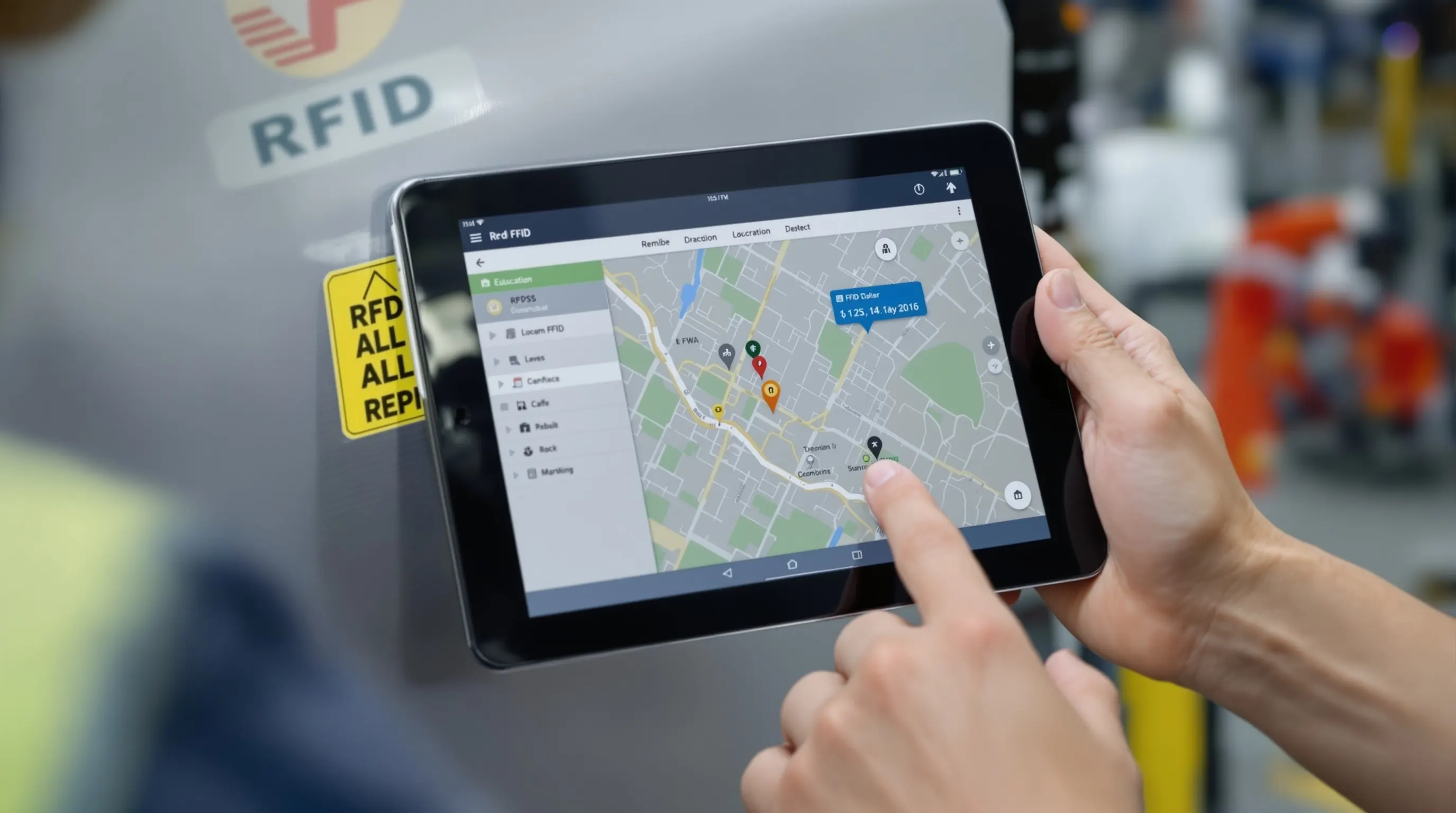
RFID GPS tracking stickers provide real-time visibility for mobile assets
Types of RFID GPS Tracking Devices
The market offers various form factors to suit different asset types and tracking requirements:
Adhesive Tracking Stickers
Ultra-thin, flexible labels that adhere to flat surfaces. Ideal for laptops, equipment cases, and containers. Battery life typically 1-3 years.
Rugged Asset Tags
Durable enclosures designed for harsh environments. Weather-resistant and impact-proof for outdoor equipment and vehicles.
Vehicle Trackers
Hardwired or OBD-connected devices for fleet management. Include additional telematics like speed, fuel consumption, and driver behavior.
Container Seals
Tamper-evident GPS seals for shipping containers. Provide security alerts and chain-of-custody documentation.
Key Benefits of RFID GPS Tracking
Organizations implementing RFID GPS tracking solutions experience transformative improvements across multiple operational areas:
Real-Time Location Visibility
Know exactly where every tracked asset is located at any moment. Eliminate time wasted searching for equipment and reduce asset loss by up to 90%.
Movement History & Analytics
Access complete historical data on asset movements, dwell times, and utilization patterns. Make data-driven decisions about asset deployment and procurement.
Geofencing & Alerts
Set virtual boundaries and receive instant notifications when assets enter or leave designated areas. Prevent unauthorized movements and theft.
Automated Compliance Documentation
Generate automatic audit trails for regulatory compliance. Support SOX compliance and other reporting requirements with verifiable location data.
Predictive Maintenance Integration
Combine location data with usage patterns to optimize maintenance schedules. Reduce equipment downtime and extend asset lifecycles.
RFID vs GPS: Understanding the Differences
While RFID GPS tracking combines both technologies, understanding their individual strengths helps organizations choose the right solution. For a detailed comparison, see our guide on RFID vs Barcode technology.
| Feature | RFID Only | GPS Only | RFID + GPS |
|---|---|---|---|
| Range | Up to 100m (UHF) | Global | Global + Local |
| Accuracy | Zone-level | 2-5 meters | 2-5 meters + zone |
| Power Required | Passive (no battery) | Active (battery) | Active (battery) |
| Indoor Tracking | Excellent | Limited | Excellent |
| Outdoor Tracking | Limited | Excellent | Excellent |
| Cost per Tag | $0.10 - $50 | $50 - $300 | $75 - $400 |
| Real-Time Updates | At read points | Continuous | Continuous |
Industry Applications
RFID GPS tracking technology delivers value across diverse industries, each with unique tracking requirements:
Logistics & Transportation
Track shipments, containers, and vehicles in real-time across global supply chains. Monitor delivery progress, optimize routes, and provide customers with accurate ETAs. Learn more about supply chain visibility solutions.
- • Fleet management and driver safety monitoring
- • Cold chain temperature tracking for perishables
- • Proof of delivery and chain of custody
Construction & Heavy Equipment
Monitor expensive machinery across multiple job sites. Prevent theft, optimize equipment utilization, and ensure assets are where they're needed.
- • Equipment sharing between project sites
- • Theft prevention and recovery
- • Maintenance scheduling based on usage
Healthcare
Track medical equipment, wheelchairs, and mobile assets throughout hospital campuses. Reduce search time and improve patient care. See our guide on medical equipment inventory management.
- • Real-time equipment location for emergencies
- • Asset utilization optimization
- • Regulatory compliance documentation
Energy & Utilities
Monitor field assets, pipeline equipment, and service vehicles across vast geographical areas. Support asset componentization and maintenance programs.
- • Remote asset monitoring in harsh environments
- • Service vehicle dispatch optimization
- • Regulatory compliance for critical infrastructure
Retail & Distribution
Track returnable assets like pallets, containers, and roll cages across the supply chain. Reduce losses and improve asset recovery rates.
- • Pallet and container tracking
- • High-value merchandise security
- • Omnichannel inventory visibility
Implementation Best Practices
Successful RFID GPS tracking implementation requires careful planning and execution. Follow these best practices to maximize your return on investment:
Implementation Roadmap
Define Tracking Requirements
Identify which assets need tracking, required accuracy levels, update frequency, and integration requirements with existing systems.
Select Appropriate Hardware
Choose tracking devices based on asset types, environmental conditions, battery life requirements, and budget constraints.
Establish Data Infrastructure
Set up cloud platforms, configure APIs for system integration, and establish data retention and security policies.
Pilot Program
Start with a limited deployment to validate performance, refine processes, and train staff before full-scale rollout.
Full Deployment & Optimization
Roll out across all target assets, continuously monitor performance, and optimize configurations based on real-world data.
Integration with Asset Management Systems
RFID GPS tracking delivers maximum value when integrated with broader asset management and ERP systems. This integration enables:
- Automatic updates to fixed asset registers with real-time location data
- Enhanced asset verification processes with GPS-confirmed locations
- Streamlined RFID-based auditing with location verification
- Improved depreciation calculations based on actual usage patterns
- Better capital planning through utilization analytics
ROI Considerations
Organizations typically see return on investment within 12-18 months through:
Reduction in asset search time
Decrease in asset loss and theft
Improvement in asset utilization
Reduction in audit preparation time
Future Trends in RFID GPS Tracking
The RFID GPS tracking landscape continues to evolve with emerging technologies:
- 5G Connectivity: Faster data transmission and lower latency for real-time applications
- AI-Powered Analytics: Predictive insights for maintenance, theft prevention, and optimization
- Smaller Form Factors: Miniaturized devices for tracking smaller assets
- Extended Battery Life: Solar and energy-harvesting technologies for longer deployments
- Blockchain Integration: Immutable audit trails for supply chain transparency
- Indoor-Outdoor Seamless Tracking: Hybrid systems combining GPS, BLE, and UWB technologies
Conclusion
RFID GPS tracking technology represents a significant advancement in asset management capabilities, offering organizations unprecedented visibility into their mobile and distributed assets. By combining the identification power of RFID with the global reach of GPS, these solutions enable real-time tracking, automated compliance, and data-driven decision-making.
Whether you're managing a fleet of vehicles, tracking construction equipment across job sites, or monitoring high-value assets in healthcare facilities, RFID GPS tracking provides the foundation for operational excellence and asset optimization.
Ready to Transform Your Asset Tracking?
CPCON's experts can help you design and implement an RFID GPS tracking solution tailored to your specific requirements. Contact us for a consultation.
Schedule a Consultation