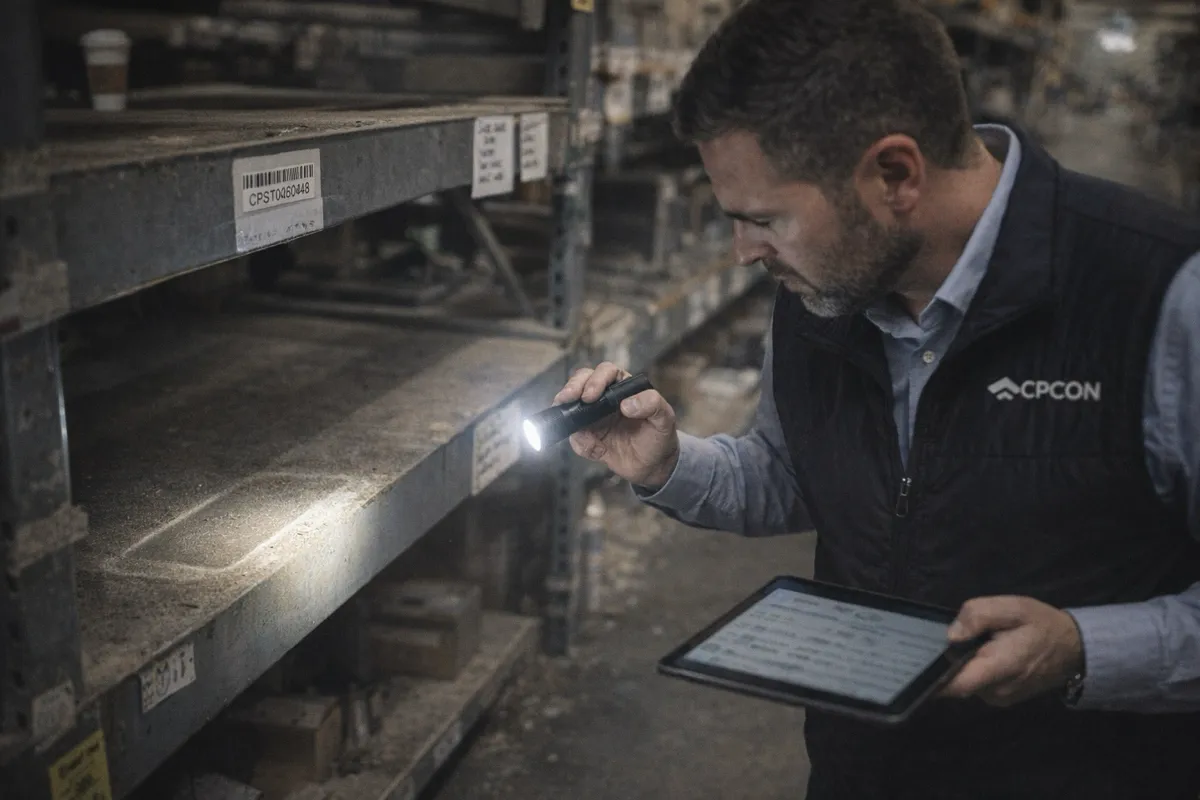
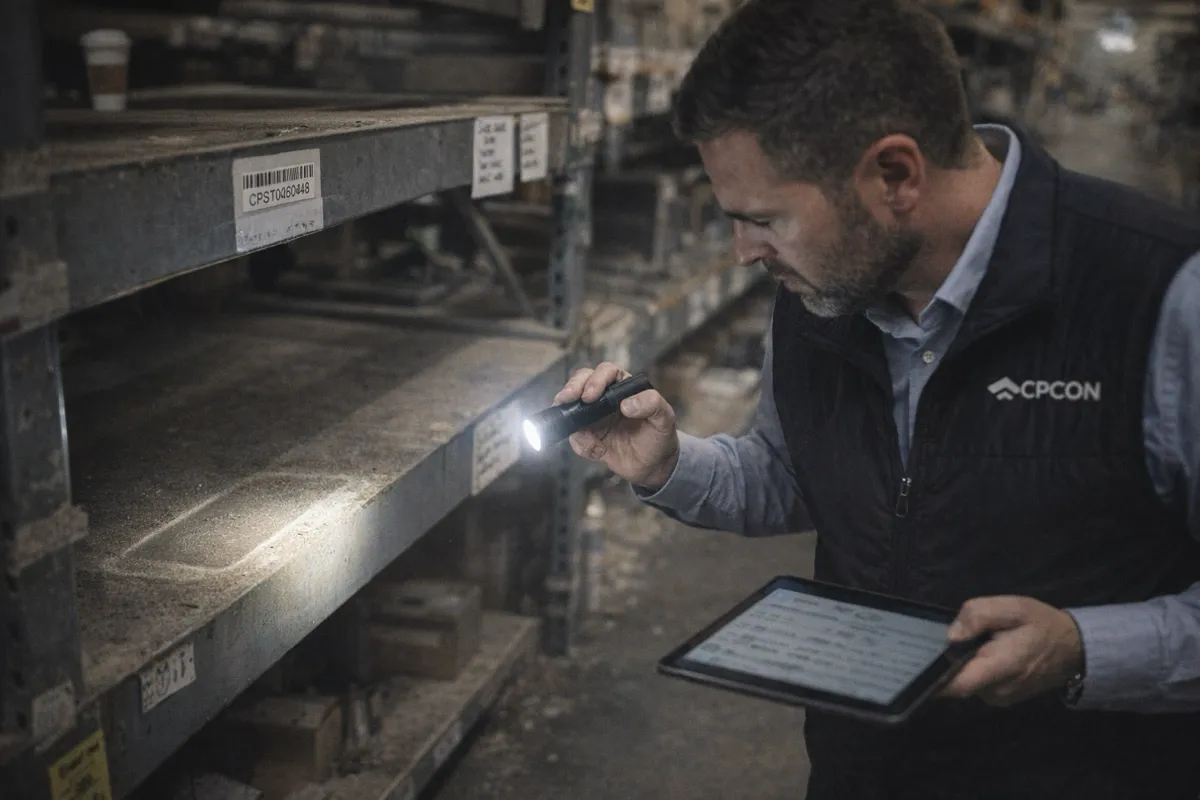
Salt Lake County does not walk your plant. It bills the Personal Property Signed Statement — a list built from what you previously reported, plus this year’s acquisitions and disposals. If a press, a forklift, or a line of IT gear left a Salt Lake City floor and never hit Schedule A, the ghost stays in the prior-year subtotal and keeps taxable value on the roll.
Local one-liner: Schedule A disposals do not write themselves. A tagged floor count is what proves the item left service so the disposal line can match the register and drop off the signed statement.
This flank applies the same existence → location → disposal → tax-roll chain from our personal property tax on ghost fixed assets pillar to Salt Lake County’s 2026 statement. For detection methodology, see ghost asset detection. For the book entries that still have to land on Schedule A, see the asset write-off and retirement guide.
Control thesis: You cannot responsibly drop a Salt Lake County line without evidence it left service and left that situs. Physical inventory plus durable tagging create the disposal trail Schedule A needs.
How Salt Lake County’s signed statement works
Utah Tax Commission Publication 20 explains the annual Personal Property Signed Statement. County assessors collect business personal property information on that statement (UCA §59-2-306). Valuation uses percent-good factors: original cost (including installation, shipping, and sales tax) multiplied by a percent-good schedule. Appraisal percent-good is not the same as book or IRS depreciation. Pub 20 states that property used in the business that is fully depreciated for accounting purposes is still taxable and must be reported.
Salt Lake County’s 2026 statement instructions require reporting all tangible personal property owned, possessed, controlled, or managed by the business. The arithmetic that keeps ghosts alive is simple:
- Line 2 (prior years’ personal property) reprints the taxable-value subtotal from page 2 — property already reported in prior years.
- Line 3 (acquisitions and disposals) is the net from Schedule A. If you acquired or disposed of taxable personal property during 2025, you must complete Schedule A. If you did neither, enter “0.”
- Line 4 totals Line 2 and Line 3. An unupdated Line 2 plus a blank Schedule A keeps last year’s ghosts in this year’s taxable value.
Utah statutes allow 60 days to complete the statement. The due date is printed at the top of the form. Failure to file within 30 days of a subsequent notice triggers a penalty of $25 or 10 percent of the tax due, whichever is greater (UCA §59-2-307), and the assessor may estimate value if the statement remains unfiled.
An owner whose aggregate taxable value is $30,100 or less for 2026 may claim the constitutional exemption — but only with an application on the statement (or the signature certification the instructions describe). The declaration must be filed timely. Ghosts left on Line 2 can keep a filer above that threshold on paper even when the floor is thinner.
This article quotes those published figures only. It does not invent millage rates. Line 5 prints the tax rate for the district on the statement; if the property location is wrong, Salt Lake County instructs you to call the assessor for the correct rate line.
Existence — what “owned, possessed, controlled, or managed” means on the floor
The Salt Lake County phrase is broader than “on our depreciation book.” If the business still possesses, controls, or manages the unit — capitalized or not — it belongs on the statement unless a published exemption applies. The operational question is the same as in the PPT ghost-asset pillar: which register lines still exist as tangible personal property at this Salt Lake City site?
- Lines that fail a disciplined file-to-floor search become Schedule A disposal candidates — not silent keepers on Line 2. See ghost asset detection.
- Untagged or unverified populations are the highest-risk keepers. The assessor cannot see your floor; they see Line 2 and Schedule A.
- Durable tags (barcode / RFID / permanent ID) tie a physical unit to a register ID so the next count and the next signed statement can be reconciled — see our asset tagging guide.
Existence evidence is what lets tax and finance support a Schedule A disposal with description, year acquired, and original cost — the identity the county sample schedule expects. A spreadsheet delete without a tagged count is not a trail.
Location — wrong situs, wrong rate line
Pub 20 taxes personal property based on location and status as of January 1. Salt Lake County prints the tax rate for your district on Line 5. The 2026 instructions are explicit: if the property location is not correct, call the assessor to obtain the correct tax rate for the new location. This article does not quote or invent a millage.
Wrong location fields on the register create two cash risks for a Salt Lake City filer:
- The statement bills the wrong rate line because the printed situs is stale
- Duplicate exposure when a unit moved to another Utah county — or out of state — and Salt Lake County Line 2 still carries it
Tagging programs that update location / cost center / plant during the count are situs controls, not housekeeping. The location on the tag and in the register must match the site Salt Lake County printed on the statement.
Disposal — Schedule A is where ghosts leave
Salt Lake County’s Schedule A Part 2 is the only official off-ramp for items that were previously reported. The instructions say items listed as disposals must have been previously reported and listed on page 2. The sample asks for property class, item description, year acquired, original cost, percent-good rate, and taxable value.
That is why a tagged floor count has to precede the filing: you need identity that matches the prior-year list, not a vague “scrap lot.” The closed loop is the same as the pillar:
- Field evidence (not-found after protocol, scrap photo, bill of sale, transfer ticket)
- Approval / disposal workflow
- Register retirement — see the write-off and retirement entries
- Explicit Schedule A Part 2 lines so Line 3 reduces the Line 2 carry-forward
A journal entry alone, if Schedule A is blank and Line 2 still holds last year’s taxable value, does not finish the job. Used equipment you purchased is reported at the date and cost you acquired it — another reason the register and the statement have to tell the same story.
Tax roll — exemption math still needs a clean list
Line 4 is total taxable value (Line 2 + Line 3). The 2026 Salt Lake County instructions say: if Line 4 is $30,100 or less, stop and complete the exemption application. Pub 20 likewise requires an application on the signed statement for the $30,100 (2026) aggregate exemption. Ghosts left on Line 2 inflate Line 4. Clearing them on Schedule A is how the exemption math — if you qualify — is computed on a list that matches the floor.
The deliverable that stops the cash leak is not a spreadsheet of “proposed ghosts.” It is a filing package built from a cleaned register:
- Population owned, possessed, controlled, or managed on the assessment date
- Correct situs so Line 5 is the right printed rate line
- Acquisitions on Schedule A Part 1
- Disposals on Schedule A Part 2 with enough identity to match page 2
CPCON’s role is operational evidence for your tax and filing team — independent fixed-asset inventory, tagging, and register reconciliation. CPCON is not your tax counsel and does not file Salt Lake County signed statements or exemption applications. Final positions belong to your finance leadership and advisors.
Explore fixed asset inventory and reconciliation when you want an assessment of register-to-floor gaps before the next signed statement.
FAQ
Why is disposed equipment still on our Salt Lake County signed statement?
Line 2 reprints the prior-year taxable-value subtotal. Ghosts stay in that carry-forward until you list them as disposals on Schedule A (Line 3) with enough identity to match the previously reported item. A book write-off that never reaches Schedule A does not take the line off the statement.
Does a tagged floor count by itself drop the Salt Lake County tax?
No. Inventory and tagging create existence, location, and disposal evidence. The cash effect happens when those disposals are posted to the register and entered on Schedule A so Line 2 plus Line 3 no longer include the ghost. The signed statement is what the assessor bills.
Can ghost assets keep us above the $30,100 exemption?
Yes. Salt Lake County’s 2026 instructions stop at Line 4 if taxable value is $30,100 or less and then require the exemption application on the statement. Dead cost left on Line 2 inflates that total. Clearing Schedule A disposals is how the list — and the exemption math — becomes accurate. This is not a substitute for applying on the statement.
Can CPCON file our Salt Lake County personal property signed statement?
No. CPCON provides fixed-asset inventory, tagging, and register reconciliation evidence. Your finance team and tax advisors own the signed statement and any exemption application.