The Healthcare Asset Tracking Challenge
Modern hospitals operate with staggering equipment complexity. A typical 500-bed acute care facility manages between 10,000 and 50,000 medical devices, from infusion pumps and patient monitors to wheelchairs, ventilators, and surgical instruments. At any given moment, research indicates that 15-20% of mobile medical equipment cannot be located by the staff who need it.
The consequences of poor hospital asset tracking extend far beyond inconvenience. Nurses spend an estimated 30-60 minutes per shift searching for equipment, diverting time from patient care. When devices cannot be found, departments resort to emergency rental agreements costing $200-$500 per device per day. Meanwhile, untracked assets expire their maintenance schedules, fall out of regulatory compliance, and accumulate as ghost assets on the balance sheet.
The Hidden Cost of Poor Asset Visibility
- Equipment hoarding: Departments stockpile devices to avoid shortages, creating artificial scarcity and inflating capital budgets by 10-15%
- Rental overspend: Average 300+ bed hospitals spend $200,000-$500,000 annually on emergency equipment rentals
- Nurse productivity loss: 30-60 minutes per shift per nurse spent searching equals 70,000+ lost hours annually for a mid-size hospital
- Compliance exposure: Untracked devices miss preventive maintenance, recall notifications, and Joint Commission audit requirements
Healthcare asset tracking addresses these challenges by establishing systematic visibility into equipment location, status, maintenance history, and utilization. For hospital CFOs and operations leaders, effective healthcare asset management is not an IT project -- it is a financial and patient safety imperative.
What Is Hospital & Medical Equipment Tracking?
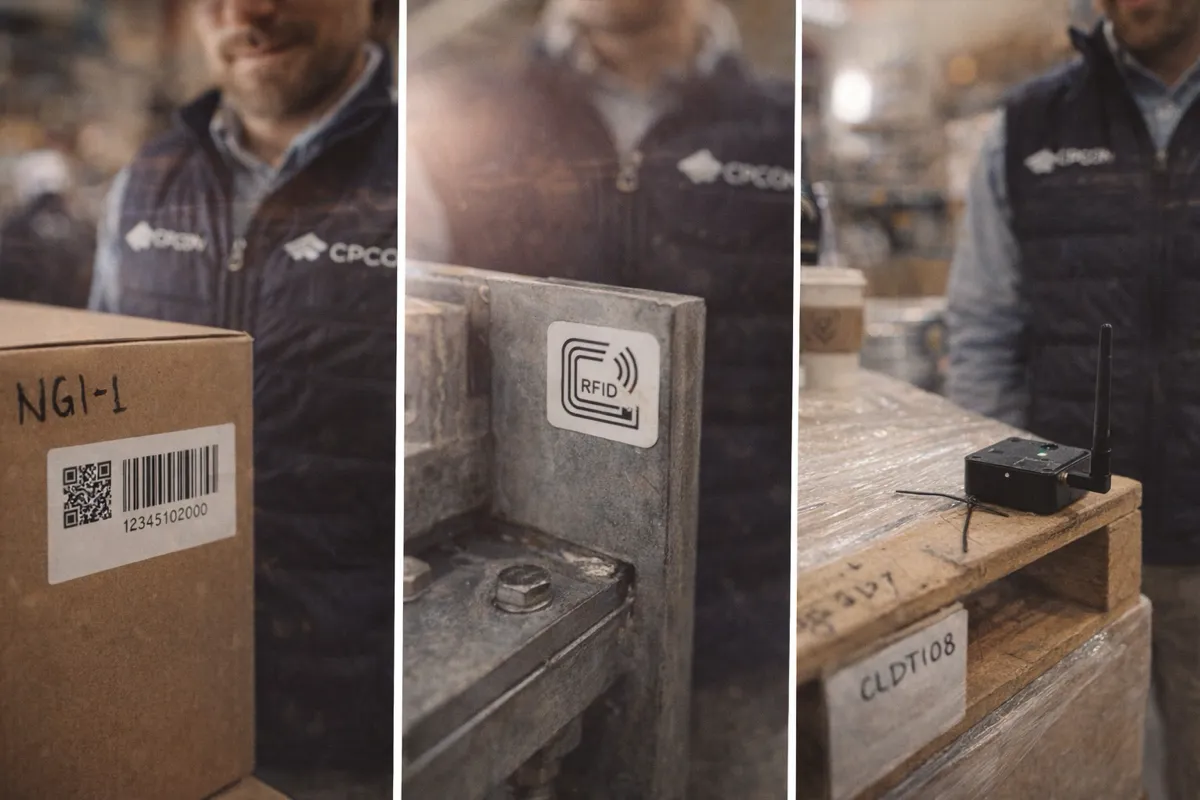
Hospital and medical equipment tracking is the practice of tagging physical medical devices and fixed assets -- infusion pumps, monitors, ventilators, beds, and biomedical equipment -- with RFID or barcode labels and recording their location, status, and maintenance history, so facilities, biomedical, and finance teams keep an accurate, audit-ready equipment register.
Types of Healthcare Assets That Require Tracking
Hospital asset tracking programs must account for diverse equipment categories, each with distinct tracking requirements, compliance obligations, and financial profiles. Understanding these categories is essential for selecting the right technology and prioritizing deployment.
| Asset Category | Examples | Avg. Unit Value | Tracking Priority |
|---|---|---|---|
| Mobile Medical Devices | Infusion pumps, ventilators, patient monitors | $3,000-$50,000 | Critical |
| Transport Equipment | Wheelchairs, stretchers, hospital beds | $500-$15,000 | High |
| Surgical Instruments | Instrument trays, scopes, powered tools | $1,000-$100,000+ | Critical |
| IT & Communications | Workstations on wheels, tablets, VoIP phones | $800-$5,000 | High |
| Implantable Devices | Orthopedic implants, pacemakers, stents | $2,000-$50,000 | Critical (UDI) |
| Facility Assets | HVAC, generators, elevators, fire systems | $10,000-$500,000 | High |
| Linen & Laundry | Scrubs, bed linens, surgical gowns | $5-$50 per item | Moderate |
Each category demands a different tracking approach. High-value mobile devices benefit most from real-time location systems (RTLS), while fixed facility assets may only require periodic RFID verification during physical inventory counts. Implantable devices carry unique FDA Unique Device Identification (UDI) requirements that mandate item-level traceability from receipt through implantation.
Compliance Requirements Driving Hospital Asset Tracking
Healthcare asset tracking is not optional for most hospitals. Multiple regulatory bodies mandate equipment documentation, maintenance verification, and location accountability. Non-compliance exposes facilities to survey deficiencies, accreditation loss, and liability in malpractice litigation.
Joint Commission Standards
The Joint Commission's Environment of Care (EC) standards require hospitals to maintain a comprehensive inventory of all medical equipment, document maintenance histories, and demonstrate that devices are inspected and tested before use. EC.02.04.01 mandates written criteria for identifying equipment requiring maintenance, and EC.02.04.03 requires that equipment is maintained according to those criteria. During unannounced surveys, Joint Commission surveyors routinely select random equipment and request immediate documentation of its maintenance history, calibration status, and safety inspection records.
CMS Conditions of Participation
The Centers for Medicare & Medicaid Services (CMS) Conditions of Participation tie Medicare reimbursement to equipment management standards. Hospitals must demonstrate that medical equipment is maintained to manufacturer specifications, that preventive maintenance schedules are followed, and that equipment recalls are addressed promptly. Failure to meet CMS CoP standards can trigger "Immediate Jeopardy" findings, placing the facility's Medicare certification at risk.
FDA Unique Device Identification (UDI)
The FDA's UDI system requires that implantable devices carry standardized identifiers throughout the supply chain. Hospitals must record UDI data in patient medical records for implanted devices, enabling rapid identification of affected patients in the event of a recall. Effective healthcare asset tracking systems automate UDI capture at the point of receipt and link it to patient records during surgical procedures.
Compliance Quick Reference
Joint Commission EC.02.04.01-03
Equipment inventory, maintenance documentation, safety inspection records
CMS Conditions of Participation
Preventive maintenance adherence, recall management, Medicare certification
FDA UDI Final Rule
Item-level traceability for implantable devices, patient record linkage
State Health Dept. Requirements
Vary by jurisdiction -- typically mirror Joint Commission with additional fire safety and radiation equipment mandates
Asset Tracking Technology Options for Hospitals
Selecting the right technology for hospital equipment tracking requires balancing accuracy, cost, infrastructure requirements, and clinical workflow impact. Four primary technologies serve the healthcare sector, each with distinct strengths. Understanding these tradeoffs is essential for building a business case that resonates with hospital leadership.
| Technology | Per-Tag Cost | Accuracy | Location Precision | Real-Time | Best For |
|---|---|---|---|---|---|
| Passive RFID | $0.10-$0.50 | 99.5%+ | Room/zone level | No | Inventory audits, compliance verification |
| Active RFID / RTLS | $15-$75 | 99%+ | Sub-room level | Yes | High-value mobile equipment |
| BLE Beacons | $5-$25 | 95-98% | Room level | Yes | Mid-tier mobile devices |
| Barcode / QR Code | $0.01-$0.10 | 95-97% | Last-scanned location | No | Low-value items, budget-constrained |
Most hospitals deploying asset tracking in 2026 adopt a hybrid approach. Passive RFID serves as the foundation for periodic inventory verification and compliance audits, scanning hundreds of tagged devices per minute without line-of-sight. Active RFID or BLE beacons layer on top for real-time location of high-value mobile equipment that nurses and biomedical engineers need to locate on demand. For help choosing between technologies, see our RFID vs barcode tracking guide.
The hybrid model enables hospitals to tag all assets cost-effectively with passive RFID while investing in real-time tracking only for the 15-20% of devices that drive the most search time and rental expense. CPCON's enterprise asset tracking solutions support this layered approach, beginning with a baseline physical inventory to establish accurate records before technology deployment.
ROI of Hospital Asset Tracking
Healthcare CFOs evaluating asset tracking investments need concrete financial data to build the business case. The ROI of hospital asset tracking systems typically derives from four primary sources, each measurable within the first 12-18 months of deployment.
When staff can locate available devices instantly, emergency rental orders drop significantly. For a hospital spending $300,000/year on rentals, this translates to $75,000-$120,000 in annual savings.
Tracking data reveals that many hospitals own 20-30% more equipment than they need. Utilization analytics enable right-sizing purchases and redistributing underused devices across departments.
Real-time location reduces equipment search time to under 2 minutes per event. For a 500-bed hospital with 1,200 nurses, this recovers approximately 70,000 hours of nursing time annually.
Automated tracking ensures maintenance records, calibration data, and location histories are always current. Facilities move from scrambling before surveys to maintaining continuous readiness.
Key Takeaway: Total Cost of Ownership
A passive RFID deployment for a 400-bed hospital typically costs $100,000-$250,000 including tags, readers, software, and implementation services. With annual savings of $150,000-$300,000 from reduced rentals, lower replacement costs, and productivity gains, most hospitals achieve full payback within 12-18 months. Adding RTLS for mobile equipment increases upfront investment but accelerates ROI through nurse productivity recovery.
Implementation Roadmap for Hospital Asset Tracking
Successful hospital asset tracking deployments follow a structured rollout methodology that minimizes clinical disruption while building organizational confidence. Attempting a facility-wide "big bang" deployment is the most common cause of project failure. Instead, a phased approach delivers measurable results at each stage.
Phase 1: Baseline Physical Inventory (Weeks 1-4)
Every effective asset tracking program begins with knowing what you actually have. CPCON conducts comprehensive physical inventory counts that reconcile the fixed asset register against physical reality. This phase typically uncovers 10-15% discrepancies between recorded and actual equipment, including ghost assets still on the books and unrecorded devices acquired through departmental purchases.
Phase 2: Technology Selection and Procurement (Weeks 4-8)
With accurate baseline data, the technology selection process can be driven by actual asset profiles rather than vendor assumptions. Key decision criteria include facility construction materials (concrete and steel affect RF propagation), existing IT infrastructure, CMMS/EHR integration requirements, and budget constraints. Pilot technology evaluations in representative clinical environments should precede any enterprise commitment.
Phase 3: Pilot Unit Deployment (Weeks 8-16)
Deploy the selected technology in a single high-impact department, typically the ICU, OR, or Emergency Department. The pilot should track 200-500 devices to validate read rates, location accuracy, workflow integration, and staff adoption. Success criteria include 98%+ tag read rates, less than 5-minute average equipment location time, and positive staff feedback on usability.
Phase 4: Phased Facility Rollout (Months 4-12)
Expand department by department, prioritizing areas with the highest equipment density and rental costs. Each rollout phase should include staff training, workflow adjustment, and a 2-week stabilization period before proceeding to the next department. Integration with the CMMS (Computerized Maintenance Management System) and EHR should be completed during this phase to enable automated maintenance scheduling and compliance reporting.
Phase 5: Optimization and Analytics (Ongoing)
With full deployment complete, the focus shifts to utilization analytics, predictive maintenance scheduling, and capital planning optimization. Tracking data enables evidence-based decisions about equipment purchases, retirement, and redistribution across the facility.
Medical Equipment Lifecycle Management
Healthcare asset tracking delivers its greatest long-term value when integrated into the full equipment lifecycle. Each stage presents specific tracking requirements and compliance obligations that, when managed systematically, extend useful life, reduce total cost of ownership, and mitigate patient safety risk.
Acquisition and Receiving
Tag assignment at receiving dock, serial number capture, UDI recording for implantables, initial entry into CMMS and fixed asset register. Establishes the chain of custody from day one.
Commissioning and Deployment
Safety inspection, clinical acceptance testing, location assignment, staff training verification. The asset tracking system records the initial deployment location and responsible department.
Preventive Maintenance
Automated PM scheduling based on manufacturer intervals, usage-based triggers from tracking data, and regulatory requirements. RFID-enabled maintenance workflows document each service event for Joint Commission readiness.
Recall Management
When the FDA issues a device recall, asset tracking systems enable immediate identification and location of affected units. Without tracking, recall response can take weeks as biomedical teams manually search the facility.
End-of-Life and Disposal
Systematic decommissioning with data sanitization, fixed asset register removal, and compliant disposal documentation. Tracking prevents retired equipment from remaining on the books as ghost assets inflating the balance sheet, and CPCON's fixed asset inventory services reconcile the register so ghost assets are eliminated.
Integrating medical equipment inventory with lifecycle management transforms asset tracking from a location tool into a strategic platform for capital planning, compliance management, and operational optimization.
Hospital Asset Tracking: Industry Benchmark Results
Across healthcare asset tracking deployments in acute care facilities, consistent performance benchmarks have emerged. These figures represent typical outcomes for hospitals implementing comprehensive tracking programs with proper baseline inventories and phased rollouts.
| Performance Metric | Before Tracking | After Tracking (12 Months) | Improvement |
|---|---|---|---|
| Equipment location time | 15-30 min | <2 min | 85-95% |
| Equipment utilization rate | 35-45% | 55-65% | 15-20 pts |
| Equipment rental spend | $200K-$500K/yr | $120K-$300K/yr | 25-40% |
| PM compliance rate | 70-80% | 95-99% | 20-25 pts |
| Audit preparation time | 2-4 weeks | Always ready | Continuous |
| Ghost asset rate | 8-15% | <2% | 80-90% |
These benchmarks reflect outcomes from facilities that committed to proper baseline inventories before deploying tracking technology. Hospitals that skip the baseline step and tag assets based on outdated register data consistently underperform, as inaccurate master data undermines every downstream process.
Common Challenges in Hospital Asset Tracking
Healthcare environments present unique technical and organizational challenges that differentiate hospital asset tracking from commercial or industrial deployments. Anticipating these challenges during planning prevents costly mid-project pivots and adoption failures.
RF Interference from Metal and Liquids
Hospitals are dense with metal equipment, fluid-filled tubing, and concrete walls -- all of which attenuate or reflect radio signals. Standard RFID tags may underperform on metal surfaces or near IV fluid bags. On-metal tags with specialized spacers and antenna designs address this challenge but cost 2-3x more than standard tags. Site surveys during the pilot phase are essential for mapping RF propagation patterns and identifying dead zones that require additional reader infrastructure.
Staff Adoption and Workflow Resistance
Clinical staff already operate under intense time pressure. Any tracking system that adds steps to clinical workflows will face resistance. Successful deployments use passive tracking methods (readers at doorways, ceiling-mounted sensors) that require zero staff interaction for routine location updates. Active scanning is reserved for specific events like receiving, maintenance, and discharge cleaning.
Integration with Legacy Systems
Most hospitals run CMMS platforms, EHR systems, and financial systems from different vendors with limited interoperability. Asset tracking solutions must integrate with these platforms through HL7, FHIR, or API interfaces to deliver value without creating data silos. Integration complexity is frequently underestimated during project planning and should receive dedicated resources and timeline allocation.
Budget Justification
Hospital capital budgets face intense competition from clinical priorities. Asset tracking projects compete against MRI machines, surgical robots, and facility renovations for funding. Building the business case requires quantifying current waste (rental costs, lost equipment, overtime for equipment searches, survey remediation costs) in terms that resonate with the C-suite and board finance committee.
CPCON Recommendation
Start with a baseline physical inventory before investing in any tracking technology. The inventory process identifies ghost assets, undocumented equipment, and compliance gaps that inform the technology selection and build the financial case for investment. CPCON's healthcare inventory services deliver a complete asset register reconciliation that serves as the foundation for technology deployment, capital planning, and compliance readiness. When you are ready to deploy real-time visibility, our healthcare asset tracking solution combines RTLS, RFID tagging, and medical equipment inventory in one program.
Frequently Asked Questions
How do hospitals track medical equipment?
Hospitals track medical equipment using a combination of technologies including passive RFID tags, active RFID/RTLS (Real-Time Location Systems), BLE beacons, and barcode/QR codes. The most common approach is a hybrid model: RFID for periodic inventory verification and compliance audits, and RTLS or BLE for real-time location tracking of high-value mobile devices like infusion pumps, ventilators, and patient monitors.
What is the best asset tracking system for hospitals?
The best hospital asset tracking system depends on facility size, budget, and priorities. For large hospitals managing 20,000+ devices, a hybrid RFID/RTLS solution provides the strongest ROI through equipment utilization gains and compliance readiness. Mid-size facilities often start with passive RFID for inventory verification, then add BLE beacons for real-time tracking of critical equipment. The key is selecting a system that integrates with existing CMMS and EHR platforms.
How much does hospital asset tracking cost?
Hospital asset tracking costs vary by technology and scale. Barcode systems start at $15,000-$50,000 for a mid-size hospital. Passive RFID deployments typically range from $75,000-$300,000 including tags, readers, and software. Active RFID/RTLS systems for real-time tracking cost $150,000-$1M+ depending on facility size. Most hospitals see full ROI within 12-18 months through reduced rental costs, lower replacement spending, and improved nurse productivity.
Is RFID or BLE better for hospital asset tracking?
RFID and BLE serve different purposes in hospitals. Passive RFID excels at periodic inventory counts and compliance audits, scanning hundreds of items per minute at low per-tag cost ($0.10-$0.50). BLE beacons provide continuous real-time location data but cost $5-$25 per tag with battery replacement every 2-5 years. Many hospitals deploy both: RFID for asset verification and BLE for tracking high-value mobile equipment like infusion pumps and ventilators. For a detailed comparison, see CPCON's RFID vs BLE tracking guide.
What is healthcare asset tracking for medical equipment?
Healthcare asset tracking for medical equipment is the practice of tagging and counting physical medical equipment and fixed assets with RFID or barcode labels to maintain an accurate equipment register and location visibility. It applies to physical equipment only -- devices, monitors, pumps, beds, and biomedical assets -- not patient data or pharmacy stock.
How does asset tracking support equipment-management compliance?
Asset tracking keeps the medical-equipment inventory, location, and maintenance and inspection history current, so facilities can produce documentation for accreditation and equipment-management standards. It supports equipment-management compliance generally by making records audit-ready, rather than providing any specific certification.