Selecting the right IT asset management software is one of the most consequential technology decisions an enterprise IT or operations leader can make. The wrong choice leads to shelfware, data silos, and persistent gaps between what the system reports and what actually sits on desks and in data centers. The right choice delivers visibility into every asset from procurement to disposal, enabling compliance, cost optimization, and informed capital planning.
This guide is written from the perspective of an implementation partner, not a software vendor. CPCON Group works across hundreds of enterprise environments each year, deploying asset tagging, physical verification, and reconciliation services that feed directly into ITAM platforms. That vantage point reveals what actually works in practice, not just what looks good in a demo.
What Is IT Asset Management Software?
IT asset management (ITAM) software is a platform designed to track the complete lifecycle of an organization's technology assets, from requisition and procurement through deployment, maintenance, and eventual retirement or disposal. Unlike IT service management (ITSM) tools that focus on incident tickets and service requests, ITAM software centers on the financial, contractual, and physical dimensions of hardware and software assets.
A robust ITAM platform maintains a single source of truth for every laptop, server, network switch, mobile device, and software license an organization owns or leases. It answers fundamental questions: What do we have? Where is it? Who is using it? What did it cost? When does the warranty expire? Is it compliant with licensing agreements?
The distinction between ITAM and related disciplines matters. A Configuration Management Database (CMDB) tracks technical relationships between components for change management. An Enterprise Asset Management (EAM) system covers operational equipment like HVAC and manufacturing machinery. ITAM occupies the intersection of finance, procurement, and IT operations, making it essential for organizations managing thousands of technology assets across multiple locations.
Why Enterprises Need ITAM Software
The business case for IT asset management software extends well beyond simple inventory tracking. Three forces drive ITAM adoption in 2026: regulatory compliance, cost optimization, and cybersecurity.
Compliance and Audit Readiness
Organizations subject to SOX (Sarbanes-Oxley) must demonstrate effective internal controls over financial reporting, including accurate fixed asset registers. GDPR and data residency regulations require organizations to know exactly where data-bearing devices are located. ITAM software provides the audit trail that satisfies these requirements, tracking every asset's location, custodian, and disposition status.
Ghost Asset Elimination
Research consistently shows that 15-30% of IT assets in a typical enterprise are "ghost assets" -- items that appear in the fixed asset register but are missing, broken, retired, or otherwise not in productive use. Organizations continue paying for maintenance contracts, insurance, and depreciation on assets that no longer exist. For a company with 50,000 IT assets, ghost assets can represent $2-5 million in unnecessary annual costs.
Security and Endpoint Visibility
Every untracked endpoint is a potential attack vector. The 2025 Ponemon Institute Cost of a Data Breach Report found that organizations with mature asset management programs detected breaches 28% faster than those without. ITAM software that integrates with endpoint detection and response (EDR) tools ensures that every device connecting to the network is known, authorized, and patched.
Key Takeaways: Why ITAM Matters
- Compliance: SOX, GDPR, and HIPAA all require accurate asset records with audit trails
- Cost savings: Eliminating ghost assets typically saves 5-10% of IT hardware budgets
- Security: Untracked devices account for a significant share of breach entry points
- Capital planning: Accurate lifecycle data enables better refresh and procurement decisions
Core Features to Evaluate in ITAM Software
Not every ITAM platform is built the same. When evaluating IT asset management software, enterprise buyers should assess capabilities across six functional areas.
Discovery and Inventory
Automated discovery scans the network to identify connected devices, collecting hardware specifications, installed software, and configuration details. The best platforms combine agent-based discovery (software installed on endpoints) with agentless scanning (network probes) to capture both managed and unmanaged devices. Look for platforms that support discovery across on-premises networks, cloud environments (AWS, Azure, GCP), and remote worker endpoints.
Software License Management
Software asset management (SAM) capabilities track license entitlements against actual installations, flagging both over-deployment (compliance risk) and under-utilization (cost waste). Enterprise-grade platforms normalize software titles, reconcile purchases against deployments, and generate compliance reports for vendors like Microsoft, Oracle, Adobe, and SAP.
Lifecycle Tracking
From purchase order to disposal certificate, ITAM software should track every stage of the asset lifecycle. This includes procurement approval workflows, receiving and asset tagging, deployment to a user or location, maintenance and repair history, redeployment, and certified disposal or recycling. Lifecycle tracking is what separates true ITAM from a simple spreadsheet inventory.
Depreciation and Financial Management
For organizations that need ITAM to integrate with fixed asset accounting, the platform should calculate depreciation using standard methods (straight-line, MACRS, declining balance) and sync with the ERP's general ledger. This eliminates the reconciliation headaches that occur when IT maintains one asset list and finance maintains another.
Procurement and Contract Management
Advanced ITAM platforms include procurement workflows that connect purchase requests to approved vendors, track warranties and service contracts, and alert administrators before renewals or expirations. This prevents the common scenario where an organization pays for maintenance on assets that have already been retired.
Reporting and Dashboards
Executive dashboards should provide at-a-glance visibility into asset counts by category and location, upcoming lease expirations, warranty coverage gaps, software compliance posture, and lifecycle stage distribution. Look for platforms that offer both pre-built reports for common use cases and customizable reporting for unique organizational requirements.
Categories of ITAM Solutions
The ITAM market segments into four distinct categories, each serving different organizational profiles. The following comparison helps narrow the field before detailed evaluations begin.
| Category | Example Platforms | Best For | Typical Cost Range | Key Strength |
|---|---|---|---|---|
| Full-Suite ITAM | ServiceNow ITAM, Flexera, Snow Software | Large enterprises (50K+ assets) | $8-$15/asset/month | End-to-end lifecycle with ITSM integration |
| Mid-Market / Lightweight | Snipe-IT, Asset Panda, InvGate Assets | SMBs and mid-market (1K-50K assets) | $2-$6/asset/month | Fast deployment, intuitive UI |
| ERP-Integrated | SAP EAM, Oracle Fixed Assets, Infor | ERP-centric organizations | Bundled with ERP license | Native financial system integration |
| Specialty / Discovery | Lansweeper, SolarWinds, Device42 | IT ops focused on network visibility | $3-$8/asset/month | Deep discovery and network mapping |
Full-suite ITAM platforms like ServiceNow and Flexera dominate the enterprise segment because they unify hardware, software, and cloud asset management within a single platform that integrates with ITSM workflows. However, their complexity and cost make them impractical for organizations with straightforward requirements.
Mid-market solutions like Snipe-IT (open-source) and Asset Panda appeal to organizations that need simple asset management software without the overhead of enterprise platforms. These tools excel at basic lifecycle tracking, barcode and RFID scanning, and mobile-friendly data collection.
ERP-integrated modules make sense when the organization already runs SAP, Oracle, or a similar platform and wants asset data to flow directly into financial reporting without middleware. The trade-off is that ERP asset modules often lack the specialized discovery and license management features of dedicated ITAM tools.
The Physical Verification Gap
Here is the uncomfortable truth that no ITAM software vendor mentions in their sales deck: software can only track what it knows about. And digital records drift from physical reality faster than most organizations realize.
A 2025 Gartner survey found that 20-30% of enterprises have significant discrepancies between their ITAM database and the actual assets on the ground. Laptops are reassigned without updating records. Servers are decommissioned but never removed from the register. Equipment moves between offices, floors, or buildings without anyone scanning a barcode. Over 12-18 months, the cumulative drift can render the ITAM database unreliable for compliance, financial reporting, or security purposes.
This is why periodic physical IT asset inventories are essential, regardless of how sophisticated the ITAM software is. Physical verification serves as the ground truth that recalibrates the digital system. Without it, organizations are making decisions based on data that may be 15-30% inaccurate.
Why Physical Verification Matters
ITAM software tracks digital records. Physical verification confirms physical reality. Together, they deliver the accurate, auditable asset data that compliance frameworks require.
- Baseline accuracy: A physical inventory before ITAM deployment ensures the system starts with clean data
- Ongoing reconciliation: Annual or semi-annual physical counts catch drift before it compounds
- Audit evidence: Physical verification documentation satisfies SOX and external auditor requirements
- Ghost asset detection: Only a physical count can confirm whether registered assets actually exist
RFID and Barcode Integration for IT Asset Tracking
Modern IT asset management software is only as accurate as the data flowing into it. Barcode asset tracking software and RFID technology provide the physical-layer data capture that keeps ITAM records aligned with reality.
Barcode-Based Tracking
Barcode labels remain the most cost-effective approach for organizations beginning their ITAM journey. Durable polyester or aluminum asset tags cost $0.10-$0.50 per label, and most ITAM platforms include mobile scanning apps that use a smartphone camera to read barcodes during physical inventories. The limitation is that barcode scanning requires line-of-sight and individual handling of each asset, making it labor-intensive for large environments.
RFID-Enabled ITAM
RFID for IT asset management eliminates the line-of-sight constraint. A technician with a handheld RFID reader can scan an entire server rack, storage room, or office floor in minutes rather than hours. Passive UHF RFID tags cost $0.15-$1.00 per tag for IT assets and can be read at distances of up to 10 meters. For data centers and large campus environments — including universities and school districts managing thousands of devices across multiple buildings — RFID reduces physical inventory time by 60-80% compared to barcode scanning.
The most effective enterprise deployments use a hybrid approach: RFID tags on high-value and high-density assets (servers, networking equipment, medical devices) and barcodes on lower-value items (monitors, peripherals, accessories). CPCON helps organizations design and deploy these hybrid tagging strategies based on asset profiles and facility layouts.
Implementation Best Practices
ITAM implementations fail more often due to poor planning than poor software. Based on hundreds of enterprise deployments, these best practices separate successful implementations from expensive shelfware.
Start with a Physical Baseline Inventory
Before loading a single record into the new ITAM platform, conduct a comprehensive physical inventory of all IT assets. This establishes the "clean start" that prevents the new system from inheriting years of accumulated data errors from spreadsheets, legacy databases, or the ERP fixed asset module. CPCON's IT asset inventory services typically uncover 15-25% more assets than what exists in the client's current records, along with 10-20% of registered assets that can no longer be located.
Define Data Standards Before Migration
Establish naming conventions, location hierarchies, category taxonomies, and custodian structures before migrating any data. Inconsistent data -- the same server room called "DC-1," "Data Center 1," and "Main Server Room" in different records -- undermines every downstream report and analysis. A data governance framework should define who can create, modify, and retire asset records, and what fields are mandatory at each lifecycle stage.
Plan for Change Management
ITAM software succeeds or fails based on whether end users actually update records when assets move, change hands, or are retired. This requires training, clear processes, and executive sponsorship. The most successful implementations designate "asset champions" in each department or location who take responsibility for data accuracy within their domain.
Phase the Rollout
Attempting to deploy ITAM across all asset types, all locations, and all processes simultaneously is a recipe for failure. A phased approach might start with hardware asset management in the headquarters data center, expand to distributed offices over six months, then add software license management in phase three. Each phase builds organizational muscle memory before adding complexity.
Implementation Checklist
- Phase 1: Physical baseline inventory and data cleansing (4-8 weeks)
- Phase 2: Platform configuration, data migration, and pilot group (6-12 weeks)
- Phase 3: Enterprise rollout with training and change management (8-16 weeks)
- Phase 4: Software license management and advanced analytics (12-24 weeks)
- Ongoing: Annual physical verification and quarterly cycle counts
Total Cost of Ownership
The sticker price of ITAM software -- typically the per-asset monthly license fee -- represents only a fraction of the total investment. Enterprise buyers must account for the full cost picture to avoid budget surprises.
| Cost Component | Mid-Market (5K assets) | Enterprise (50K assets) | Large Enterprise (200K+ assets) |
|---|---|---|---|
| Annual Software License | $12,000 - $36,000 | $120,000 - $600,000 | $480,000 - $3,600,000 |
| Implementation Services | $15,000 - $50,000 | $75,000 - $250,000 | $250,000 - $500,000+ |
| Data Cleanup and Migration | $5,000 - $15,000 | $25,000 - $100,000 | $75,000 - $200,000 |
| Physical Baseline Inventory | $10,000 - $25,000 | $50,000 - $150,000 | $150,000 - $500,000 |
| Training | $3,000 - $10,000 | $15,000 - $50,000 | $50,000 - $150,000 |
| Year 1 Total | $45,000 - $136,000 | $285,000 - $1,150,000 | $1,005,000 - $4,950,000 |
Hidden costs frequently blindside organizations that focus only on the license fee. Data cleanup alone can consume 20-30% of the implementation budget if existing records are fragmented across multiple spreadsheets, legacy systems, and departmental databases. Integration costs escalate when the ITAM platform must exchange data with procurement, ITSM, HR (for employee-asset assignments), and financial systems.
The ROI calculation should weigh these costs against quantifiable savings: ghost asset elimination (typically 5-10% of hardware budget), software license optimization (10-30% reduction in over-deployment), reduced audit preparation time (40-60% fewer staff hours), and faster incident response through accurate asset data.
How Physical Inventory Services Complement ITAM
Even the most sophisticated IT asset management software cannot see through walls or open cabinets. That is where physical inventory services bridge the gap between digital records and physical reality.
CPCON Group provides enterprise-grade physical inventory services that integrate directly with ITAM platforms. The process typically follows a structured approach:
Baseline Inventory
Before or during ITAM deployment, CPCON teams physically locate, tag, and catalog every IT asset across all facilities. Each asset is photographed, its serial number and model recorded, its physical location documented, and its condition assessed. This baseline becomes the "day one" dataset for the ITAM platform.
Periodic Verification
On an annual or semi-annual cycle, CPCON teams return to verify that ITAM records match physical reality. The team scans every tagged asset using RFID or barcode readers, identifies discrepancies (assets present but not in the system, assets in the system but not found), and delivers a reconciliation report that the client's IT and finance teams can use to update records.
Technology Deployment
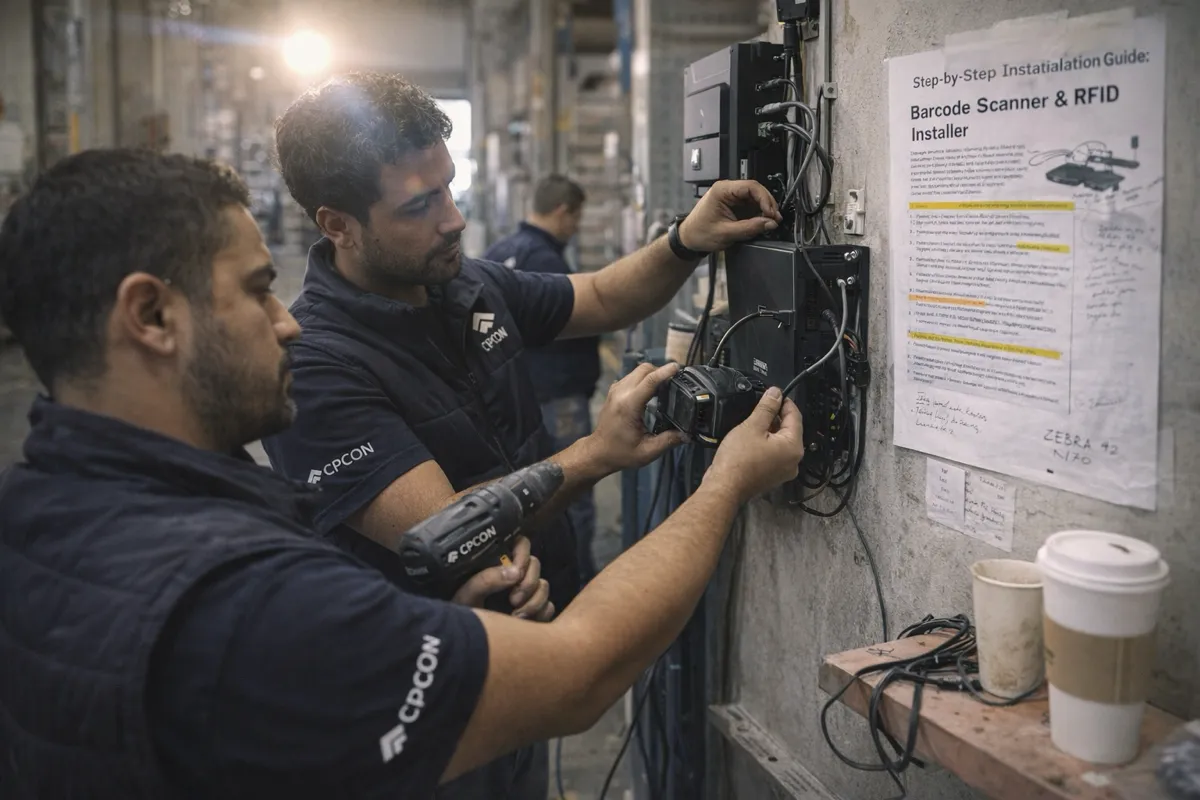
CPCON assists with deploying the physical tracking infrastructure that feeds the ITAM platform, including RFID tags, barcode labels, fixed RFID readers at doorways and loading docks, and mobile scanning devices for field teams. The technology selection depends on the facility type, asset density, and required read range.
Reconciliation and Reporting
After each physical count, CPCON delivers detailed reconciliation reports that map physical findings against ITAM records. These reports identify ghost assets (in the system but not found physically), unregistered assets (found physically but not in the system), location discrepancies, and condition changes. The reconciliation data feeds directly back into the ITAM platform to restore accuracy.
Frequently Asked Questions
What is the best IT asset management software?
The best IT asset management software depends on organizational size and requirements. Full-suite platforms like ServiceNow and Flexera suit large enterprises with complex, multi-site environments and deep ITSM integration needs. Mid-market solutions like Snipe-IT and Asset Panda offer simpler deployment for organizations with fewer than 10,000 assets. ERP-integrated modules from SAP or Oracle work best when ITAM needs to align tightly with existing financial systems. The key is matching the platform's complexity to the organization's operational maturity.
How much does ITAM software cost?
ITAM software licensing typically ranges from $2 to $15 per asset per month, depending on the platform and feature set. However, the total cost of ownership is significantly higher. Enterprise implementations commonly run $50,000 to $500,000 or more when factoring in configuration, data migration, integrations, training, and the baseline physical inventory that establishes clean starting data. Annual maintenance and support typically adds 15-20% of the initial license cost.
What is the difference between ITAM and CMDB?
ITAM (IT Asset Management) focuses on the financial and lifecycle management of IT assets, including procurement, depreciation, license compliance, and disposal. A CMDB (Configuration Management Database) tracks the technical configuration and relationships between IT components to support service management and change control. While both maintain inventories of IT components, ITAM emphasizes cost optimization and regulatory compliance, whereas CMDB supports operational processes like incident resolution and impact analysis. Many organizations use both, with data flowing between them.
How often should IT assets be physically verified?
Industry best practice recommends a comprehensive physical verification at least once per year, with cycle counts of high-value or high-risk assets on a quarterly basis. Organizations subject to SOX compliance, those with distributed remote workforces, or those in regulated industries like healthcare and financial services should consider more frequent verification. Without periodic physical counts, ITAM databases typically drift 15-30% from physical reality within 12 months, undermining the accuracy that the software is designed to provide.