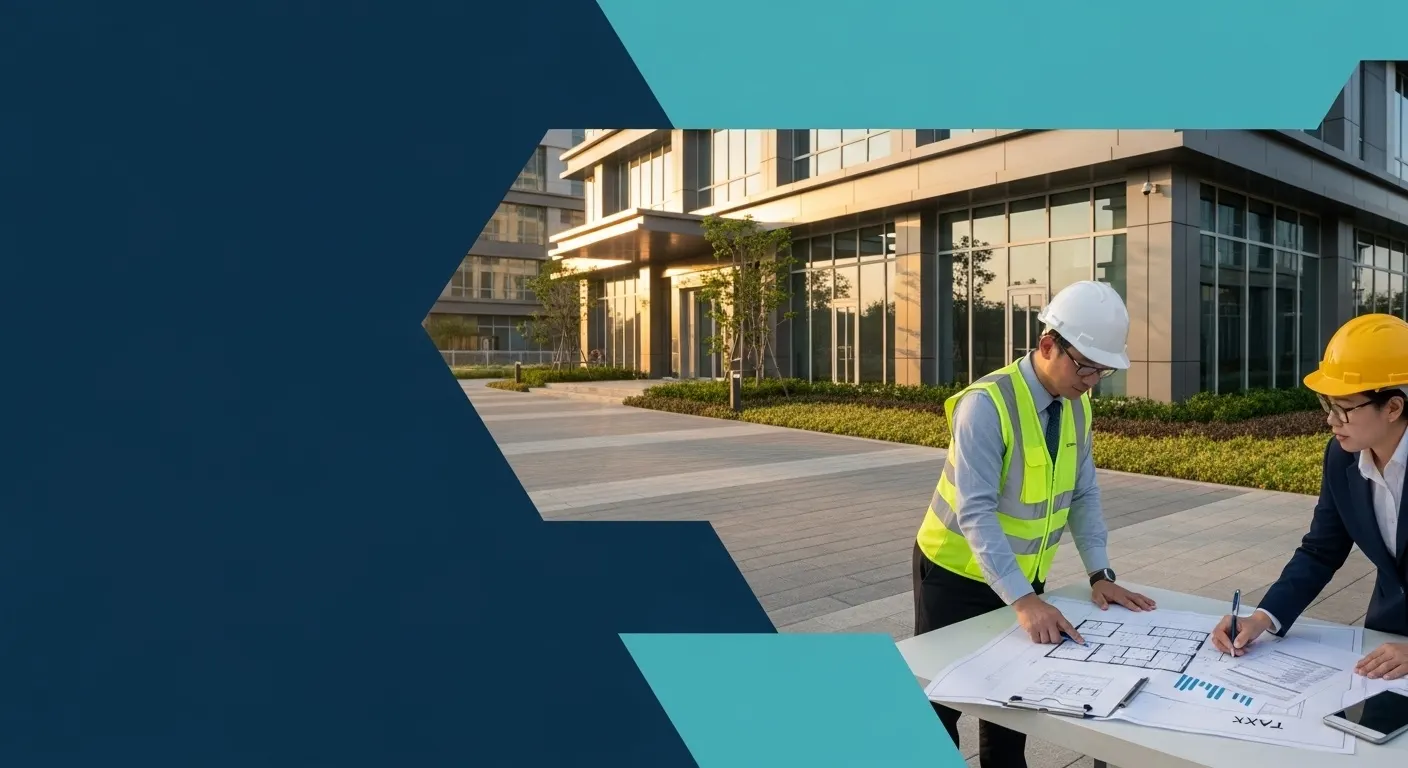
Strategic Cost Segregation Analysis
Accelerate depreciation deductions and maximize tax savings on commercial real estate. CPCON delivers engineering-based cost segregation studies that withstand IRS scrutiny.
What Is Cost Segregation and How Does It Save You Money?
Cost segregation is an IRS-approved tax strategy that reclassifies components of commercial real estate from long-lived real property (39-year or 27.5-year) into shorter-lived personal property (5, 7, or 15-year) categories. This acceleration of depreciation deductions generates significant cash flow benefits in the early years of property ownership.
Combined with bonus depreciation provisions, cost segregation can deliver first-year deductions of 20-40% of the building\u0027s cost basis — translating to hundreds of thousands or millions of dollars in tax savings depending on property value.
CPCON\u0027s engineering-based approach goes beyond simple estimates. Our team of engineers, CPAs, and tax professionals conduct detailed site inspections and apply construction cost analysis methodologies that meet the IRS Audit Techniques Guide standards for cost segregation studies.

Tax Benefits of Cost Segregation
Cost segregation delivers measurable financial benefits that improve cash flow and reduce your effective tax rate.
Immediate Cash Flow
Of building cost reclassified to shorter depreciation lives, generating substantial first-year deductions.
Accelerated Depreciation
Components reclassified from 39-year to 5, 7, or 15-year recovery periods for faster write-offs.
Catch-Up Deductions
For existing properties, file Form 3115 to claim missed depreciation from prior years without amending returns.
Audit Protection
Engineering-based studies meet IRS Audit Techniques Guide standards, providing strong audit defense.
Bonus Depreciation
Current bonus depreciation rate applied to qualifying personal property and land improvements identified in the study.
Property Tax Reduction
Reclassified personal property may be exempt from real property taxes in many jurisdictions, creating additional savings.
Our Cost Segregation Process
A proven six-step methodology that maximizes your tax savings while ensuring full IRS compliance.
Feasibility Assessment
We analyze your property details, cost basis, and tax situation to estimate potential savings and determine if a full study is warranted — at no cost to you.
Data Collection & Site Inspection
Our engineers conduct a detailed physical inspection of the property, reviewing construction documents, blueprints, invoices, and appraisals to identify reclassifiable components.
Engineering Analysis
Using construction cost estimation techniques, we quantify the cost of each building component and classify it into the appropriate IRS depreciation category (5, 7, 15, 27.5, or 39-year).
Tax Benefit Modeling
We calculate the present value of accelerated depreciation deductions, model bonus depreciation scenarios, and quantify the net tax benefit over the study period.
Report Delivery
A comprehensive report documenting methodology, component classifications, cost allocations, and supporting calculations — ready for your CPA to file with your tax return.
Audit Support
If the IRS questions your cost segregation deductions, CPCON provides full audit defense support including technical documentation and expert testimony.
Property Types We Analyze
Cost segregation delivers tax benefits across virtually every commercial property type. Our engineers have deep experience with these asset classes.
Office Buildings
Class A/B/C office properties, corporate campuses, and mixed-use office developments
Retail Properties
Shopping centers, strip malls, standalone retail, restaurants, and convenience stores
Industrial & Warehouse
Manufacturing facilities, distribution centers, cold storage, and flex industrial
Healthcare Facilities
Hospitals, medical office buildings, outpatient clinics, and senior living communities
Hospitality
Hotels, resorts, convention centers, and extended-stay properties
Multifamily Residential
Apartment complexes, condominiums, student housing, and affordable housing
Automotive
Dealerships, service centers, car washes, and fleet maintenance facilities
Educational
Private schools, universities, training centers, and research facilities
Frequently Asked Questions
Common questions about cost segregation studies, tax benefits, and the CPCON process.
Get a Free Cost Segregation Assessment
Tell us about your property and we will provide a no-obligation estimate of your potential tax savings. Our team typically responds within one business day.
Stop Overpaying on Property Taxes
Every year without a cost segregation study is a year of missed tax savings. Let CPCON\u0027s engineering team identify the deductions hiding in your commercial real estate.