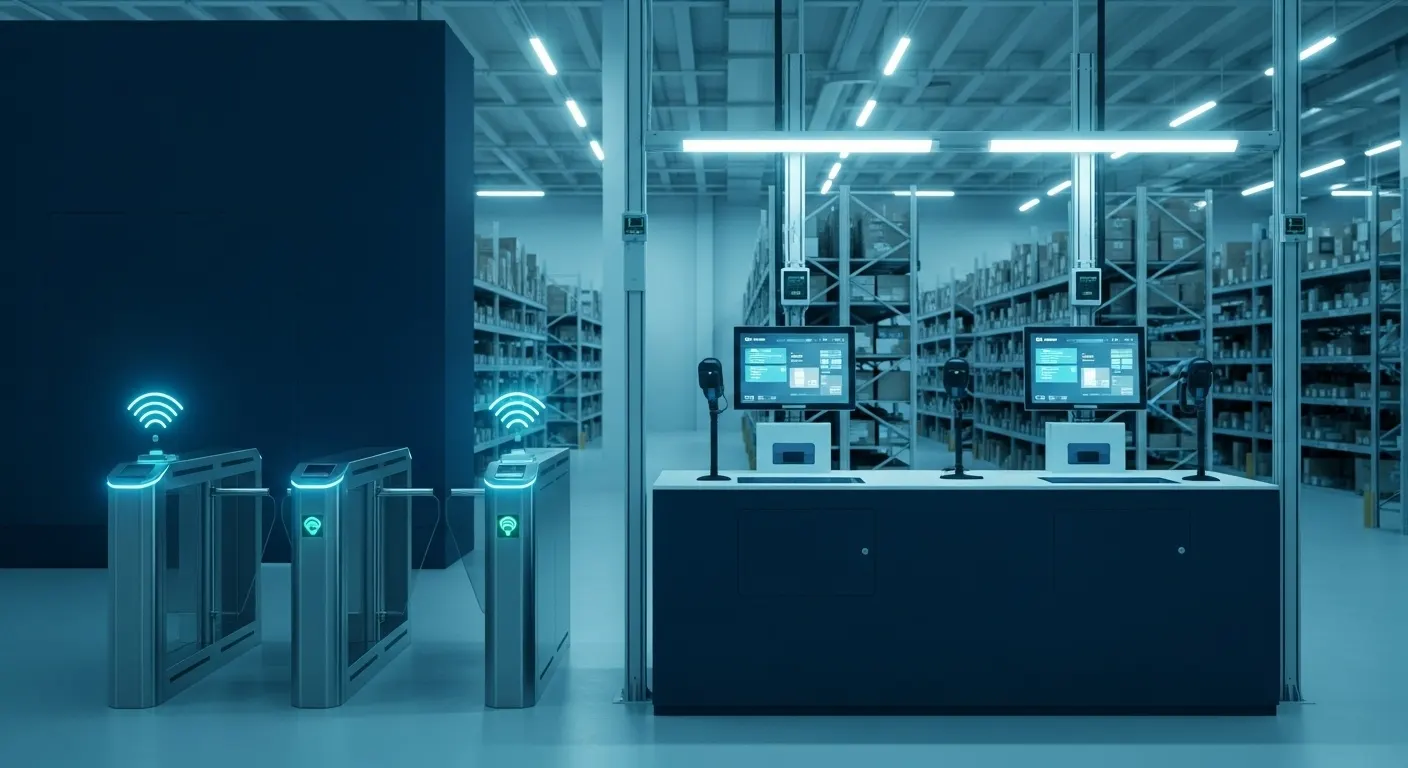
RFID vs Barcode: Enterprise Tracking
Choose the right technology for your asset tracking needs. CPCON helps enterprises evaluate, deploy, and optimize RFID and barcode solutions for maximum accuracy and ROI.
Choosing the Right Tracking Technology for Your Enterprise
The choice between RFID (Radio Frequency Identification) and barcode scanning is one of the most impactful technology decisions an enterprise can make for asset management. Each technology has distinct strengths, and the optimal solution often involves a strategic combination of both.
RFID excels at bulk scanning, real-time tracking, and hands-free automation — reading hundreds of tags per second without line-of-sight. Barcodes offer lower per-unit cost, universal compatibility, and simplicity for item-level identification. The right choice depends on your asset types, environment, volume, and compliance requirements.
CPCON has deployed both technologies across thousands of enterprise engagements in 50+ countries. We help you evaluate your specific needs, design the optimal technology architecture, and implement solutions that deliver measurable ROI from day one.

RFID vs. Barcode: Head-to-Head Comparison
A detailed comparison across the dimensions that matter most for enterprise asset tracking decisions.
| Dimension | RFID | Barcode |
|---|---|---|
| Read Speed | Hundreds to thousands of items per second; bulk scanning capability | One item at a time; typically 1-2 seconds per scan |
| Line of Sight | Not required — reads through packaging, pallets, and containers | Required — scanner must see the barcode directly |
| Read Range | Passive: up to 12m; Active: up to 100m+ | Typically 15-60cm for 1D; up to 4.5m for 2D with specialized scanners |
| Per-Unit Cost | $0.05-$15+ per tag depending on type (passive vs. active) | $0.01-$0.10 per label; virtually free for printed labels |
| Data Capacity | 96 bits to 8KB+ (read/write capable) | 1D: 20-25 characters; 2D/QR: up to 7,089 characters (read-only) |
| Durability | Rugged tags withstand extreme temperatures, moisture, chemicals | Labels can degrade with exposure to heat, moisture, UV, abrasion |
| Automation Potential | High — portal readers, conveyor integration, automated inventory | Limited — requires manual scanning by operator |
| Best For | High-volume, high-value assets; real-time tracking; harsh environments | Item-level identification; low-cost applications; universal compatibility |
When to Use RFID, Barcode, or Both
The best technology choice depends on your specific use case. Here are common scenarios and our recommended approach for each.
RFID Recommended
Warehouse Wall-to-Wall Audits
Bulk-scan entire facilities in hours instead of days with handheld RFID readers
Real-Time Asset Location
Track high-value equipment movement across facilities with fixed RFID readers
Automated Receiving & Shipping
Portal readers automatically log items entering and leaving dock doors
Healthcare Equipment Tracking
Locate medical devices across hospital campuses without manual scanning
Manufacturing WIP Tracking
Monitor work-in-progress through production stages automatically
IT Asset Management
Track laptops, servers, and network equipment across data centers and offices
Barcode Recommended
Retail Point-of-Sale
Universal UPC/EAN compatibility for checkout and inventory management
Document & File Tracking
Low-cost labels for tracking files, folders, and document boxes
Fixed Asset Tagging
Durable asset labels for furniture, fixtures, and low-movement equipment
Pharmaceutical Serialization
2D barcodes for unit-level drug tracking and compliance
Maintenance Work Orders
Scan equipment barcodes to pull up maintenance history and schedules
Cycle Count Programs
Cost-effective scanning for regular inventory verification programs
Hybrid Approach
Multi-Site Enterprises
RFID at high-volume distribution centers, barcodes at smaller branch locations
Tiered Asset Management
RFID for high-value assets above threshold, barcodes for lower-value items
Phased Technology Migration
Start with barcodes, upgrade to RFID as volume and ROI justify investment
Supply Chain Visibility
RFID at key checkpoints, barcodes for item-level detail within shipments
Compliance Programs
RFID for automated audit trails, barcodes for manual verification backup
Global Operations
Technology mix optimized per facility based on local requirements and infrastructure
Our Implementation Process
A proven six-step methodology that takes you from technology evaluation to enterprise-wide deployment.
Needs Assessment
We analyze your asset types, volumes, environments, compliance requirements, and existing infrastructure to understand your tracking needs.
Technology Recommendation
Based on the assessment, we recommend the optimal technology mix — RFID, barcode, or hybrid — with detailed ROI projections and implementation timeline.
Solution Design
Our engineers design the complete solution architecture including hardware selection, tag/label specifications, reader placement, and software integration.
Pilot Deployment
We deploy a controlled pilot at one facility or zone to validate performance, refine processes, and demonstrate ROI before full-scale rollout.
Enterprise Rollout
Phased deployment across all facilities with hardware installation, asset tagging, staff training, and ERP integration at each location.
Ongoing Optimization
Continuous monitoring, performance analytics, and technology upgrades to ensure your tracking system delivers maximum value over time.
Frequently Asked Questions
Common questions about RFID, barcode, and hybrid tracking solutions for enterprise asset management.
Get a Technology Assessment
Tell us about your asset tracking challenges and we will recommend the right technology solution — RFID, barcode, or hybrid — with ROI projections tailored to your operation.
Find the Right Tracking Technology for Your Enterprise
Whether you need RFID, barcode, or a hybrid solution, CPCON has the expertise and technology to transform your asset tracking accuracy and efficiency.