IoT Sensors for Supply Chain Visibility: Real-Time Tracking Solutions
How IoT sensor technology enables end-to-end supply chain visibility, reduces losses, and improves operational efficiency through real-time monitoring and predictive analytics.
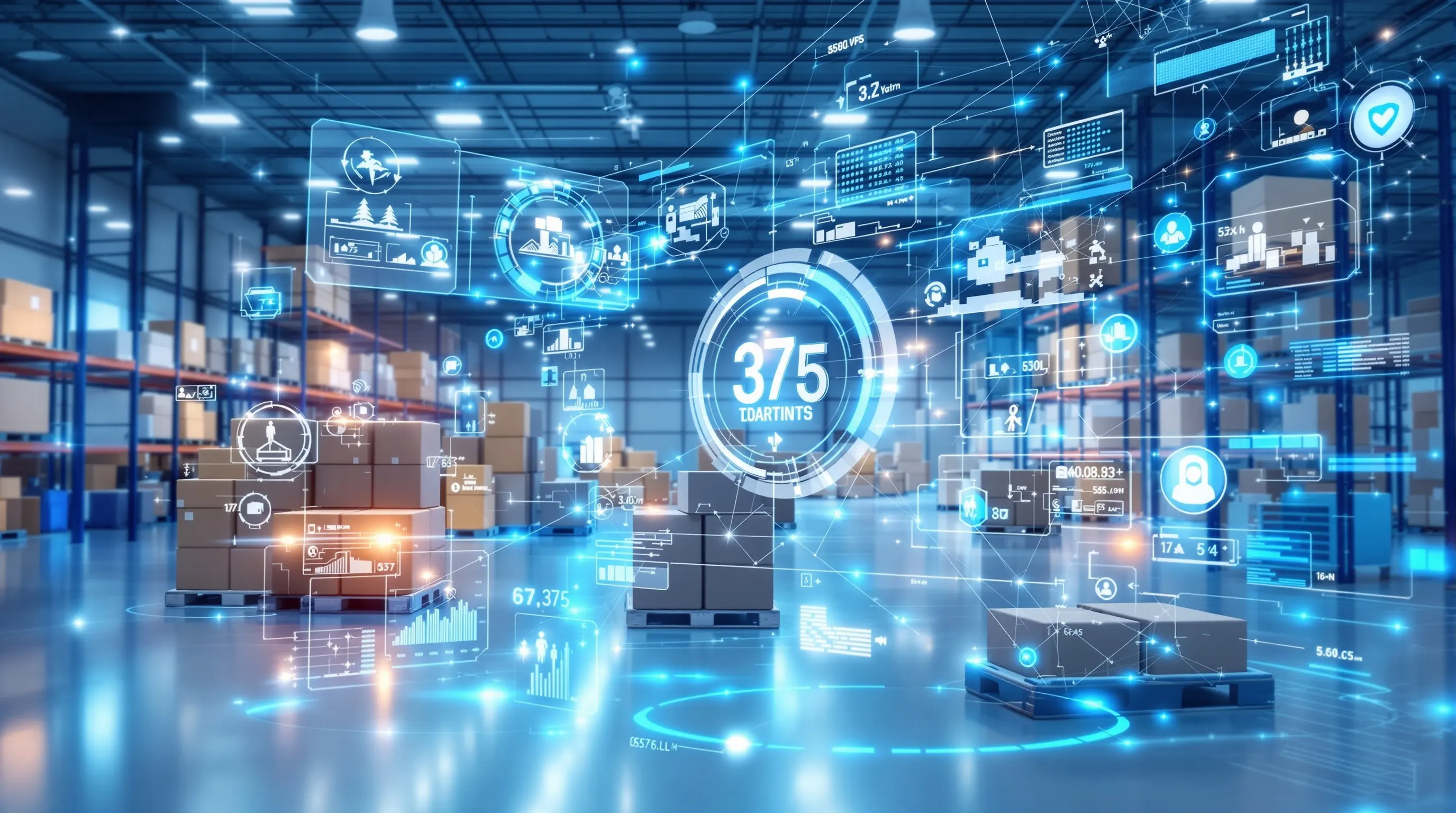
The Supply Chain Visibility Challenge
Traditional supply chain management relies on periodic check-ins and manual updates, creating visibility gaps that lead to inefficiencies, losses, and customer dissatisfaction. Modern supply chains require real-time visibility across every touchpoint—from manufacturing facilities to distribution centers to final delivery.
IoT sensor technology addresses this challenge by providing continuous, automated monitoring of goods throughout the supply chain. These sensors capture critical data including location, temperature, humidity, shock, light exposure, and more, transmitting information in real-time to centralized platforms.
Key IoT Sensor Technologies
GPS Tracking Sensors
Capabilities: Real-time location tracking, geofencing, route optimization, estimated arrival times
Best For: Long-haul transportation, international shipments, high-value cargo, fleet management
Typical Accuracy: 5-10 meters outdoors; limited indoor functionality
Cellular IoT Sensors
Capabilities: Wide-area connectivity, multi-parameter monitoring, cloud integration, remote configuration
Best For: Cross-border shipments, cold chain logistics, pharmaceutical distribution, perishable goods
Battery Life: 3-7 years depending on reporting frequency and sensor configuration
Bluetooth Low Energy (BLE) Beacons
Capabilities: Indoor positioning, proximity detection, asset tracking within facilities, low power consumption
Best For: Warehouse operations, manufacturing facilities, retail distribution, last-mile delivery
Range: 50-100 meters; requires gateway infrastructure for data collection
RFID with Sensor Integration
Capabilities: Automated identification, batch reading, temperature/humidity monitoring, tamper detection
Best For: High-volume operations, inventory management, compliance documentation, quality assurance
Read Range: Passive RFID: 1-10 meters; Active RFID: up to 100 meters
Critical Monitoring Parameters
Temperature Monitoring
Applications: Pharmaceuticals, food & beverage, chemicals, biologics
Typical Requirements:
- Accuracy: ±0.5°C for pharmaceuticals, ±1°C for food products
- Logging interval: 1-15 minutes depending on product sensitivity
- Alert thresholds: Configurable based on product specifications
- Calibration: Annual or semi-annual depending on regulatory requirements
Compliance Standards: FDA 21 CFR Part 11, EU GDP Guidelines, WHO TRS 961
Humidity Monitoring
Applications: Electronics, paper products, textiles, moisture-sensitive materials
Critical Thresholds:
- Electronics: 30-50% RH to prevent static discharge and corrosion
- Pharmaceuticals: 35-65% RH per USP guidelines
- Food products: <60% RH to prevent mold growth
Shock & Vibration Monitoring
Applications: Fragile equipment, precision instruments, artwork, high-value electronics
Measurement Parameters:
- Impact detection: G-force thresholds (typically 2-15G)
- Tilt monitoring: Angle deviation from upright position
- Drop detection: Free-fall events and landing impact
- Vibration frequency: Continuous monitoring for transportation damage
Implementation Architecture
Edge Layer: Sensors & Gateways
The edge layer consists of IoT sensors attached to shipments, pallets, or containers, along with gateway devices that aggregate and transmit data. Key considerations include:
- Sensor placement: Strategic positioning to ensure accurate readings without interfering with handling
- Power management: Battery life optimization through intelligent reporting schedules
- Data buffering: Local storage for connectivity gaps with automatic sync when connection restored
- Gateway infrastructure: Fixed gateways at facilities, mobile gateways on vehicles
Connectivity Layer: Network Infrastructure
Multiple connectivity options ensure continuous data flow across diverse environments:
- Cellular networks: 4G LTE, 5G, NB-IoT for wide-area coverage
- Satellite connectivity: Global coverage for remote areas and ocean transport
- Wi-Fi networks: High-bandwidth connectivity within facilities
- LoRaWAN: Long-range, low-power connectivity for campus environments
Platform Layer: Data Management & Analytics
Cloud-based platforms process sensor data and provide actionable insights:
- Real-time dashboards: Live visibility into shipment status and conditions
- Alert management: Automated notifications for exception events
- Historical analytics: Trend analysis and performance optimization
- Predictive modeling: Machine learning for proactive issue prevention
- Integration APIs: Connectivity with ERP, WMS, TMS systems
Use Case: Cold Chain Pharmaceutical Distribution
Challenge
A pharmaceutical distributor needed to ensure temperature compliance for biologics requiring 2-8°C storage throughout a multi-modal supply chain spanning manufacturing in Europe to hospitals across North America.
Solution
- Cellular IoT sensors with temperature and humidity monitoring
- GPS tracking for real-time location visibility
- Cloud platform with automated alerting and compliance reporting
- Integration with existing TMS and quality management systems
Results
- 99.7% temperature compliance across all shipments
- $2.3M annual savings from reduced product losses
- 87% reduction in temperature excursion investigations
- 100% regulatory compliance with automated documentation
- 4.2 hours average reduction in delivery time through route optimization
ROI Calculation Framework
Cost Components
Hardware Costs:
- Reusable sensors: $50-200 per unit (3-5 year lifespan)
- Single-use sensors: $15-40 per shipment
- Gateway devices: $200-800 per location
Connectivity Costs:
- Cellular data plans: $2-8 per sensor per month
- Satellite connectivity: $15-30 per device per month
Platform Costs:
- Software licensing: $5,000-50,000 annually depending on scale
- Integration services: $20,000-100,000 one-time
- Training and change management: $10,000-30,000
Value Drivers
Loss Prevention:
- Reduced product spoilage: 40-70% reduction in temperature-related losses
- Theft deterrence: 30-50% reduction in cargo theft incidents
- Damage prevention: 25-40% reduction in handling damage claims
Operational Efficiency:
- Labor savings: 15-25% reduction in manual tracking activities
- Faster issue resolution: 60-80% reduction in investigation time
- Improved asset utilization: 10-20% increase in container/pallet turns
Customer Experience:
- Proactive communication: 90%+ reduction in "where is my order" inquiries
- Accurate ETAs: 85-95% on-time delivery performance
- Quality assurance: Documented proof of proper handling
Sample ROI Calculation
Scenario: Mid-size pharmaceutical distributor, 5,000 annual shipments, average shipment value $50,000
Annual Costs:
- Sensors (reusable): $100,000 (500 units × $200, amortized over 4 years = $25,000/year)
- Connectivity: $48,000 (500 sensors × $8/month × 12 months)
- Platform: $30,000 annual license
- Support & maintenance: $15,000
- Total Annual Cost: $118,000
Annual Benefits:
- Loss prevention: $375,000 (1.5% historical loss rate × $50K avg value × 5,000 shipments × 50% reduction)
- Labor savings: $85,000 (2 FTE × $42,500 average loaded cost)
- Faster claims resolution: $45,000 (reduced investigation time and documentation)
- Improved customer retention: $120,000 (estimated value of prevented churn)
- Total Annual Benefit: $625,000
Net Annual Benefit: $507,000
ROI: 430%
Payback Period: 2.8 months
Implementation Best Practices
1. Start with High-Value Use Cases
Begin with shipments where visibility gaps create the most risk or cost—temperature-sensitive products, high-value cargo, or routes with historical issues. Early wins build momentum and justify broader deployment.
2. Design for Scalability
Choose platforms and sensor technologies that can grow with your needs. Ensure the architecture supports adding new sensor types, expanding to new geographies, and integrating with future systems without major rework.
3. Establish Clear Alert Protocols
Define escalation procedures for different exception types:
- Critical alerts: Immediate notification to operations and quality teams (temperature excursions, security breaches)
- Warning alerts: Notification to logistics coordinators (route deviations, minor delays)
- Informational alerts: Dashboard updates only (milestone achievements, routine status updates)
4. Integrate with Existing Systems
IoT data becomes most valuable when integrated with ERP, WMS, and TMS systems. Automated data flow eliminates manual entry, enables proactive decision-making, and creates a single source of truth for supply chain operations.
5. Plan for Sensor Lifecycle Management
Establish processes for:
- Sensor calibration and maintenance schedules
- Battery replacement or recharging procedures
- Firmware updates and security patches
- End-of-life disposal and recycling
- Inventory management for spare sensors
Common Implementation Challenges
Challenge: Connectivity Gaps
Issue: Sensors lose connectivity in remote areas, during ocean transport, or in facilities with poor cellular coverage.
Solution: Implement local data buffering with automatic sync when connectivity restored. Consider hybrid connectivity (cellular + satellite) for critical shipments. Deploy gateway infrastructure at key facilities.
Challenge: Alert Fatigue
Issue: Too many alerts overwhelm operations teams, leading to ignored notifications and missed critical events.
Solution: Implement intelligent alerting with configurable thresholds, alert suppression for known issues, and machine learning to reduce false positives. Establish clear escalation protocols and alert prioritization.
Challenge: Data Overload
Issue: Massive volumes of sensor data create storage and analysis challenges without clear actionable insights.
Solution: Implement edge processing to filter and aggregate data before transmission. Use data retention policies to archive historical data. Focus dashboards on actionable metrics rather than raw sensor readings.
Future Trends
AI-Powered Predictive Analytics
Machine learning algorithms will analyze historical sensor data to predict potential issues before they occur—identifying routes prone to delays, carriers with handling problems, or environmental conditions that increase risk. Predictive models will enable proactive intervention rather than reactive problem-solving.
Blockchain Integration for Trust & Transparency
Combining IoT sensor data with blockchain creates immutable records of product handling and conditions throughout the supply chain. This enables trusted data sharing among supply chain partners, simplifies compliance documentation, and provides consumers with verifiable product provenance.
5G-Enabled Real-Time Control
5G networks will enable ultra-low latency communication between sensors and control systems, allowing real-time adjustments to transportation conditions. Smart containers will automatically adjust temperature, humidity, or atmosphere based on sensor readings and product requirements.
Sustainable Supply Chain Monitoring
IoT sensors will increasingly monitor environmental impact metrics—carbon emissions, energy consumption, packaging waste—enabling companies to measure and optimize supply chain sustainability. Regulatory requirements and consumer demand will drive adoption of environmental monitoring capabilities.
Conclusion
IoT sensor technology transforms supply chain visibility from periodic snapshots to continuous real-time monitoring. Organizations implementing comprehensive sensor solutions achieve significant reductions in losses, improved operational efficiency, and enhanced customer satisfaction.
Success requires careful planning—selecting appropriate sensor technologies for specific use cases, designing scalable architecture, establishing clear alert protocols, and integrating with existing systems. Organizations that start with high-value use cases and expand systematically achieve the fastest ROI and smoothest adoption.
As sensor technology continues to advance and connectivity becomes more ubiquitous, supply chain visibility will evolve from competitive advantage to baseline expectation. Organizations investing in IoT infrastructure today position themselves to leverage emerging capabilities—AI-powered analytics, blockchain integration, autonomous control systems—that will define the future of supply chain management.