Retail Inventory Tracking System: A Complete Guide to Modern Solutions
Wendell leads CPCON's global operations with extensive expertise in retail inventory management, omnichannel solutions, and technology-driven asset tracking systems that transform retail operations worldwide.
In today's competitive retail landscape, effective inventory tracking is essential for success. Modern retail inventory tracking systems provide real-time visibility, reduce shrinkage, improve customer satisfaction, and optimize operations across all channels.
What Is a Retail Inventory Tracking System?
A retail inventory tracking system is a technology solution that monitors and manages merchandise throughout the entire retail supply chain—from receiving at the distribution center through storage, display, and final sale. These systems provide real-time visibility into stock levels, locations, and movement patterns.
Modern systems integrate with point-of-sale (POS) systems, warehouse management systems (WMS), and enterprise resource planning (ERP) platforms to create a unified view of inventory across all channels. This integration enables retailers to make data-driven decisions about purchasing, merchandising, and fulfillment.
Key Components of Retail Inventory Tracking Systems
Identification Technology
The foundation of any tracking system is the technology used to identify individual items or groups of items. Common identification technologies include:
- Barcodes: Cost-effective and widely adopted, requiring line-of-sight scanning
- RFID Tags: Enable bulk reading without line-of-sight, ideal for high-volume operations
- QR Codes: Store more information than traditional barcodes and can be scanned with smartphones
- NFC Tags: Near-field communication for close-range identification and authentication
Data Capture Devices
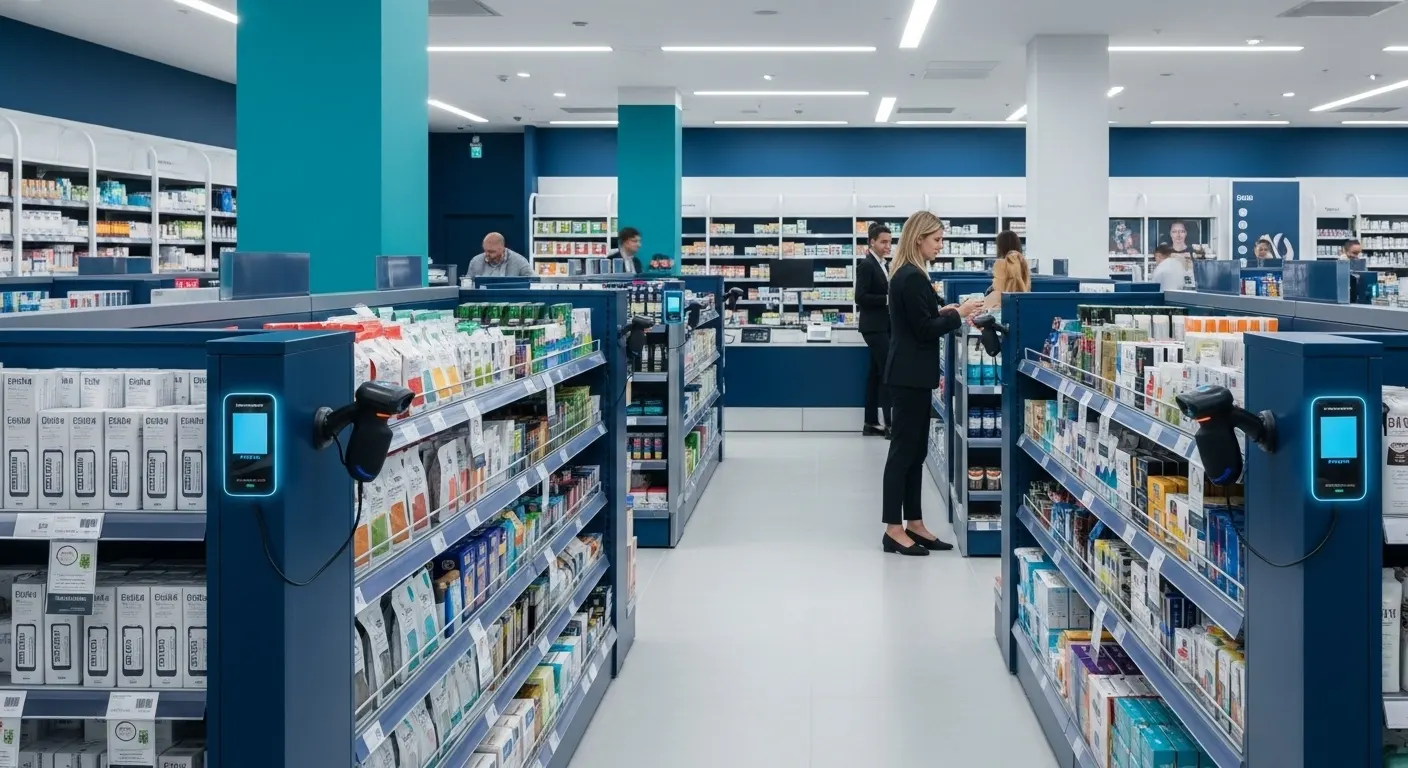
Retailers use various devices to capture inventory data including handheld scanners for mobile inventory counts, fixed readers at strategic locations like receiving docks and exits, mobile computers combining scanning with data processing, and smart shelves with integrated sensors for automatic inventory monitoring.
Software Platform
The software platform processes captured data, maintains inventory records, generates reports, and integrates with other business systems. Key software capabilities include real-time inventory updates, automated reordering, demand forecasting, multi-location management, and analytics and reporting dashboards.
Types of Retail Inventory Tracking Systems
Perpetual Inventory Systems
Perpetual systems continuously update inventory records with each transaction. When items are received, sold, or transferred, the system immediately reflects these changes. This provides real-time accuracy and enables better decision-making, though it requires reliable technology infrastructure and disciplined processes.
Periodic Inventory Systems
Periodic systems update inventory records at scheduled intervals through physical counts. While less resource-intensive than perpetual systems, they provide less timely information and may result in stockouts or overstock situations between count periods.
Hybrid Systems
Many retailers implement hybrid approaches, using perpetual tracking for high-value or fast-moving items while applying periodic counting to lower-priority merchandise. This balances accuracy with operational efficiency.
Benefits of Modern Inventory Tracking Systems
Implementing an effective inventory tracking system delivers numerous benefits:
- Reduced Stockouts: Real-time visibility prevents lost sales due to out-of-stock situations
- Lower Carrying Costs: Optimized inventory levels reduce storage and capital costs
- Shrinkage Reduction: Better tracking identifies and prevents theft and loss
- Improved Customer Experience: Accurate inventory enables reliable fulfillment and product availability
- Enhanced Omnichannel Capabilities: Unified inventory view supports buy-online-pickup-in-store and ship-from-store
- Better Forecasting: Historical data and analytics improve demand prediction
- Operational Efficiency: Automation reduces manual counting and administrative tasks
Implementation Considerations
Assessing Your Needs
Before selecting a system, retailers should evaluate their specific requirements including number of SKUs and inventory complexity, number and types of locations (stores, warehouses, distribution centers), transaction volume and velocity, integration requirements with existing systems, and budget constraints and expected ROI.
Technology Selection
Choose technologies appropriate for your merchandise and operations. High-value items may justify RFID investment, while basic barcoding may suffice for others. Consider factors like read range requirements, environmental conditions, and item characteristics when selecting identification technology.
Change Management
Successful implementation requires effective change management including comprehensive staff training, clear process documentation, phased rollout approach, ongoing support and troubleshooting, and regular performance monitoring and optimization.
Integration with Retail Ecosystem
Modern inventory tracking systems must integrate seamlessly with other retail technologies including POS systems for automatic inventory deduction at sale, e-commerce platforms for online inventory visibility, warehouse management systems for distribution operations, supplier systems for automated replenishment, and analytics platforms for business intelligence.
API-based integrations and cloud platforms facilitate these connections, creating a unified retail technology ecosystem that supports omnichannel operations.
Emerging Trends in Retail Inventory Tracking
The retail inventory tracking landscape continues to evolve with new technologies and approaches:
- AI and Machine Learning: Advanced algorithms improve demand forecasting and optimize inventory levels
- Computer Vision: Camera-based systems automatically track inventory without tags
- IoT Sensors: Smart shelves and connected devices provide continuous monitoring
- Blockchain: Distributed ledger technology enhances supply chain transparency
- Robotics: Automated systems conduct inventory counts and manage warehouse operations
Measuring Success
Track key performance indicators to evaluate system effectiveness including inventory accuracy rate, stockout frequency, inventory turnover ratio, carrying cost reduction, shrinkage percentage, order fulfillment rate, and time to complete physical counts.
Regular monitoring of these metrics enables continuous improvement and demonstrates ROI to stakeholders. Successful retailers view inventory tracking as an ongoing process of optimization rather than a one-time implementation.
Related Articles
Omnichannel Inventory Management: Strategies for Success
Learn how to optimize inventory across all retail channels for seamless customer experiences.
RFID vs Barcode: Which Technology Is Right for Your Business?
Compare identification technologies to determine the best solution for your retail operations.